
Weekly Crypto Break May 22

Weekly Newsletter
5 min read time
|Updated: 2026-05-22
This week, the crypto asset market was shaped by ecosystem sustainability, state-level reserve policy, and tokenization themes. On the Ethereum Layer 2 side, Zero Network’s decision to wind down operations brought sustainability and business model questions back into focus in an increasingly competitive infrastructure layer. In the United States, the ARMA bill proposed for a strategic Bitcoin reserve showed that Bitcoin continues to be discussed at the level of state policy. Solana’s Q1 data drew attention with network activity and RWA growth, while JPMorgan’s onchain liquid money market fund for stablecoin issuers highlighted tokenization’s expanding role in reserve and liquidity management. On the market side, Bitcoin and Ethereum were both on track to close the week with a weaker tone, while ETF outflows stood out.
Solana Q1 Data: Transaction Activity and RWA Growth Stand Out
According to Messari’s Q1 2026 Solana report, the network processed approximately 10.1 billion transactions during the quarter, marking the highest quarterly transaction level in Solana’s history. Over the same period, real world assets (RWA) on Solana surpassed 2 billion USD, while the network also maintained a strong position in stablecoins.
Key metrics from the report include an average of roughly 2.4 million daily active addresses, approximately 89.5 million USD in network revenue, and
stablecoin market capitalization reaching 14.85 billion USD. These figures suggest that Solana had a notable quarter not only in terms of transaction count, but also across stablecoin liquidity, RWA growth, and revenue generation.
Why it matters Solana’s growth shows that network activity is not only about short-term transaction intensity. It also points to strengthening use cases across stablecoin usage,
RWA integrations, and institutional-scale transaction infrastructure. Still, when interpreting the data, it remains important to distinguish how much of the transaction growth comes from economically meaningful activity versus low-value automated transactions.
New US Bill Revives Strategic Bitcoin Reserve Push: ARMA in Focus
US lawmakers have introduced a new bipartisan bill aimed at creating a strategic Bitcoin reserve at the federal level. Introduced as the American Reserve Modernization Act (ARMA), the bill proposes establishing a Strategic Bitcoin Reserve under the US Treasury, alongside a separate Digital Asset Stockpile for other crypto assets held by federal agencies.
Under the proposal, the United States would aim to acquire approximately 1 million BTC over five years. These purchases are intended to be carried out through budget-neutral strategies, without creating an additional burden for taxpayers. The bill also proposes that Bitcoin held in the reserve should not be sold for at least 20 years, except for specific purposes such as reducing national debt.
Why it matters The bill shows that Bitcoin is being discussed not only through the lens of private sector adoption and investment products, but also at the level of state reserve policy. Given that the US already holds a significant amount of Bitcoin, the proposal highlights the need for a clearer federal policy around these assets. ARMA also brings topics such as reserve transparency, independent audits, and individuals’ right to self-custody into the discussion.
JPMorgan Plans Onchain Liquid Money Market Fund for Stablecoin Issuers
JPMorgan has filed for an onchain liquid money market fund designed for stablecoin issuers’ reserve management. Planned to operate on Ethereum, the fund is structured to align with reserve asset requirements that stablecoin issuers are expected to meet under the US
GENIUS Act.
The fund is expected to invest in short-term US Treasury bills and overnight repo transactions backed by cash or Treasuries. On the
blockchain infrastructure side, JPMorgan’s own unit, Kinexys Digital Assets, will play a role. The fund is expected to launch initially on Ethereum, with the possibility of expanding to other blockchains later.
Why it matters This move shows that stablecoin reserve management and tokenized traditional finance products are becoming increasingly connected. By developing onchain products for stablecoin issuers, major banks like JPMorgan are showing that tokenization is no longer positioned only as an investment product, but also as infrastructure for reserves, liquidity, and compliance.
Zero Network Winds Down as Ethereum L2 Consolidation Comes Into Focus
The Zerion team announced that it is winding down Zero Network, an Ethereum Layer 2 network focused on gas-free transactions. Launched in November 2024, Zero Network was positioned as an EVM-compatible, fully gasless network designed to simplify the user experience and support broader mainstream adoption.
The team said the vision behind Zero Network remains valid, but that maintaining an independent blockchain is not the right path to achieve it. As a result, resources will be redirected toward Zerion’s API and wallet products. User assets are stated to be safe, while users are advised to move
NFTs, ETH, and other tokens off the network by the end of July. Asset bridging into the network has already been paused.
Why it matters Zero Network’s wind-down shows that not every new Ethereum L2 can reach a sustainable business model. As more protocols shut down operations, especially under challenging market conditions, teams appear to be redirecting resources toward products that are closer to users and more capable of generating revenue.
Bitcoin Price Chart
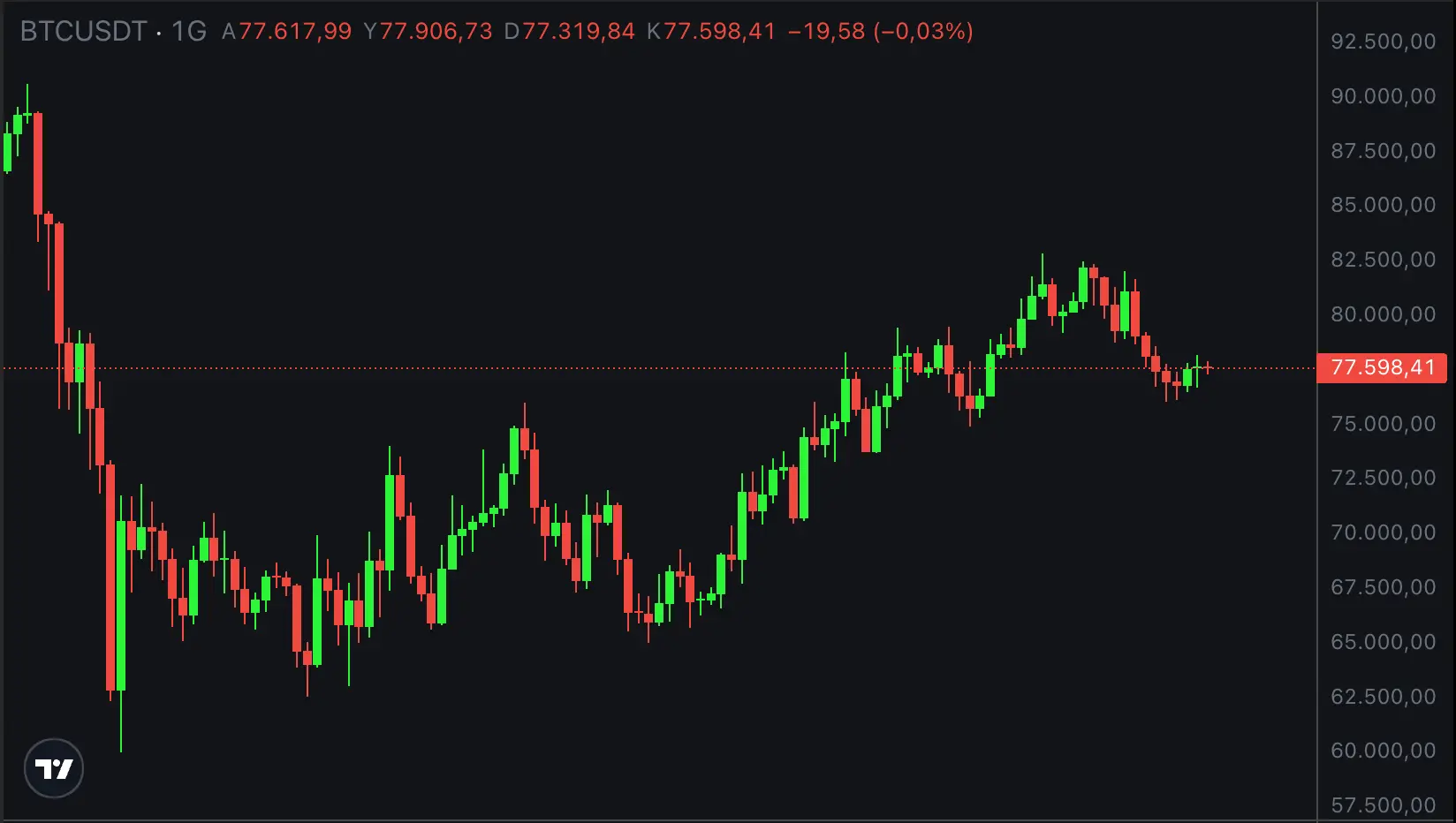
Bitcoin tested the 80,800 USD level during the week but failed to hold that area and pulled back. At the time of writing, Bitcoin is trading around 77,500 USD. In this setup, 80,800 USD stands out as the near-term resistance area being monitored, while Bitcoin is expected to close the week down by approximately 3.55%.
On the ETF side, total net outflows of 1.151 billion USD were recorded over the week.
Ethereum Price Chart
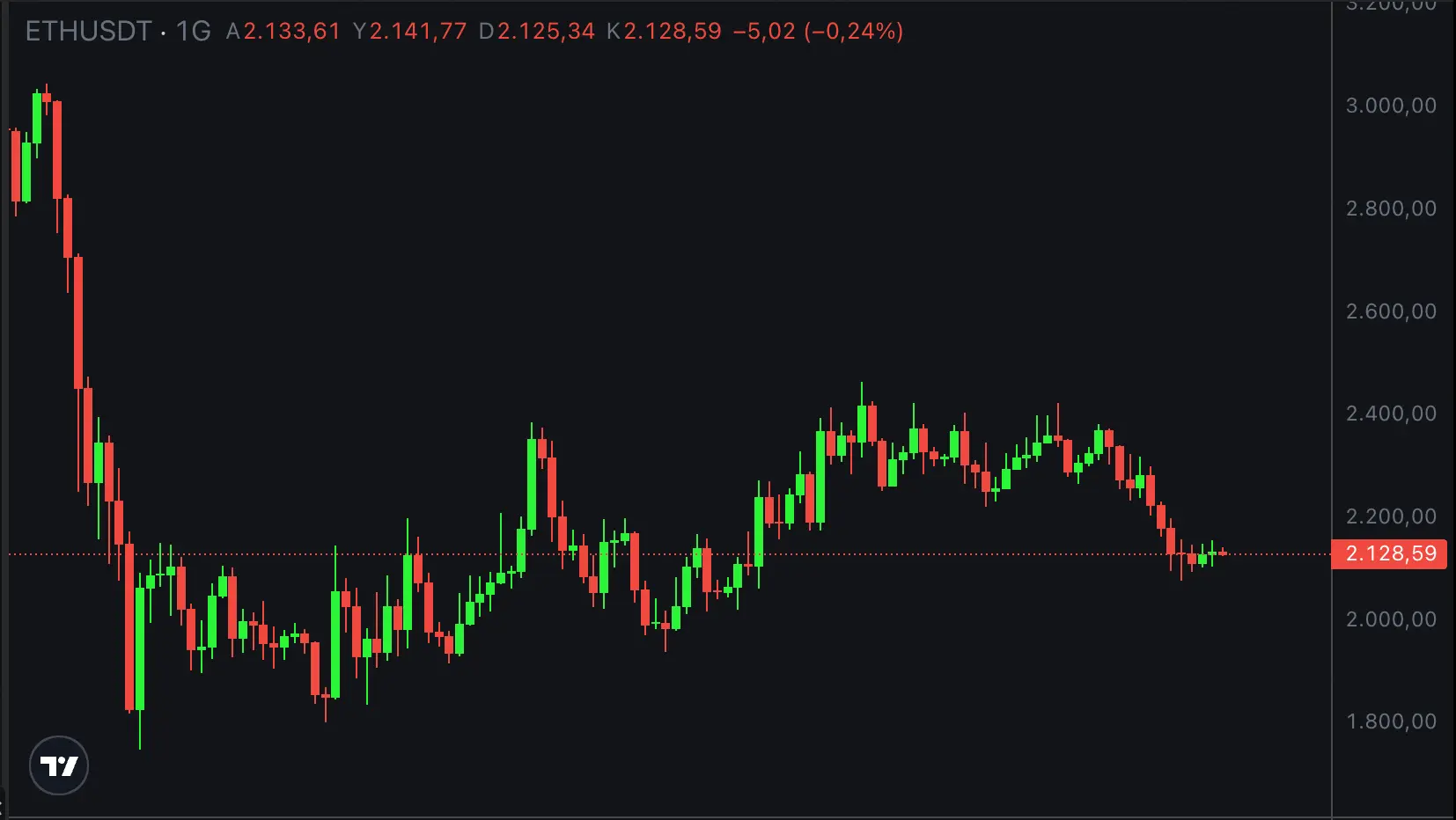
Ethereum had a weaker week compared with Bitcoin. After testing the 2,250 USD level during the week, Ethereum is trading around 2,120 USD at the time of writing. In this setup, 2,250 USD stands out as the near-term resistance area being monitored, while Ethereum is expected to close the week down by approximately 5.25%.
On the ETF side, although outflows were more limited compared with Bitcoin, total net outflows of 209.4 million USD were recorded over the week.
 2026-05-22
Legal Notice
The information, comments, and evaluations contained in this content do not constitute investment advice. This content is not intended to be prescriptive in any way and is intended to provide general information. It does not constitute investment advice. CoinTR cannot be held responsible for any transactions made based on this information or any losses that may arise.
 Weekly Crypto Break June 5
 Recommended
 Weekly NewsletterWeekly Crypto Break July 24 Regulation, mass adoption, network security, and project governance shaped this week’s crypto agenda. The updated CLARITY Act draft brought political negotiations in the United States back into focus, while Telegram’s native crypto wallet plan strengthened the potential for crypto usage to reach a broader audience. The creation of the Bitcoin Security Consortium showed that institutional players are beginning to contribute more actively to the network’s long term security. Movement Labs’ restru2026-07-24
 Weekly NewsletterWeekly Crypto Break July 17 Regulation, tokenization, and stablecoin infrastructure shaped this week’s crypto agenda. Japan’s decision to bring crypto assets under a financial product framework, together with the ethics provision becoming a critical issue in CLARITY Act negotiations, placed regulatory developments at the center of the week. DTCC’s completion of live transactions using tokenized securities brought onchain finance closer to traditional market infrastructure, while Visa’s institutional stablecoin platform ex2026-07-17
 Weekly NewsletterWeekly Crypto Break July 10 This week, the crypto market was shaped by corporate treasury management, the regulatory timeline in the United States, and stablecoin infrastructure. Strategy’s sale of 3,588 BTC to generate liquidity showed that corporate Bitcoin strategies are beginning to evolve beyond accumulation toward more active capital management. As the political window for the CLARITY Act narrowed, regulatory uncertainty returned to the forefront. Sony’s preparations to establish a regulated stablecoin focused struc2026-07-10


