
Weekly Crypto Break May 15

Weekly Newsletter
5 min read time
|Updated: 2026-05-16
This week, the
crypto market was shaped by institutional positioning and the regulatory agenda. JPMorgan’s increased Bitcoin ETF exposure and the CLARITY Act draft moving forward in the Senate brought institutional interest and expectations for regulatory clarity in the US back into focus.
On the corporate treasury side, SharpLink’s comments on Ethereum treasury companies and the impact of Metaplanet’s Bitcoin holdings on its financial results drew attention. On the macro front, crypto-linked stocks recovered following Trump’s tariff delay. In markets, Bitcoin remained positioned around the 80,000 USD support area, while Ethereum showed a more sideways outlook.
SharpLink CEO Says Ethereum Treasury Firms Are Moving Away From the Bitcoin Model
SharpLink CEO Joseph Chalom said Ethereum treasury companies are evolving in a different direction from the Bitcoin treasury model associated with Strategy and Michael Saylor. According to Chalom, leading Ethereum-focused firms are placing more emphasis on staking income and simpler balance sheet management, rather than complex debt and financing structures.
SharpLink is reported to be the second-largest public Ethereum treasury with approximately 868,699 ETH, while BitMine ranks first with 5,180,131 ETH. Chalom also noted that Ethereum could become more clearly differentiated from Bitcoin as stablecoins, tokenized assets,
DeFi, and AI-linked applications continue to expand.
Why it matters This perspective shows that, on the corporate treasury side, Ethereum is being positioned not only as a reserve asset but also through staking income and tokenization infrastructure. As a result, ETH treasury companies are being evaluated not only through price movements, but also through network use cases and balance sheet management models.
JPMorgan Increases Bitcoin ETF Exposure With IBIT in Focus
JPMorgan Chase increased its exposure to
Bitcoin ETFs in the first quarter. According to the bank’s 13F filing, its position in BlackRock’s iShares Bitcoin Trust (IBIT) rose from roughly 3 million shares in the previous quarter to 8.3 million shares in Q1. This increase points to an additional position size of approximately 162 million USD, despite Bitcoin’s weaker performance during the same period.
JPMorgan also expanded its exposure beyond IBIT. The bank increased its holdings in Fidelity’s FBTC and Bitwise’s BITB, while also significantly growing its position in BITO, a Bitcoin futures-based ETF. Selective positions were also seen in Ethereum and Solana-linked ETFs, while the XRP-linked position was reportedly fully closed.
Why it matters This suggests that major financial institutions continue to selectively increase exposure to crypto-linked products despite weaker market conditions. JPMorgan’s strong increase in IBIT, in particular, stands out as a key signal that Bitcoin ETFs are becoming more visible within institutional portfolios.
CLARITY Act Draft Gets Green Light in the Senate
The Senate Banking Committee voted on May 14 to advance the draft of the Digital Asset Market Clarity Act (CLARITY Act). The 309-page draft aims to create a clearer framework for how oversight of digital assets is divided between the SEC and the CFTC. In the next stage, the bill is expected to move to the full Senate, where it will need to clear the 60-vote threshold to proceed.
Key negotiation points include
stablecoin yield, DeFi oversight, and ethics rules around public officials holding crypto assets. The bill had previously passed the House in 2025 with bipartisan support. However, differences between the Senate and House versions mean the reconciliation process is expected to continue before a final text is reached.
Why it matters Committee approval marks an important step toward a clearer regulatory framework for digital assets in the United States. Still, for the bill to become law, several stages remain, including a full Senate vote, alignment between the two versions of the text, and detailed rulemaking by the SEC and CFTC.
Metaplanet Reports Bitcoin-Driven Loss as Operating Profit Falls Short
Japan-based Bitcoin treasury company Metaplanet reported a net loss despite generating operating profit, as the decline in the period-end value of its Bitcoin holdings weighed on overall results. While the company’s revenue increased year over year, Bitcoin price volatility had a negative impact on the balance sheet and pulled down the final financial result.
Metaplanet’s Bitcoin-focused revenue model and operating profit continue to grow, but the company’s large BTC position makes its financial results more sensitive to Bitcoin price movements. The company emphasized that it remains committed to its long-term Bitcoin treasury strategy.
Why it matters This shows that, for publicly listed companies holding Bitcoin on their balance sheets, financial results can be shaped not only by operating performance but also by the price movement of their Bitcoin holdings during the period. As a result, for companies like Metaplanet, both operating profitability and the balance sheet impact of Bitcoin holdings remain closely watched.
Bitcoin Price Chart
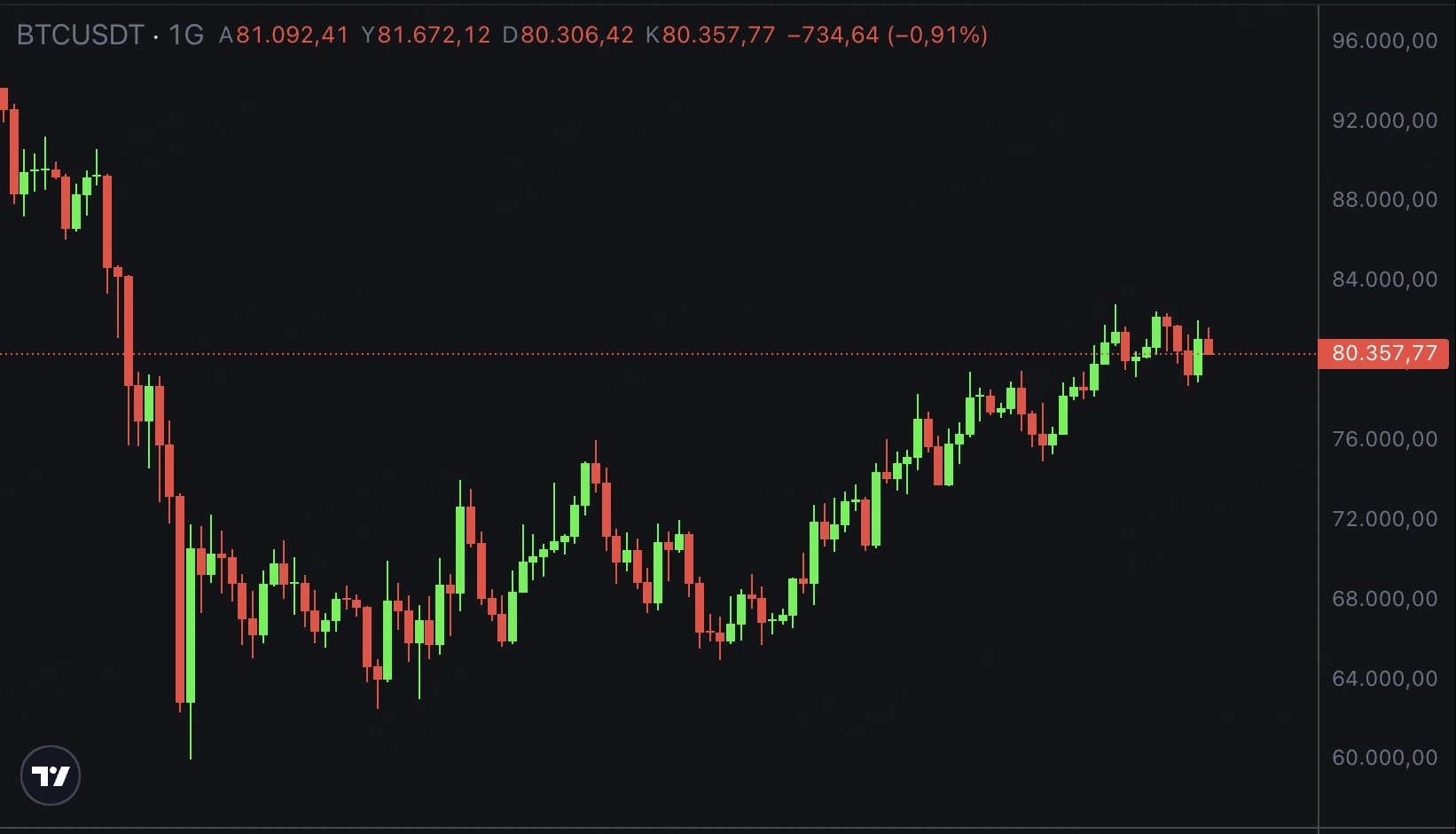
Bitcoin price dipped to 78,800 USD during the week and tested the 82,000 USD level on upside attempts. At the time of writing, Bitcoin continues to trade near the 80,000 USD area, which stands out as a strong near-term support level. The 82,000 USD level remains the key resistance area being monitored.
On the ETF side, total net outflows of 705.1 million USD were recorded over the week.
Ethereum Price Chart
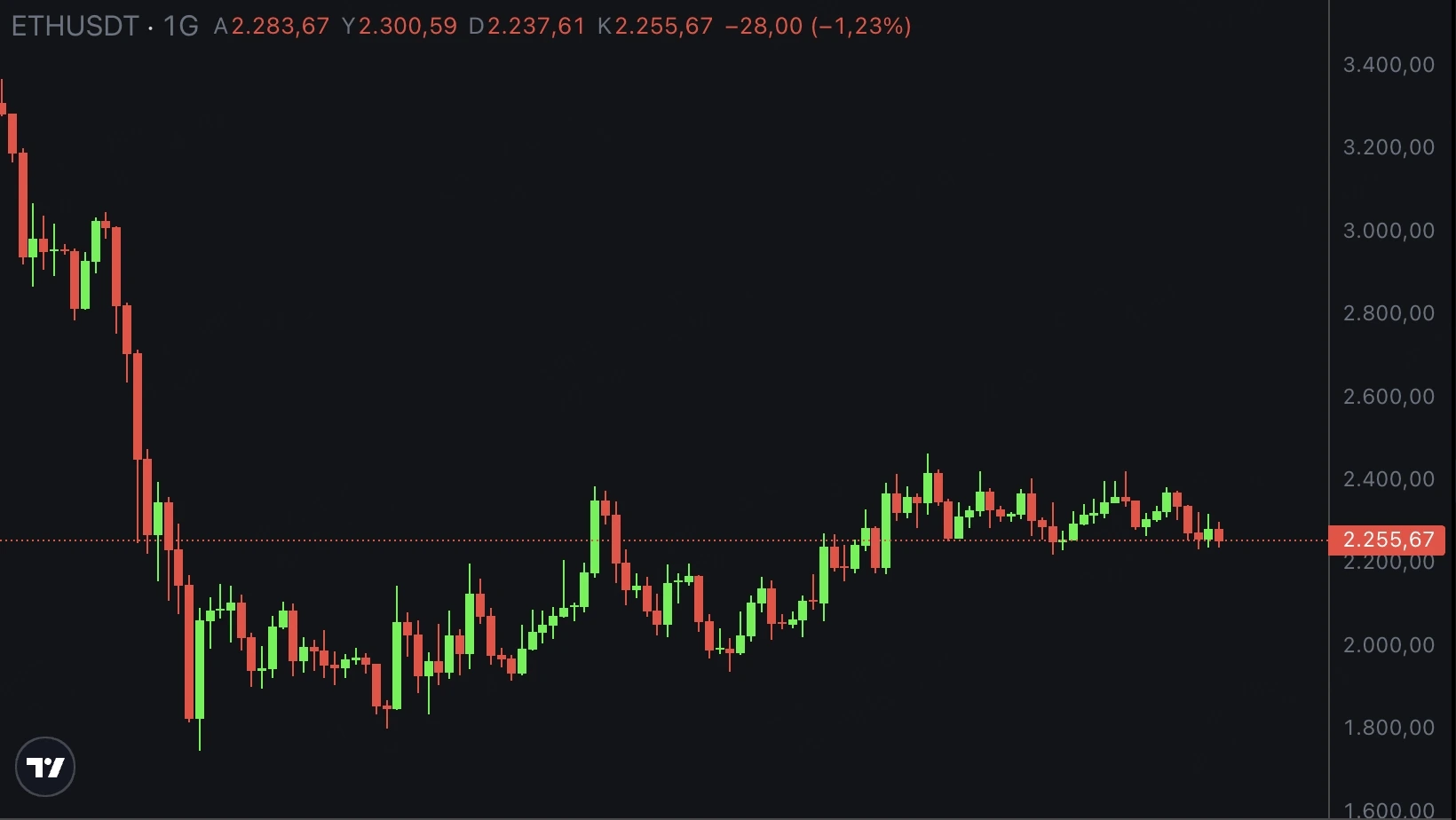
Ethereum price remained relatively flat this week. During the week, Ethereum fell as low as USD 2,230, while upside attempts tested the USD 2,380 level. In this outlook, USD 2,200 stands out as the key short-term support zone, while USD 2,400 remains the resistance level to watch.
On the ETF side, total net outflows of USD 189.5 million were recorded over the week.
 2026-05-15
Legal Notice
The information, comments, and evaluations contained in this content do not constitute investment advice. This content is not intended to be prescriptive in any way and is intended to provide general information. It does not constitute investment advice. CoinTR cannot be held responsible for any transactions made based on this information or any losses that may arise.
 Weekly Crypto Break May 22
Recommended
 Weekly NewsletterWeekly Crypto Break September 11 This week in the cryptocurrency market, spot Bitcoin ETF flows in the U.S., changes to the U.S. Treasury’s long-term bond buyback program, stablecoin initiatives in the banking sector, and crypto asset regulations in Europe were among the key topics on the agenda. U.S.-listed spot Bitcoin ETFs recorded $3.8 billion in net inflows over a three-week period. The U.S. Treasury increased the size of liquidity-supporting buybacks for long-term bonds. U.S. Bank completed a live stablecoin transfer on2026-09-11
 Weekly NewsletterWeekly Crypto Break September 4 This week in the cryptocurrency market, spot Bitcoin ETF flows in the U.S., a new regulation in Türkiye covering crypto asset service providers, and developments related to traditional financial institutions expanding their digital asset services were among the key topics on the agenda. U.S.-listed spot Bitcoin ETFs closed August with the highest monthly net inflow recorded in 2026. In Türkiye, the Capital Markets Board expanded the scope of remote customer onboarding2026-09-04
 Weekly NewsletterWeekly Crypto Break August 28 The crypto market this week was shaped by ETF demand for Bitcoin, corporate capital management and increasing usage across blockchain networks. Bitcoin’s weekly price increase in dollar terms reached a historic level, while spot ETF inflows recording their strongest week since October 2025 indicated that institutional demand was accelerating again. On the Strategy side, a more flexible balance-sheet approach focused on strengthening cash reserves rather than making new Bitcoin purchases drew at2026-08-28
