
Weekly Crypto Break April 24

Weekly Newsletter
5 min read time
|Updated: 2026-04-24
This week, the crypto asset
market was shaped by two themes: corporate treasury activity and intervention and compliance dynamics in stablecoins. Metaplanet’s decision to issue zero-interest bonds to fund additional Bitcoin purchases signaled that companies continue to scale their treasury strategies through capital markets instruments. In parallel, Tether’s decision to freeze a large amount of USDT at the request of US law enforcement brought the discussion around issuer intervention capabilities back into focus. On the DeFi side, Lido’s support proposal related to KelpDAO drew attention, while on the institutional front BitMine staking a large share of its ETH holdings highlighted the growing emphasis on yield-oriented treasury management.
Metaplanet Issues 50 Million USD in Zero-Interest Bonds to Buy More Bitcoin
Tokyo-listed Metaplanet announced it has issued 50 million USD in zero-interest bonds to fund additional Bitcoin purchases. The bonds were reportedly purchased by EVO Fund and are set to mature on October 31, 2026.
The company stated that the proceeds will be used for Bitcoin accumulation, reinforcing its ongoing strategy of expanding a “Bitcoin treasury” approach via capital markets tools.
Why it matters
Zero-interest financing can allow the company to scale Bitcoin purchases with a lower funding cost, while also underscoring how corporate treasury strategies are increasingly being structured through capital markets instruments. At the same time, such moves tend to bring renewed focus to leverage and risk management considerations on the balance sheet.
Lido Considers a One-Time stETH Contribution to Help Cover the rsETH Shortfall
As part of efforts to address the collateral shortfall affecting KelpDAO’s rsETH following a LayerZero-related issue, Lido is considering a one-time contribution of roughly 2,500 stETH (around 6 million USD). This support is positioned as part of a broader recovery plan under Aave’s “DeFi United” framework, which aims to fully close the rsETH gap.
A key point in the proposal is that Lido’s contribution would not serve as a partial fix. It would be activated only if the overall recovery package reaches sufficient size to cover the full deficit. The shortfall is described as exceeding 100,000 ETH, and any unused balance would reportedly return to the Lido treasury.
Why it matters
The development highlights how large-scale recovery efforts in DeFi can be coordinated across multiple ecosystem participants rather than handled by a single protocol. It is also closely watched from both a risk management and governance perspective, given Lido’s indirect exposure to rsETH-related products.
Tether Freezes 344 Million USDT at the Request of US Law Enforcement
Tether said it has frozen 344 million USDT following a request from US law enforcement. The action is described as targeting addresses linked to suspected illicit activity and supporting ongoing investigative processes.
The move again underscores that
stablecoin issuers can intervene at the address level when required, and Tether is known to have carried out similar freezes in prior investigations.
Why it matters
Freezing mechanisms are viewed as an important tool for compliance and sanctions enforcement, while also reinforcing that stablecoins can remain subject to centralized issuer intervention. For institutional observers, the conditions and processes under which freezes occur remain a key part of the broader discussion around stablecoin design and governance.
BitMine Stakes Over 70% of Its ETH Holdings
Known for its
Ethereum treasury strategy, BitMine drew attention after staking roughly 320 million USD worth of ETH over the past 24 hours, pushing the share of its holdings that generate staking rewards to more than 70%. On-chain data indicates the company staked around 75,600 ETH on Thursday, following an additional transfer of more than 61,200 ETH the day before.
Based on the figures shared, BitMine’s total staked amount is estimated at roughly 3.5 million ETH, representing about 70.1% of its total ETH holdings. At that scale, BitMine’s position would approach over 4% of Ethereum’s circulating supply.
Why it matters
Staking at this magnitude makes the “yield-generation” layer far more visible in corporate ETH treasury strategies, beyond simply holding ETH on the balance sheet. Large-scale staking activity is also closely watched for its implications on liquid supply dynamics and concentration within the network.
Bitcoin Price Chart
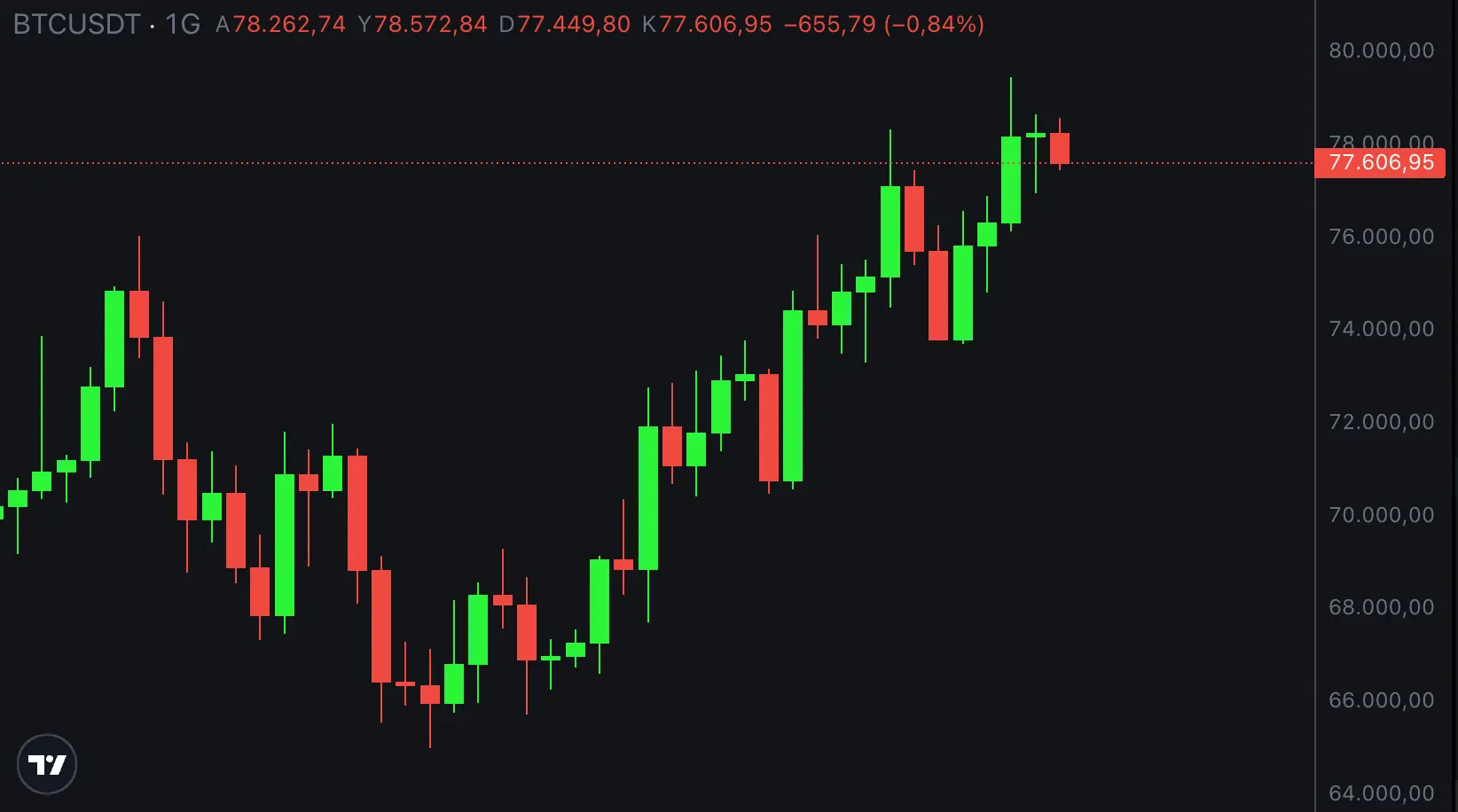
Bitcoin price dipped to 73,900 USD during the week and continued its upward move, testing the 79,400 USD level. In this setup, 73,900 USD stands out as the main near-term support area, while 79,400 USD remains the key resistance being monitored. Bitcoin is expected to close the week by approximately 3.5%. On the ETF side, total net inflows of +809.3 million USD were recorded over the week.
Ethereum Price Chart
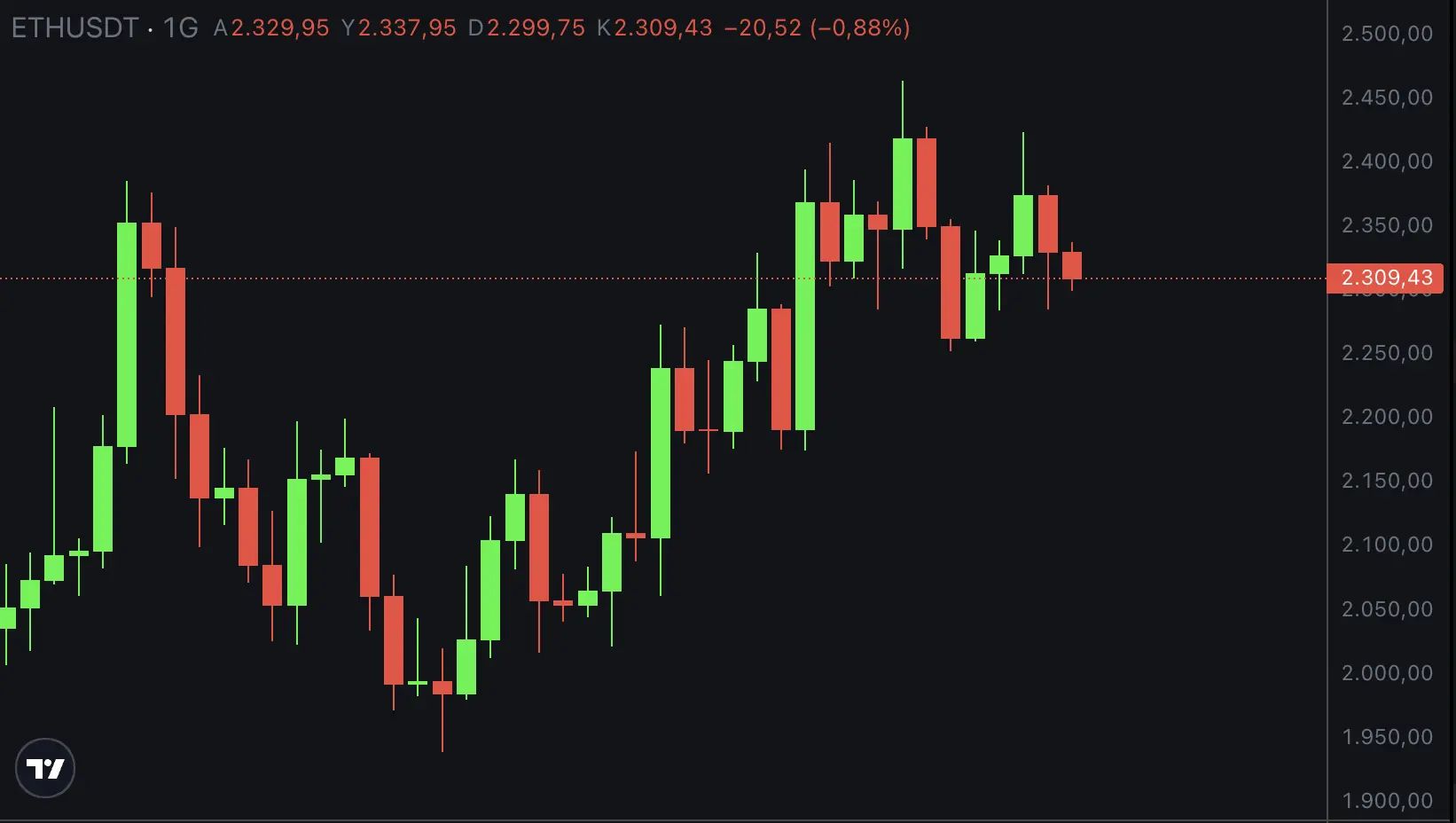
Ethereum price dipped to 2,260 USD during the week and tested the 2,450 USD level. In this setup, 2,260 USD stands out as the main near-term support area, while 2,500 USD is being watched as a strong resistance level. Ethereum is expected to close the week down by approximately 1%. On the ETF side, total net inflows of +131.7 million USD were recorded over the week.
 2026-04-24
Legal Notice
The information, comments, and evaluations contained in this content do not constitute investment advice. This content is not intended to be prescriptive in any way and is intended to provide general information. It does not constitute investment advice. CoinTR cannot be held responsible for any transactions made based on this information or any losses that may arise.
 Weekly Crypto Break May 8
Recommended
 Weekly NewsletterWeekly Crypto Break June 19 This week, the crypto asset market was shaped by the Ethereum ecosystem, stablecoin payment infrastructure, and institutional governance themes. Ethereum’s Q1 2026 data showed a strong outlook in user activity, transaction count, and tokenization despite the low-fee environment. On the stablecoin side, Trace Finance’s 32 million USD funding round highlighted growing institutional interest in cross-border payment and settlement infrastructure. The senior-level departure at the Eth2026-06-19
 Weekly NewsletterWeekly Crypto Break June 12 This week, the crypto asset market was shaped by institutional product development, tokenization, and the integration of blockchain into traditional sectors. Metaplanet’s move to acquire Siiibo Securities in order to develop Bitcoin-linked yield products showed that Bitcoin treasury companies are moving toward broader financial product models, while Citi’s launch of a blockchain-based marketplace for private company shares brought tokenization’s role in capital markets back into focus. Meanwhil2026-06-12
 Weekly NewsletterWeekly Crypto Break June 5 This week, the crypto asset market was shaped by Ethereum treasury strategies, tokenization, and institutional payment infrastructure. BitMine’s plan to raise 300 million USD to accelerate Ethereum accumulation and FG Nexus’ additional ETH sale brought diverging approaches to corporate Ethereum positions back into focus. On the traditional finance side, the tokenized deposit network planned by a JPMorgan and Citi-backed consortium drew attention, while in DeFi, ether.fi’s 100 mil2026-06-05


