
Weekly Crypto Break May 8

Weekly Newsletter
5 min read time
|Updated: 2026-05-08
This week, the
crypto market was shaped by two main themes: the US regulatory timeline and institutional-scale ecosystem investment. In the United States, White House messaging around a July 4 target for the Clarity Act brought regulatory uncertainty back into focus, while South Korea confirmed a 22% crypto tax framework scheduled to take effect in 2027, reinforcing the global policy agenda. On the ecosystem front, Aptos’ plan to deploy more than 50 million USD across ecosystem initiatives drew attention, and on the institutional side, miners’ financial performance and treasury strategies remained closely watched. In markets, Bitcoin was on track to finish the week higher, while Ethereum showed a more muted tone and ETF flows remained a key data point throughout the week.
Aptos Commits Over 50 Million USD to Its Ecosystem With Agentic AI and Market Infrastructure in Focus
Aptos Foundation and Aptos Labs announced a funding plan exceeding 50 million USD across the Aptos ecosystem. The initiative is described as spanning first-party products, core protocol infrastructure, research efforts, and strategic funding for partners working on trading and AI.
Within this scope,
Aptos is placing emphasis on use cases tied to institutional-grade market infrastructure and enabling autonomous systems to operate more effectively onchain. Highlighted examples include Decibel, an onchain perpetual exchange developed by Aptos Labs, and Shelby, positioned as a custody-layer approach designed for AI agents.
Why it matters
The announcement reinforces that growth across Layer 1 ecosystems is increasingly defined not only by application count, but also by market infrastructure and emerging agentic AI use cases, making Aptos’ strategic priorities more explicit.
South Korea Confirms Crypto Tax Timeline With a 22% Rate Starting in 2027
South Korea’s Ministry of Economy and Finance confirmed that the long-delayed crypto capital gains tax is set to take effect as planned on January 1, 2027. Under the current income tax framework, gains from crypto assets will be classified as “other income,” with a 22% tax applied to annual gains above 2.5 million won (around 1,800 USD), composed of 20% income tax plus a 2% local tax.
As part of implementation planning, the National Tax Service is reportedly preparing operational guidance and holding technical readiness meetings with major crypto platforms. A draft notice is expected to be opened for legislative review during 2026.
Why it matters The announcement reaffirms a timeline that has already been delayed twice. It is a key regulatory milestone for both platform reporting and compliance preparation, and for investors seeking clearer visibility on tax obligations heading into 2027.
Clarity Act Timeline Update as the White House Sets a July 4 Target
White House digital assets adviser Patrick Witt said the goal is to finalize the Digital Asset Market Clarity Act process by July 4. In this context, the Senate Banking Committee is expected to advance the bill out of committee later this month, and key points of disagreement are described as narrowing. A compromise framework on
stablecoin yield is also said to be taking shape, although neither the crypto industry nor the banking sector is reportedly fully satisfied with the direction.
Committee Chair Tim Scott characterized the process as being in the “final stretch,” and CFTC Chair Mike Selig expressed optimism around a July 4 signing timeline. On the Democratic side, Kirsten Gillibrand emphasized she would not support the bill without ethics provisions such as a crypto insider trading ban for public officials and lawmakers, and she also called for stronger safeguards around consumer protection and illicit and terror finance.
Why it matters An accelerated timeline would influence expectations for a clearer US framework across core issues such as SEC versus CFTC jurisdiction, stablecoin yield parameters, exchange and institutional requirements, and the overall enforcement approach. The key checkpoint is the May committee vote. If the bill clears that stage, the July 4 target may remain in play; if not, the process could slip into August.
American Bitcoin Reports an 81.8 Million USD Net Loss in Q1 2026 as Production Hits a Record and Treasury Grows
Trump-linked American Bitcoin (ABTC) reported a net loss of 81.8 million USD in the first quarter of 2026. The company posted 62.1 million USD in mining revenue, while total expenses reached 150.7 million USD. The largest driver of the loss was a 117.2 million USD impairment related to digital assets.
Operationally, ABTC said it produced a record 817 BTC during the quarter and added 803 BTC to its treasury, bringing total Bitcoin holdings to 7,021 BTC as of March 31. The company also noted its mining cost declined to 36,200 USD per BTC over the period.
Why it matters For companies following a “mining plus treasury” strategy, reported results can reflect not only operating performance but also accounting-driven valuation effects under reporting standards. ABTC emphasized it did not sell Bitcoin during the quarter, highlighting the distinction between non-cash accounting impacts and underlying operations.
Also see.
Bitcoin mining
Bitcoin Price Chart
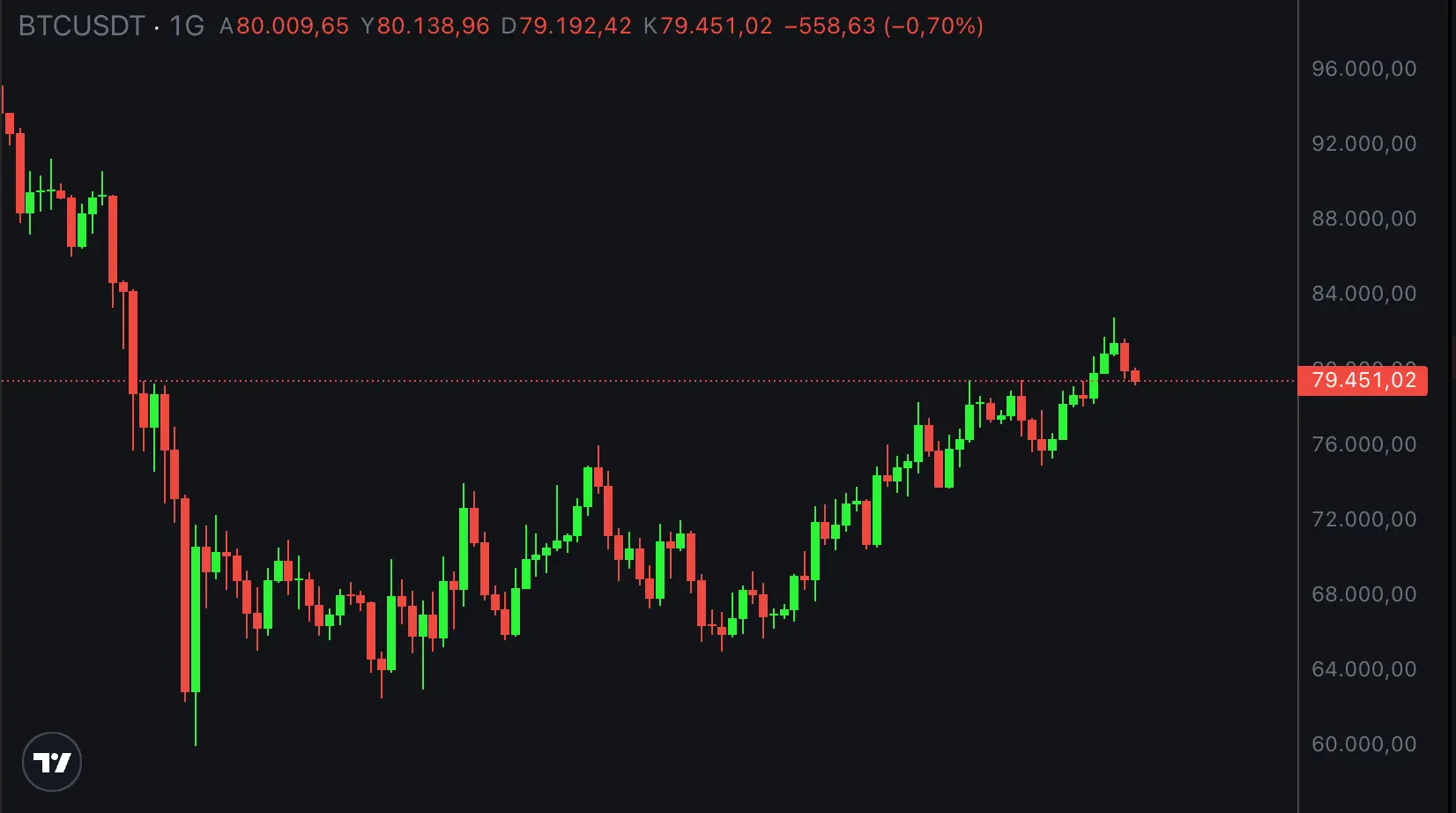
Bitcoin dipped to 77,000 USD during the week and extended its upside move, testing 82,600 USD. At the time of writing,
Bitcoin is trading around 79,400 USD. In this setup, 77,000 USD stands out as the main near-term support area, while 82,600 USD remains the key resistance level being monitored. Bitcoin is expected to close the week by approximately 3%. On the ETF side, total net inflows of +777.3 million USD were recorded over the week.
Ethereum Price Chart
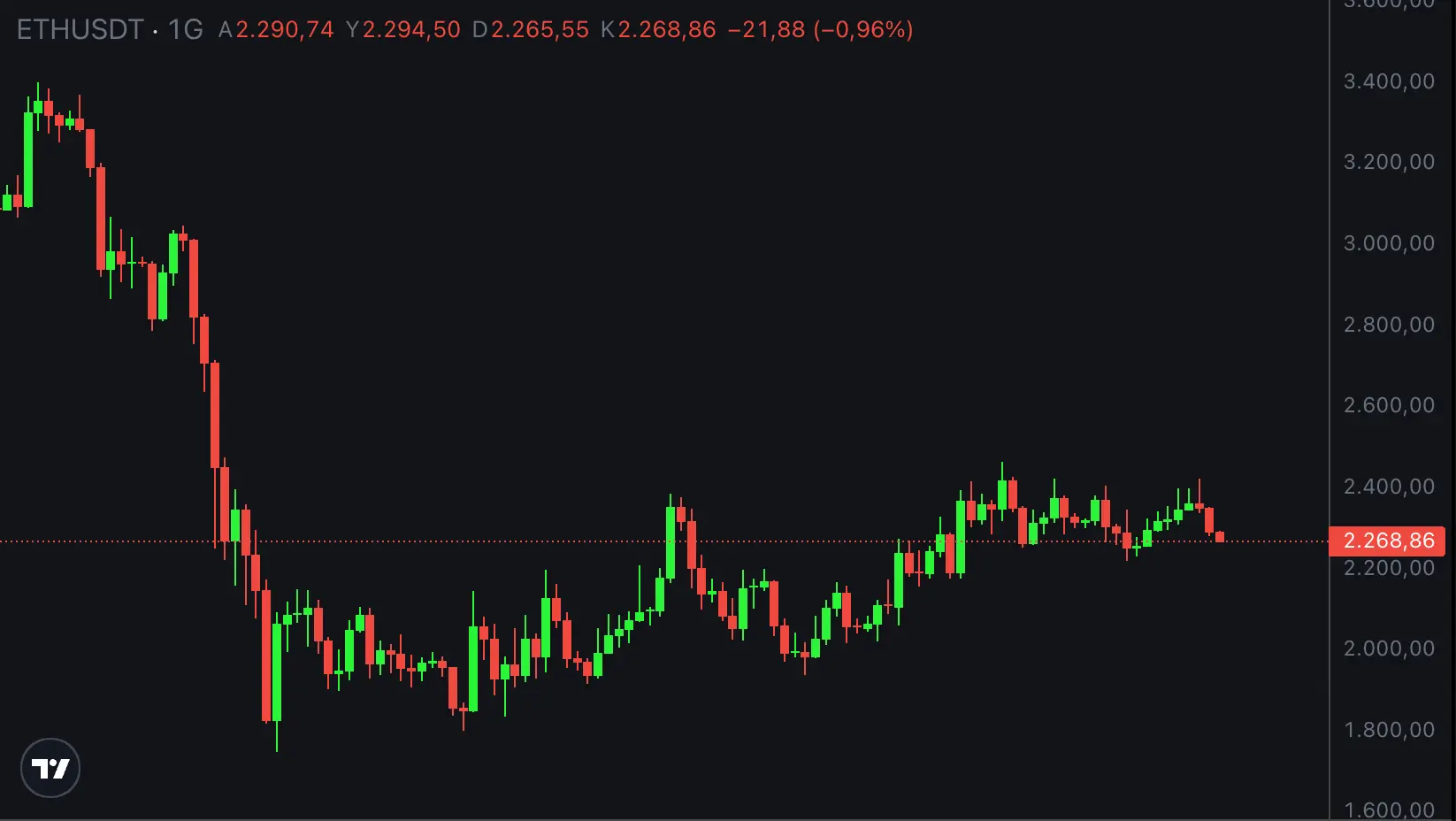
Ethereum dipped to the 2,200 USD area during the week and tested 2,400 USD. At the time of writing, Ethereum is trading around 2,268 USD. In this setup, 2,200 USD stands out as the main near-term support area, while 2,400 USD remains the key resistance level being monitored. Ethereum is expected to close the week down by approximately 0.4%, and it has shown a relatively weaker tone compared with Bitcoin. On the ETF side, total net inflows of +66.7 million USD were recorded over the week.
 2026-05-08
Legal Notice
The information, comments, and evaluations contained in this content do not constitute investment advice. This content is not intended to be prescriptive in any way and is intended to provide general information. It does not constitute investment advice. CoinTR cannot be held responsible for any transactions made based on this information or any losses that may arise.
 Weekly Crypto Break May 15
Recommended
 Weekly NewsletterWeekly Crypto Break September 11 This week in the cryptocurrency market, spot Bitcoin ETF flows in the U.S., changes to the U.S. Treasury’s long-term bond buyback program, stablecoin initiatives in the banking sector, and crypto asset regulations in Europe were among the key topics on the agenda. U.S.-listed spot Bitcoin ETFs recorded $3.8 billion in net inflows over a three-week period. The U.S. Treasury increased the size of liquidity-supporting buybacks for long-term bonds. U.S. Bank completed a live stablecoin transfer on2026-09-11
 Weekly NewsletterWeekly Crypto Break September 4 This week in the cryptocurrency market, spot Bitcoin ETF flows in the U.S., a new regulation in Türkiye covering crypto asset service providers, and developments related to traditional financial institutions expanding their digital asset services were among the key topics on the agenda. U.S.-listed spot Bitcoin ETFs closed August with the highest monthly net inflow recorded in 2026. In Türkiye, the Capital Markets Board expanded the scope of remote customer onboarding2026-09-04
 Weekly NewsletterWeekly Crypto Break August 28 The crypto market this week was shaped by ETF demand for Bitcoin, corporate capital management and increasing usage across blockchain networks. Bitcoin’s weekly price increase in dollar terms reached a historic level, while spot ETF inflows recording their strongest week since October 2025 indicated that institutional demand was accelerating again. On the Strategy side, a more flexible balance-sheet approach focused on strengthening cash reserves rather than making new Bitcoin purchases drew at2026-08-28
