
Weekly Crypto Break July 24

Weekly Newsletter
6 min read time
|Updated: 2026-07-24
Regulation, mass adoption, network security, and project governance shaped this week’s crypto agenda. The updated CLARITY Act draft brought political negotiations in the United States back into focus, while Telegram’s native crypto wallet plan strengthened the potential for crypto usage to reach a broader audience. The creation of the Bitcoin Security Consortium showed that institutional players are beginning to contribute more actively to the network’s long term security. Movement Labs’ restructuring filing also highlighted the risks surrounding token distribution and market making agreements. On the market side, Bitcoin and Ethereum traded near their weekly highs, while ETF flows recorded net inflows for both assets.
Updated CLARITY Act Draft Released
Republicans in the United States Senate released an updated draft of the CLARITY Act, which aims to establish a regulatory framework for the crypto market. The proposal combines texts developed by the Senate Banking and Agriculture committees and may soon advance to the Senate floor.
The new draft restricts senior public officials from issuing or promoting crypto assets in exchange for compensation while in office. However, the fact that the provision would be enforced solely by the Department of Justice, together with plans for the ethics rules to expire in January 2029, has drawn objections from Democrats.
The text also includes protections designed to prevent software developers who do not control user funds from being treated as money transmission service providers. Additional provisions have been introduced to combat illicit finance and strengthen the technical capabilities of law enforcement agencies.
Why it matters
The CLARITY Act could create a comprehensive framework for crypto asset classification,
market oversight, and the division of authority between regulatory institutions in the United States. However, the bill’s progress through the Senate appears to depend less on its technical provisions and more on whether political agreement can be reached over the ethics rules.
Telegram Prepares to Integrate a Native Crypto Wallet Across Its Applications
Telegram founder Pavel Durov announced plans to integrate the native Gram wallet, which allows users to retain direct control over their assets, across all Telegram applications this summer. The new structure aims to offer instant
crypto transfers without transaction fees to a user base of more than one billion people.
Unlike Telegram’s existing wallet, the new product is expected to become a direct part of the application rather than a separate bot that users must activate. By allowing users to control their private keys, the structure aims to remove the need to download a separate wallet and bring crypto transfers closer to the messaging experience.
However, technical details such as the exact release date, supported assets beyond Gram, account recovery mechanisms, and how free transactions will be funded have not yet been disclosed. The announcement should therefore be viewed as a large scale distribution plan rather than a completed product launch.
Why it matters
Telegram’s move could transform crypto wallets from technical standalone products into a feature within an everyday communication application, potentially accelerating adoption across a user base of more than one billion people. However, its actual impact will depend on ease of use, the security model, and regional availability.
Major Institutions Join Forces to Support Bitcoin Security
Nine institutions, including BlackRock, Coinbase, and Strategy, established the Bitcoin Security Consortium to support the long term security of the Bitcoin network. Other founding members include Fidelity Digital Assets, Galaxy, ARK Invest, Anchorage Digital, Block, and Blockstream.
Consortium members plan to allocate a total of 15 million USD over three years to support Bitcoin developers and security research. The first area of focus will be post quantum security solutions designed to protect existing cryptographic systems against potential future risks from quantum computers.
The consortium will not govern the
Bitcoin protocol or make decisions regarding specific network changes. Funding will be directed independently to existing open source developers and researchers, while responsibility for Bitcoin’s development will remain with the decentralized community.
Why it matters
Bitcoin’s security has long been supported by the work of the open source community. Direct funding from major asset managers, custody providers, and infrastructure companies shows that institutional participation is expanding beyond simply holding Bitcoin. Although quantum computing is not considered an immediate threat, beginning preparations early represents an important step toward the network’s long term resilience.
Movement Labs Files for Chapter 11 Protection
Movement Labs, the original developer of the Movement blockchain, filed for restructuring protection under Chapter 11 in the United States. According to court documents, the company holds less than 500,000 USD in assets, while its liabilities are estimated at between 1 million USD and 10 million USD.
The filing followed a controversial market making agreement connected to the launch of the MOVE token. Under the agreement, 66 million MOVE tokens came under the control of a market maker and were later sold into the market, placing significant pressure on the token price and triggering scrutiny of the project’s governance.
The bankruptcy process applies only to Movement Labs. Development and operational activities for the Movement network have been managed by a separate company, Move Industries, since December 2025.
Why it matters
The Movement Labs case shows how problems involving
token distribution, market making agreements, and corporate governance can directly affect the financial sustainability of a project company. Although the network continues to operate, the restructuring also demonstrates that a blockchain ecosystem and the commercial entity that originally developed it can follow separate paths.
Bitcoin Price Chart
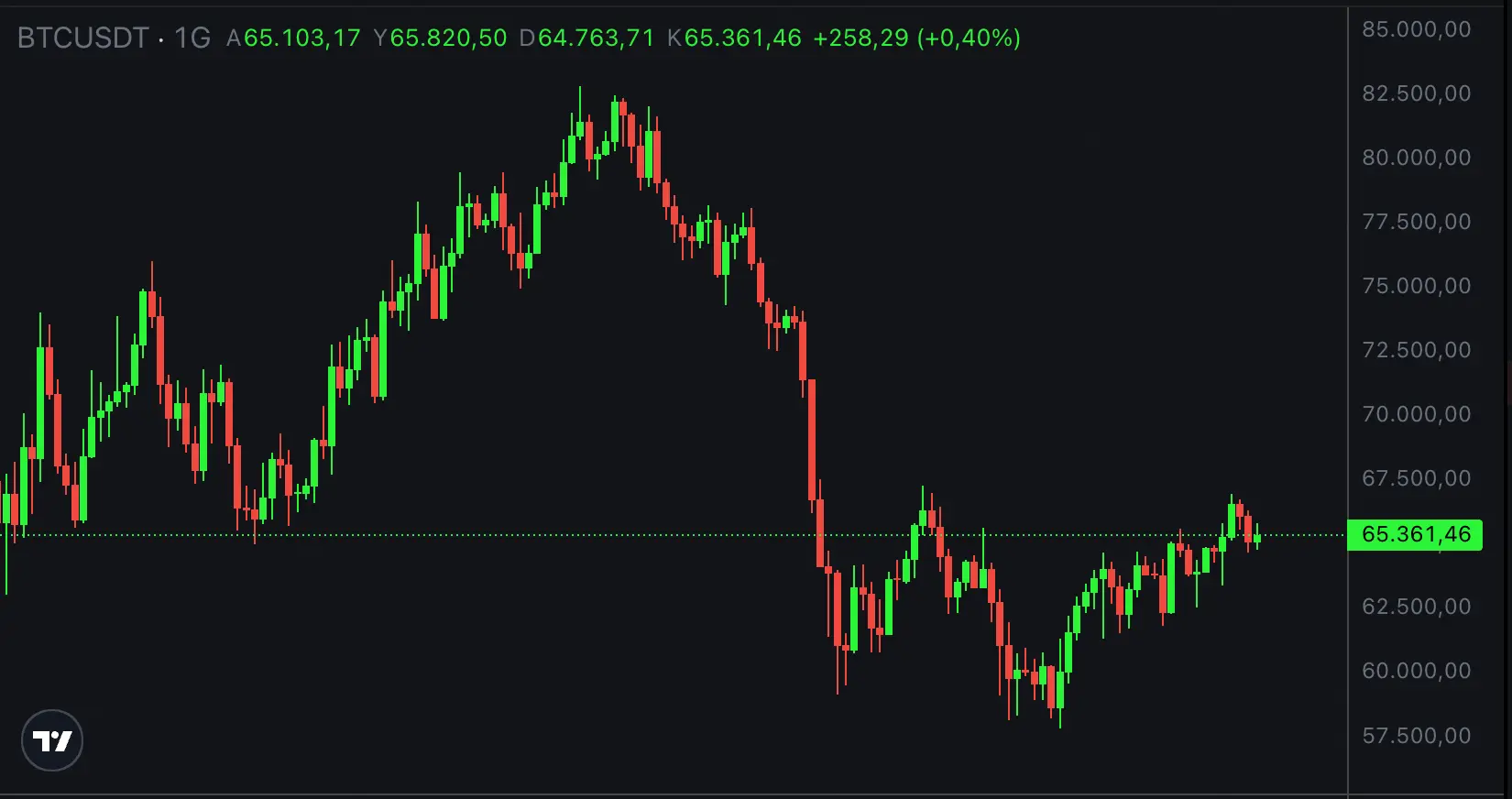
Bitcoin fell as low as 62,800 USD during the week and tested the 66,800 USD area during its upward attempts. At the time of writing, Bitcoin is trading around 65,300 USD.
From a technical perspective, the price trading near its 50 day moving average makes the 63,000 to 65,000 USD range an important short term support area. On the upside, the 66,800 to 68,000 USD region remains the first major resistance zone to overcome. On the ETF side, total weekly net inflows of approximately 274 million USD were recorded.
Ethereum Price Chart
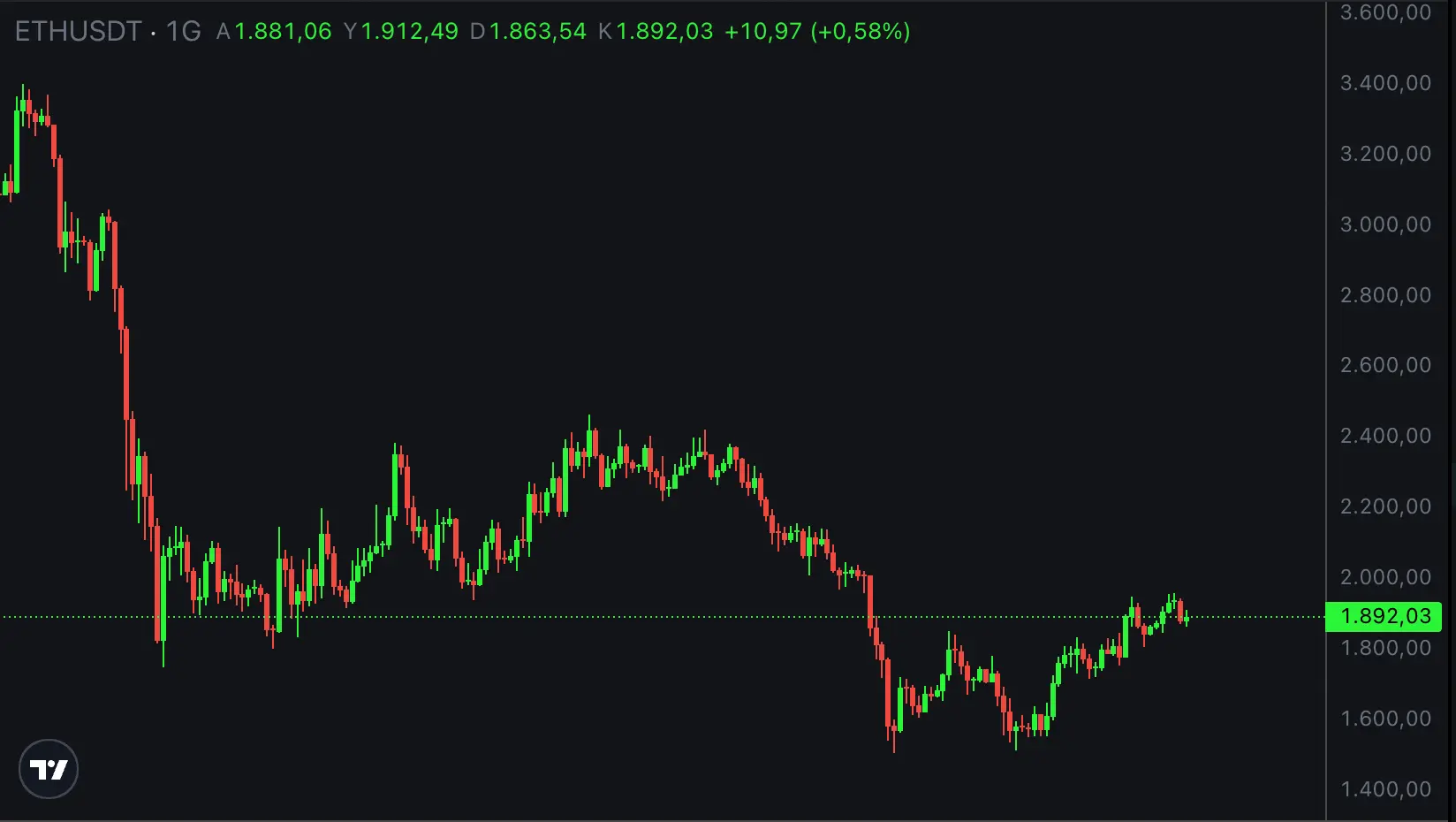
Ethereum fell as low as 1,800 USD during the week and tested the 1,950 USD area during its upward attempts. At the time of writing, Ethereum is trading around 1,888 USD.
From a technical perspective, the 50 day exponential moving average at approximately 1,831 USD makes the 1,800 to 1,830 USD range an important support area. On the upside, the 1,930 to 1,950 USD region, where the 100 day exponential moving average and the weekly high converge, represents the first major resistance zone to overcome. On the ETF side, total weekly net inflows of approximately 174.5 million USD were recorded.
 2026-07-24
Legal Notice
The information, comments, and evaluations contained in this content do not constitute investment advice. This content is not intended to be prescriptive in any way and is intended to provide general information. It does not constitute investment advice. CoinTR cannot be held responsible for any transactions made based on this information or any losses that may arise.
 Weekly Crypto Break July 31
Recommended
 Weekly NewsletterWeekly Crypto Break September 11 This week in the cryptocurrency market, spot Bitcoin ETF flows in the U.S., changes to the U.S. Treasury’s long-term bond buyback program, stablecoin initiatives in the banking sector, and crypto asset regulations in Europe were among the key topics on the agenda. U.S.-listed spot Bitcoin ETFs recorded $3.8 billion in net inflows over a three-week period. The U.S. Treasury increased the size of liquidity-supporting buybacks for long-term bonds. U.S. Bank completed a live stablecoin transfer on2026-09-11
 Weekly NewsletterWeekly Crypto Break September 4 This week in the cryptocurrency market, spot Bitcoin ETF flows in the U.S., a new regulation in Türkiye covering crypto asset service providers, and developments related to traditional financial institutions expanding their digital asset services were among the key topics on the agenda. U.S.-listed spot Bitcoin ETFs closed August with the highest monthly net inflow recorded in 2026. In Türkiye, the Capital Markets Board expanded the scope of remote customer onboarding2026-09-04
 Weekly NewsletterWeekly Crypto Break August 28 The crypto market this week was shaped by ETF demand for Bitcoin, corporate capital management and increasing usage across blockchain networks. Bitcoin’s weekly price increase in dollar terms reached a historic level, while spot ETF inflows recording their strongest week since October 2025 indicated that institutional demand was accelerating again. On the Strategy side, a more flexible balance-sheet approach focused on strengthening cash reserves rather than making new Bitcoin purchases drew at2026-08-28
