
Weekly Crypto Break April 17

Weekly Newsletter
6 min read time
|Updated: 2026-04-17
This week in the
crypto market, the CLARITY Act returned to the spotlight on the regulatory front, while debates around the USDT–USDC landscape and Drift Protocol continued to hold relevance. On the mining side, record selling activity in Q1 2026 pointed to the intensity of operational pressure across the sector. Meanwhile, the intersection of Bitcoin and quantum computing remained a key theme, bringing long-term security discussions back into sharper focus.
Clarıty Act: Yield Clause Delayed, “Idle Balance” Ban Remains
Updated stablecoin yield provisions under the CLARITY Act are reportedly not expected to be released this week and may slip into next week. Senator Thom Tillis is said to prefer not to make draft text public before the Senate Banking Committee timeline is clarified, while outreach with banking groups and crypto companies is continuing.
The draft framework appears to preserve the earlier approach. Rewards or yield tied purely to holding idle
stablecoin balances would be prohibited, while reward models linked to activity, such as transactions, would still be permitted.
Why it matters
This provision directly shapes the boundaries for “passive yield” campaigns and reward programs in stablecoins, making it a closely watched point for both banking competition concerns and product design decisions across crypto platforms.
Drift Related Lawsuit Targets Circle Over “USDC Not Frozen” Claims
USDC issuer Circle is facing a class action lawsuit led by a Drift investor following the roughly 280 million USD exploit at Drift Protocol on April 1. The lawsuit alleges Circle did not act in time to freeze stolen funds, and that attackers were able to move roughly 230 million USD worth of USDC from Solana to Ethereum using Circle’s cross-chain transfer infrastructure.
The complaint includes claims such as negligence and allegations akin to aiding and abetting. It also points to prior instances where Circle was able to freeze USDC wallets, raising questions around technical capability and decision-making. Circle has not publicly responded to the lawsuit at the time of writing.
Why it matters The case puts a spotlight on when and under what conditions stablecoin issuers can or should intervene, including freezing actions. On the other hand, freezing without legal instruction can raise concerns about arbitrariness. On the other, delayed intervention during an exploit can amplify losses. The balance between these considerations is closely monitored from a regulatory and market integrity standpoint.
Public Miners Log Record BTC Sales in Q1 2026
Publicly traded Bitcoin miners are reported to have sold more than 32,000 BTC in the first quarter of 2026. This total is said to exceed the aggregate BTC sold across all of 2025, highlighting a notable concentration of selling activity within a single quarter.
During this period, hashprice (revenue per unit of hashpower) has remained below 35 USD per PH per day. The current level of roughly 33 USD per PH per day is described as increasing pressure on higher-cost operators, potentially pushing around 20% of the sector into operating at a loss.
Why it matters Record-scale selling reinforces that miner behavior is shaped not only by price action but also by operating costs, energy pricing, intensifying network competition, and block reward economics. The ongoing decline in miner reserves also suggests that miner supply dynamics will remain an important variable to monitor going forward.
Also see.
Bitcoin mining
Tether Backs Drift With Up to 127.5 Million USD for User Recovery
Drift Protocol said it has secured a support package of up to 127.5 million USD with
Tether to help compensate user losses and prepare for reopening following the April 1 exploit. In addition, roughly 20 million USD in further support is expected from other partners.
Key components include a 100 million USD revenue-linked credit facility, ecosystem support, and financing for market makers. These resources are intended to flow into a recovery pool that is expected to grow over time, with the goal of covering user losses reported at around 295 million USD through a combination of platform revenues and any recoverable assets.
Drift also said it plans to introduce a separate recovery token for affected users, noting that transferability could provide earlier liquidity options. For the reopening phase, Drift indicated it will shift its primary stablecoin preference from USDC to USDT, and that Tether will support liquidity through market-making activity.
Why it matters The plan shows that post-exploit recovery is not limited to covering losses. It also involves rebuilding liquidity, updating stablecoin infrastructure choices, and redesigning recovery instruments for users. The move toward USDT, amid ongoing debate around intervention and freezing expectations on the USDC side, is also a notable example of how operational considerations can shape product and market structure decisions.
Adam Back Says a Post-Quantum Shift Could Clarify Satoshi’s Accessible Balance
Blockstream CEO Adam Back argued that if
Bitcoin eventually transitions to a post-quantum address format, it could become clearer how much of the Bitcoin associated with Satoshi Nakamoto is actually accessible. In his view, such a shift would require users who want to preserve their holdings to move funds to the new address format, while balances that do not migrate could effectively be treated as lost.
Back also emphasized that quantum computers capable of threatening Bitcoin’s cryptography are likely still far away, potentially at least 20 years out. In the same context, it was noted that Jameson Lopp and collaborators have published a Bitcoin Improvement Proposal aimed at restricting future movement of certain balances held in quantum-vulnerable address types.
Why it matters
The quantum risk discussion is not only a theoretical security topic. It can also influence market perceptions in a future migration scenario, including which balances are truly active versus effectively unrecoverable. As a result, both technical preparation and governance considerations are being closely watched across the ecosystem.
Bitcoin Price Chart
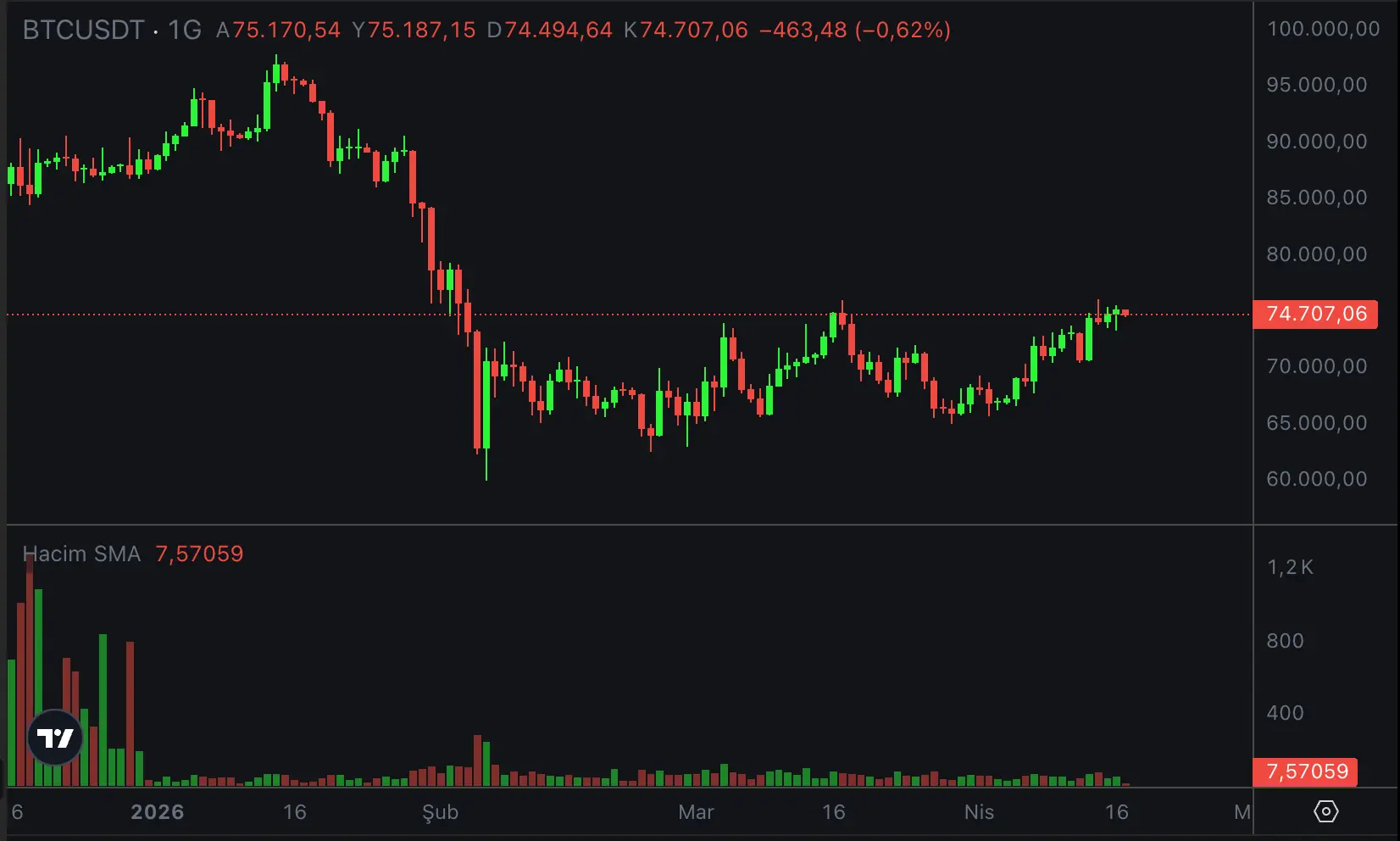
Bitcoin price dipped to 70,600 USD during the week, then staged a strong recovery and tested 75,600 USD. At the time of writing, Bitcoin is trading near 74,700 USD. In this setup, 70,600 USD stands out as the main near-term support area, while 75,600 USD remains the key resistance level being monitored. Bitcoin is expected to close the week by approximately 3.5%.
On the ETF side, total net inflows of +332.6 million USD were recorded over the week.
Ethereum Price Chart
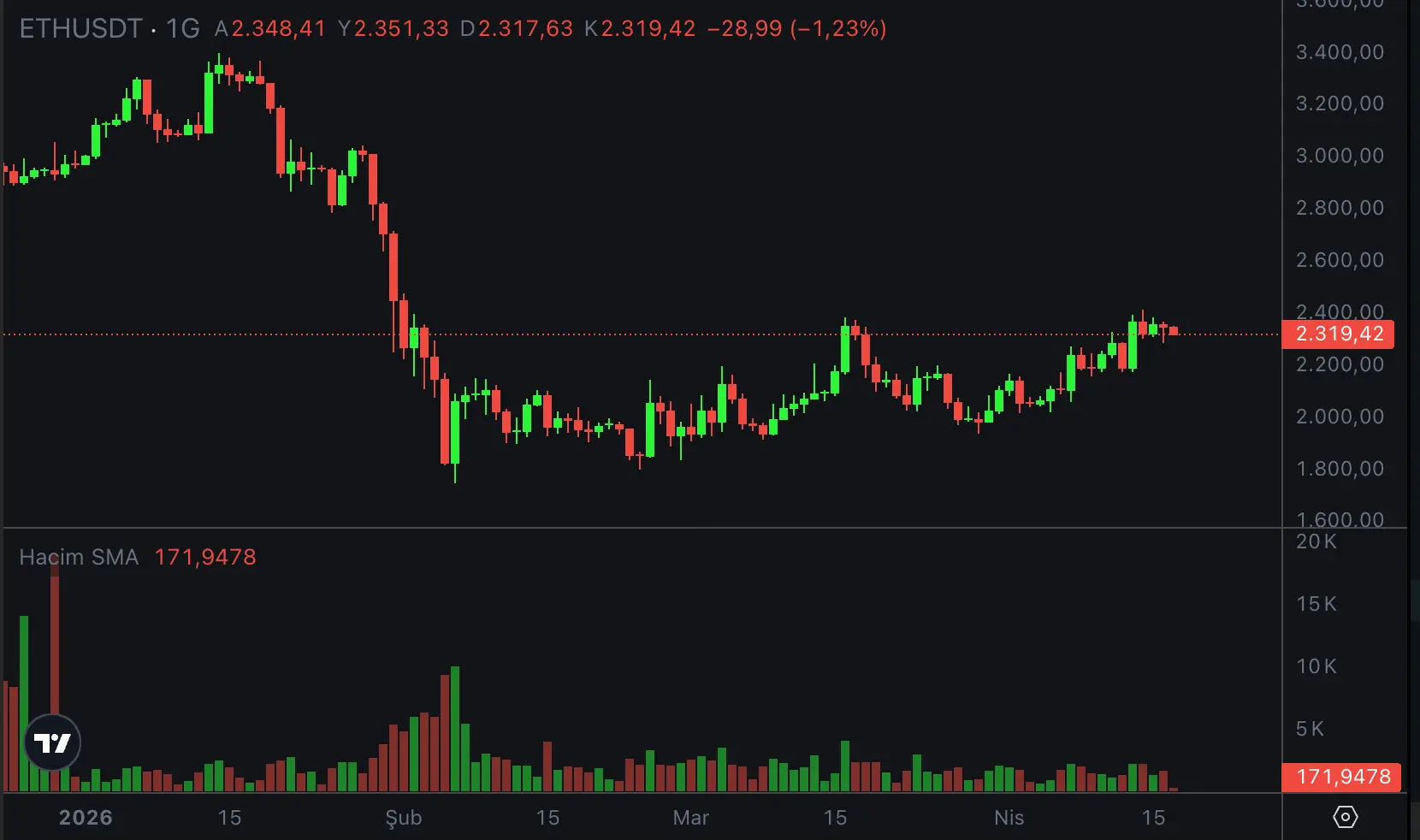
Ethereum price dipped to 2,180 USD during the week, then strengthened and tested the 2,400 USD level. Ethereum is expected to close the week by approximately 5.5%, showing a relatively stronger performance than Bitcoin. In this setup, 2,180 USD stands out as the key near-term support area, while 2,400 USD remains a clear resistance level.
On the ETF side, total net inflows of +148.5 million USD were recorded over the week.
 2026-04-17
Legal Notice
The information, comments, and evaluations contained in this content do not constitute investment advice. This content is not intended to be prescriptive in any way and is intended to provide general information. It does not constitute investment advice. CoinTR cannot be held responsible for any transactions made based on this information or any losses that may arise.
 Weekly Crypto Break April 24
Recommended
 Weekly NewsletterWeekly Crypto Break September 11 This week in the cryptocurrency market, spot Bitcoin ETF flows in the U.S., changes to the U.S. Treasury’s long-term bond buyback program, stablecoin initiatives in the banking sector, and crypto asset regulations in Europe were among the key topics on the agenda. U.S.-listed spot Bitcoin ETFs recorded $3.8 billion in net inflows over a three-week period. The U.S. Treasury increased the size of liquidity-supporting buybacks for long-term bonds. U.S. Bank completed a live stablecoin transfer on2026-09-11
 Weekly NewsletterWeekly Crypto Break September 4 This week in the cryptocurrency market, spot Bitcoin ETF flows in the U.S., a new regulation in Türkiye covering crypto asset service providers, and developments related to traditional financial institutions expanding their digital asset services were among the key topics on the agenda. U.S.-listed spot Bitcoin ETFs closed August with the highest monthly net inflow recorded in 2026. In Türkiye, the Capital Markets Board expanded the scope of remote customer onboarding2026-09-04
 Weekly NewsletterWeekly Crypto Break August 28 The crypto market this week was shaped by ETF demand for Bitcoin, corporate capital management and increasing usage across blockchain networks. Bitcoin’s weekly price increase in dollar terms reached a historic level, while spot ETF inflows recording their strongest week since October 2025 indicated that institutional demand was accelerating again. On the Strategy side, a more flexible balance-sheet approach focused on strengthening cash reserves rather than making new Bitcoin purchases drew at2026-08-28
