
Weekly Crypto Break April 3

Weekly Newsletter
5 min read time
|Updated: 2026-04-03
This week, the crypto asset market saw a heavy news flow shaped by security and institutional framework themes. In the Solana ecosystem, the large-scale security incident involving Drift brought renewed focus to critical questions around security and operational processes. In the United States, Coinbase’s conditional approval in its trust charter process signaled that crypto firms may be moving toward a more institutional oversight framework in custody and market infrastructure. On the corporate treasury side, Metaplanet’s Bitcoin purchases stood out, while advances in quantum computing brought back discussions around Bitcoin’s long-term cryptographic resilience.
Major Security Incident at Drift Protocol: Approximately 285 Million USD Impact
Drift, a
Solana based derivatives protocol, experienced a security incident on April 1, during which approximately 285 million USD in assets were withdrawn. After detecting unusual onchain activity, the protocol temporarily paused deposits and withdrawals, and the incident is described as having unfolded in under 20 minutes. Assets reported as affected include USDC and USDT, as well as JUP, WBTC, and WETH.
Technical commentary suggests the incident may be linked less to a classic “smart contract vulnerability” and more to the misuse of pre-approved transaction authorizations, alongside a potential compromise of administrative privileges associated with the protocol’s security governance structure. This framing brought attention back to the importance of operational security and human-factor risks, in addition to code-level audits.
Why it matters The incident underscores that risk is not limited to smart contract reviews. Operational layers such as multi-signature authority setups, signing procedures, device security, and transaction approval workflows can be just as critical. It also highlights how large asset movements across networks can happen quickly, making speed and coordination decisive factors in incident response.
Coinbase Receives Conditional Approval for a US Trust Charter
The Office of the Comptroller of the Currency (OCC) is reported to have granted conditional approval for Coinbase’s application for a US trust charter. Coinbase emphasized that this does not mean it is becoming a commercial bank, and noted that it does not plan to accept deposits or operate under a fractional reserve model.
According to the company, the goal is to bring its custody and market infrastructure activities under a more cohesive federal level oversight framework. Coinbase also indicated that its existing licensed structure in New York will remain in place.
Why it matters This development signals that crypto firms, particularly in custody and infrastructure, may be moving toward a more standardized licensing framework at the federal level. It also highlights a path toward deeper integration with traditional finance through regulated custody and infrastructure licensing, without necessarily shifting into full scale banking.
Metaplanet Buys 5,075 BTC in Q1 2026 and Ranks Among the Largest Public Treasuries
Tokyo-listed Metaplanet reported purchasing a total of 5,075 BTC in the first quarter of 2026. The company said these purchases totaled approximately 405 million USD, with an average cost of 79,898
USD/BTC. Following these additions, Metaplanet is reported to have moved into third place among the largest public company Bitcoin treasuries.
Metaplanet’s total Bitcoin holdings increased to 40,177 BTC, while the company disclosed a total cost basis of approximately 4.18 billion USD and an average cost of 104,106 USD per BTC. The firm also reported operating income of 2.97 billion JPY (around 18.6 million USD) in Q1 FY2026 from a separate “Bitcoin Income Generation” business line, which it describes as using collateralized options strategies and being managed separately from its long-term treasury holdings.
Quantum Computing Debate Returns as Dormant Bitcoin Could Be Exposed
As Google highlighted significant progress in quantum computing, the discussion around quantum risk in the Bitcoin ecosystem resurfaced, driven by the long-term possibility that quantum advances could weaken today’s cryptography. In this context, long-dormant
Bitcoin wallets are being discussed as theoretically more exposed, including wallets often attributed to Satoshi Nakamoto.
The discussion also references estimates that roughly 2.3 million BTC may be effectively immobile due to lost private keys and early user access issues, while Satoshi is often estimated to control around 1.1 million BTC.
Why it matters This narrative brings renewed attention to the medium- to long-term need for a transition toward quantum-resistant cryptography. At the same time, how the network should handle long-dormant wallets remains a technically and governance wise sensitive topic, making potential solution paths an area the ecosystem continues to watch closely.
Bitcoin Price Chart
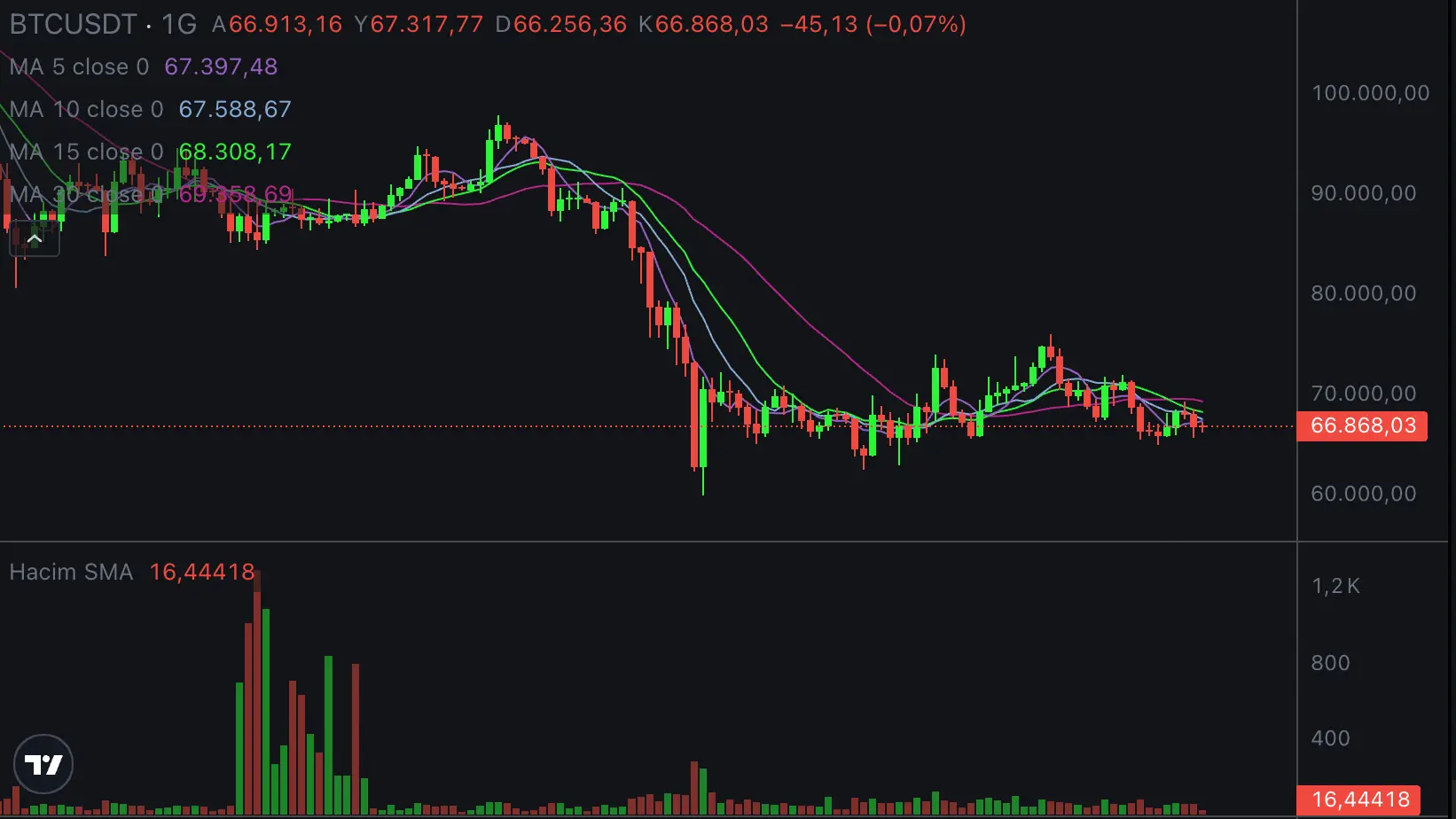
Bitcoin price tested the 69,130 USD level during the week but failed to hold above it, slipping back into a lower range. At the time of writing, Bitcoin is trading at around 66,800 USD. In this setup, 70,000 USD stands out as a key near-term resistance level, while the 65,000 USD area remains the main support zone being monitored. Bitcoin is expected to close the week down by approximately 1.2%.
On the ETF side, total net inflows of 22.2 million USD were recorded over the week.
Ethereum Price Chart
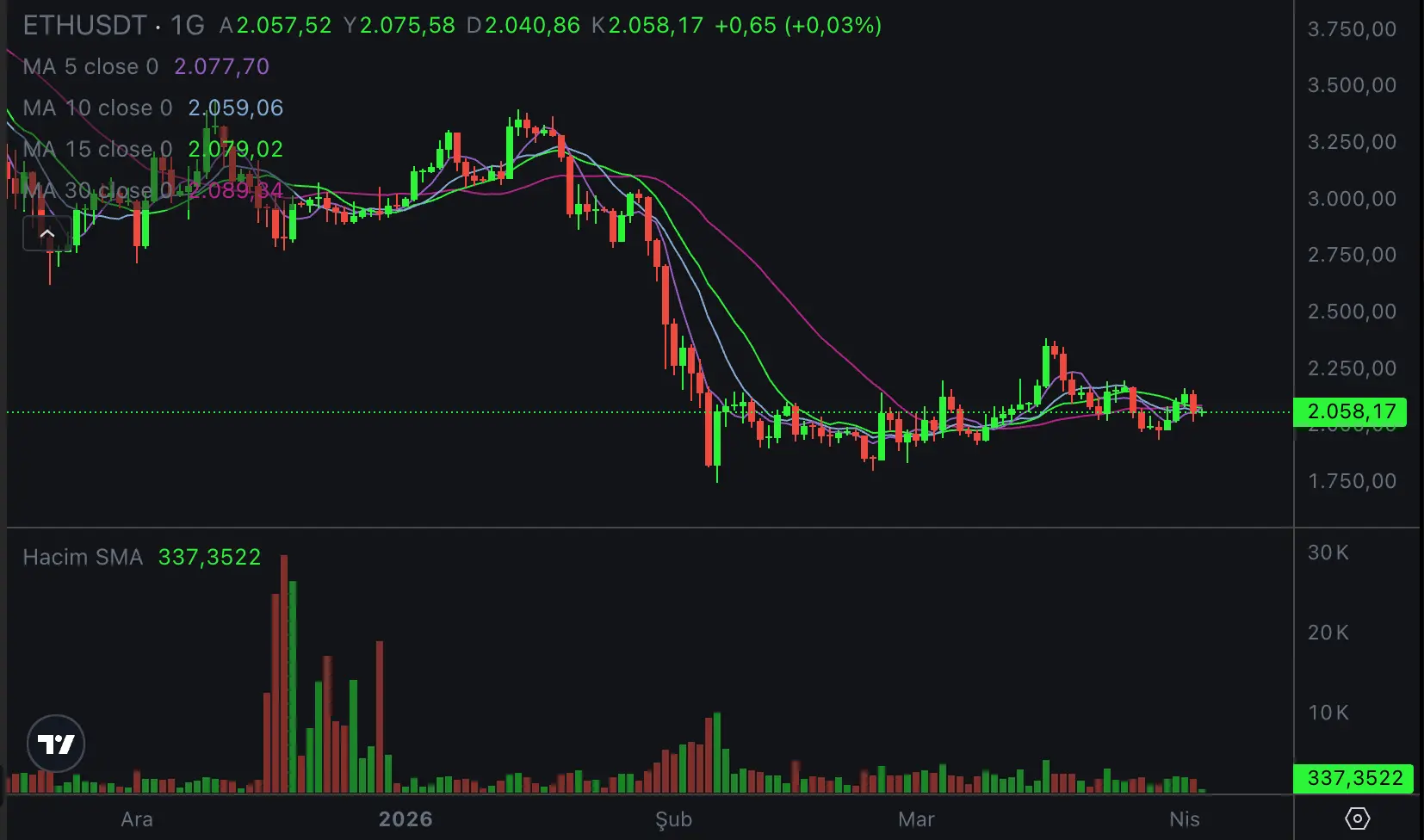
Ethereum price showed a relatively stronger setup than Bitcoin this week, dipping to 1,958 USD while also testing 2,130 USD. At the time of writing, Ethereum is trading around 2,050 USD. In this setup, 2,130 USD stands out as a key near-term resistance level, while the 1,958 USD area remains the main support zone being monitored. Ethereum is expected to close the week by approximately 0.75%.
On the ETF side, total net outflows of 42.1 million USD were recorded over the week.
 2026-04-03
Legal Notice
The information, comments, and evaluations contained in this content do not constitute investment advice. This content is not intended to be prescriptive in any way and is intended to provide general information. It does not constitute investment advice. CoinTR cannot be held responsible for any transactions made based on this information or any losses that may arise.
 Weekly Crypto Break April 10
Recommended
 Weekly NewsletterWeekly Crypto Break September 11 This week in the cryptocurrency market, spot Bitcoin ETF flows in the U.S., changes to the U.S. Treasury’s long-term bond buyback program, stablecoin initiatives in the banking sector, and crypto asset regulations in Europe were among the key topics on the agenda. U.S.-listed spot Bitcoin ETFs recorded $3.8 billion in net inflows over a three-week period. The U.S. Treasury increased the size of liquidity-supporting buybacks for long-term bonds. U.S. Bank completed a live stablecoin transfer on2026-09-11
 Weekly NewsletterWeekly Crypto Break September 4 This week in the cryptocurrency market, spot Bitcoin ETF flows in the U.S., a new regulation in Türkiye covering crypto asset service providers, and developments related to traditional financial institutions expanding their digital asset services were among the key topics on the agenda. U.S.-listed spot Bitcoin ETFs closed August with the highest monthly net inflow recorded in 2026. In Türkiye, the Capital Markets Board expanded the scope of remote customer onboarding2026-09-04
 Weekly NewsletterWeekly Crypto Break August 28 The crypto market this week was shaped by ETF demand for Bitcoin, corporate capital management and increasing usage across blockchain networks. Bitcoin’s weekly price increase in dollar terms reached a historic level, while spot ETF inflows recording their strongest week since October 2025 indicated that institutional demand was accelerating again. On the Strategy side, a more flexible balance-sheet approach focused on strengthening cash reserves rather than making new Bitcoin purchases drew at2026-08-28
