
What is Layer 2? Layer 2 Coins

Cryptocurrency Exchange
6 min read time
|Updated: 2026-02-24
Why do transaction fees on Ethereum sometimes reach record levels? Why do transactions slow down when network congestion increases? The fundamental reason for this is the scalability limitations of blockchains. As the number of transactions increases, the load on the main network grows and gas fees rise. Layer-2 solutions have been developed to mitigate this problem. So what is Layer-2, and how does it make blockchains faster and more cost-effective?
What is Layer 2?
Layer 2 is a second-layer solution built on top of the main blockchain (Layer 1) that aims to increase scalability by reducing transaction load. These structures aim to reduce congestion by processing a significant portion of transactions outside the main chain. Transaction results are then transmitted to the main network, where the verification process is completed.
Layer 2 solutions leverage the security model of the
Layer 1 network they are built upon. This allows for higher transaction capacity and lower transaction costs without compromising the security and decentralization principles provided by the underlying network. It offers an alternative approach to network congestion and high fees, particularly during periods of high usage.
These solutions can be implemented using different technical methods. The goal is to reduce the load on the main blockchain, increase transaction speed, and improve the user experience. Layer-2 technologies are considered an important part of the scalability debate in the blockchain ecosystem.
What is Layer 2 Blockchain?
Layer 2 is a second-layer scaling solution built on top of the main blockchain. This architecture aims to increase the network's capacity without requiring transactions to be executed directly on the main chain.
Layer-2 solutions are not uniform; some models operate with a sidechain structure connected to the main chain, while others adopt an off-chain execution approach. Their common feature is that they increase the system's efficiency by separating the transaction execution process from the main network.
How Does Layer 2 Blockchain Work?
Layer-2 processes transactions outside the main chain and transmits the results to Layer-1 in bulk. This reduces transaction density and ensures more efficient network operation. This model is particularly popular on heavily used networks such as
Ethereum.
The Layer-2 process generally consists of the following steps:
-
Executing transactions on Layer-2: User transactions are first performed on the second-layer network. At this stage, transactions are not written to the main chain individually.
-
Batching transactions: Multiple transactions are grouped into a single package. This ensures that less data is written to the chain.
-
Transmission of proof or summary data to the main chain: The Layer-2 network generates cryptographic proof or summary data showing that the transactions are valid and sends it to Layer-1.
-
Verification and finalization on the main chain: The main network verifies the transmitted data and securely records the transactions.
Layer 2 Solutions
Optimistic Rollup and ZK Rollup models are among the Layer 2 solutions commonly used on the Ethereum network. These structures aim to increase transaction capacity and reduce costs by processing transactions outside the main chain.
Optimistic Rollup assumes transactions are valid by default and initiates a detailed verification process only in case of a challenge (fraud proof). ZK Rollup, on the other hand, verifies transactions using cryptographic validity proofs and does not require an additional challenge period. Both models are Layer-2 techniques developed to increase scalability.
Layer 2 Coins
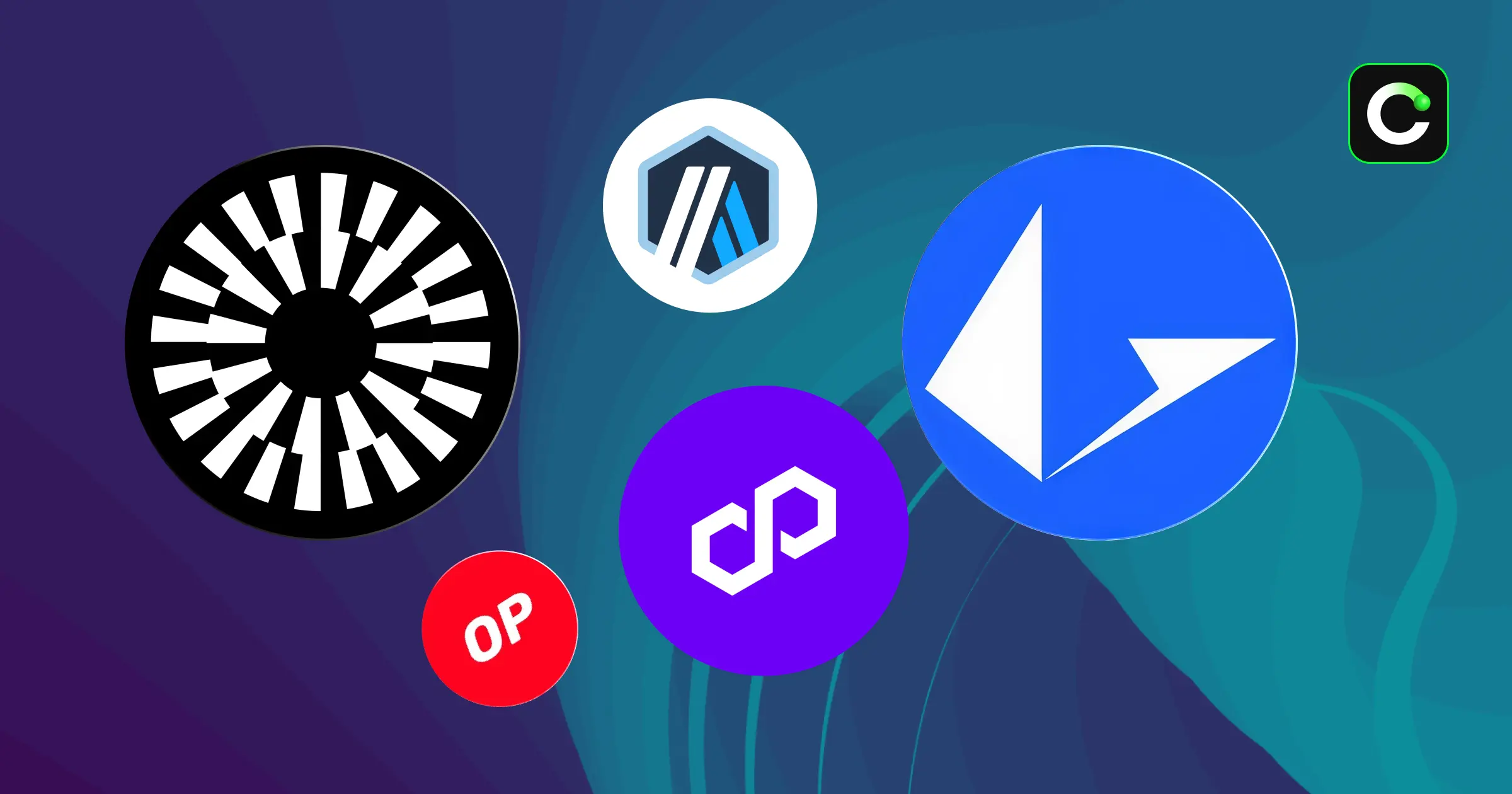
Layer-2 coins are the native crypto assets of Layer-2 scaling solutions. These tokens are typically used for paying transaction fees, staking, governance, and network incentive mechanisms. Layer-2 projects developed within the Ethereum ecosystem, in particular, aim to offer the advantages of low cost and high speed.
Some prominent Layer-2 coins are:
-
Polygon (POL): A scaling solution developed for Ethereum. It offers lower transaction fees and fast transfers. The POL token is used for governance and on-chain transactions.
-
Arbitrum (ARB): A Layer-2 solution powered by Optimistic Rollup technology. The ARB token plays a role in governance and ecosystem decisions.
-
Optimism (OP): A Rollup project that aims to execute transactions on Ethereum at a lower cost. The OP token is used in network governance.
-
Immutable X (IMX): A Layer-2 protocol developed for NFT transactions. It aims to reduce high gas fees.
-
Loopring (LRC): A zkRollup-based Layer-2 solution for decentralized exchanges. The LRC token plays a role in staking and protocol usage.
Layer-2 coins are the building blocks of projects that offer solutions to scalability issues in the blockchain ecosystem. They are widely used in DeFi, NFT, and Web3 applications thanks to their ability to increase transaction capacity while reducing costs.
FAQ
Why does Layer 2 exist, and what does it solve?
Layer 2 was developed to solve the problems of high transaction fees and network congestion on main blockchains.
How does Layer 2 work?
Layer 2 performs transactions outside the main blockchain (Layer 1), then transmits the transaction summary or cryptographic proof to the main network. For example, on Ethereum, transactions are first processed on the second layer, then recorded in bulk on the main chain. This increases speed and reduces transaction costs.
What is the difference between Layer 2 and Layer 1?
Layer-1 is the main blockchain network where transactions occur directly (e.g., Ethereum). Network security and data validation are provided at this layer. Layer-2 is built on top of Layer-1; it processes transactions outside the main chain, offering speed and cost advantages. It largely derives its security from Layer-1 but makes the network more scalable.
Is Layer 2 secure?
Layer-2 solutions are generally considered secure. Rollup-based models derive their security largely from Layer-1. However, some structures, such as sidechains, have their own security mechanisms. Therefore, the security level can vary depending on the technology used.
What is a rollup?
A rollup is a Layer-2 scaling method that processes transactions in batches outside the main blockchain and transmits the results to the main network as a single data package or cryptographic proof.
What is an Optimistic Rollup?
An Optimistic Rollup is a Layer-2 scaling method that assumes transactions are valid by default. Transactions are processed in batches off the main chain; if an error is detected, the “fraud proof” mechanism kicks in. This model aims to reduce transaction costs.
What is a ZK Rollup?
ZK-Rollup (Zero-Knowledge Rollup) is a Layer-2 scaling method that processes transactions outside the main blockchain and transmits their validity to the main network using cryptographic proof (zero-knowledge proof). In this model, transactions are mathematically verified, eliminating the need for an additional challenge period. It is widely used on Ethereum and offers both security and speed advantages.
What is the difference between Optimistic and ZK rollups?
Optimistic Rollup assumes transactions are valid by default and allows for a challenge (fraud proof) period if an error occurs. ZK-Rollup, on the other hand, verifies transactions with cryptographic validity proof and does not require a challenge period. Therefore, transactions in ZK-Rollup typically finalize faster.
 2026-02-24
Legal Notice
The information, comments, and evaluations contained in this content do not constitute investment advice. This content is not intended to be prescriptive in any way and is intended to provide general information. It does not constitute investment advice. CoinTR cannot be held responsible for any transactions made based on this information or any losses that may arise.
 5 General Approaches to Starting in Crypto with Small Amounts
Recommended
 Cryptocurrency ExchangeWhat is a Stablecoin? 2026 Stablecoin List The sharp price fluctuations in cryptocurrency markets are driving investors toward more stable alternatives. In this context, stablecoins stand out among digital assets thanks to their structures designed to ensure price stability. Questions like “What does stablecoin mean?” and “What is a stablecoin?” are frequently asked, especially by users new to cryptocurrency. So why have these assets become so widely used? Today, the stablecoin ecosystem is no longer limited to as2024-11-24
 Cryptocurrency ExchangeWhat are Bear and Bull Markets? In financial markets, the terms bear market and bull market are often used to describe overall trends. A bear market represents periods of declining prices, while a bull market refers to rising trends. These terms are particularly important in the cryptocurrency market. But what exactly is a bear market, what is a bull market, and how long do these periods last? Here’s a detailed guide. What is a Bear Market? A bear market is a period when asset prices experience a prolonged decline, typically2024-11-24
 Cryptocurrency ExchangeWhat is Blockchain Technology? Blockchain is a digital ledger technology where data is stored on a distributed network without the need for central authority. As the backbone of cryptocurrencies such as Bitcoin, blockchain is now being used not only in the financial world but also across many different industries. Blocks record transactions, and each block is linked to the previous one, forming a chain. This structure makes data immutable, tamper-proof, and transparent. Key Features: Decentralization: Not controlled by a s2024-11-28
