
What Is Technical Analysis in the Cryptocurrency Market?

Technical Analysis
6 min read time
|Updated: 2026-05-22
|
Summary:
|
Crypto technical analysis is a method that helps investors evaluate price movements and market trends through charts. In technical analysis, data such as price, trading volume, trend structure, and support and resistance levels are examined to analyze the market’s potential direction.
What is technical analysis?
In the
cryptocurrency market, technical analysis is a method of interpreting future price trends by examining market data such as an asset’s past price movements and trading volume. This analytical approach aims to assess the market’s potential direction through charts, technical indicators, support and resistance levels, and various patterns.
There are distinct differences between technical analysis and fundamental analysis. While fundamental analysis focuses on elements such as a
cryptocurrency project’s technology, use case, token economy, and ecosystem, technical analysis directly examines market data. Therefore, price movements, trading volume, and market trends take the center stage in technical analysis.
In technical analysis, investors operate on the assumption that past price movements form specific trends. Accordingly, the market’s current structure can be assessed using candlestick charts, trend lines, support and resistance levels, and technical indicators such as RSI and MACD.
This analytical method is applicable not only to short-term trading but also to long-term market assessments. Technical analysis tools are particularly utilized for determining trend direction, analyzing market momentum, and interpreting price movements.
Why is technical analysis important in the cryptocurrency market?
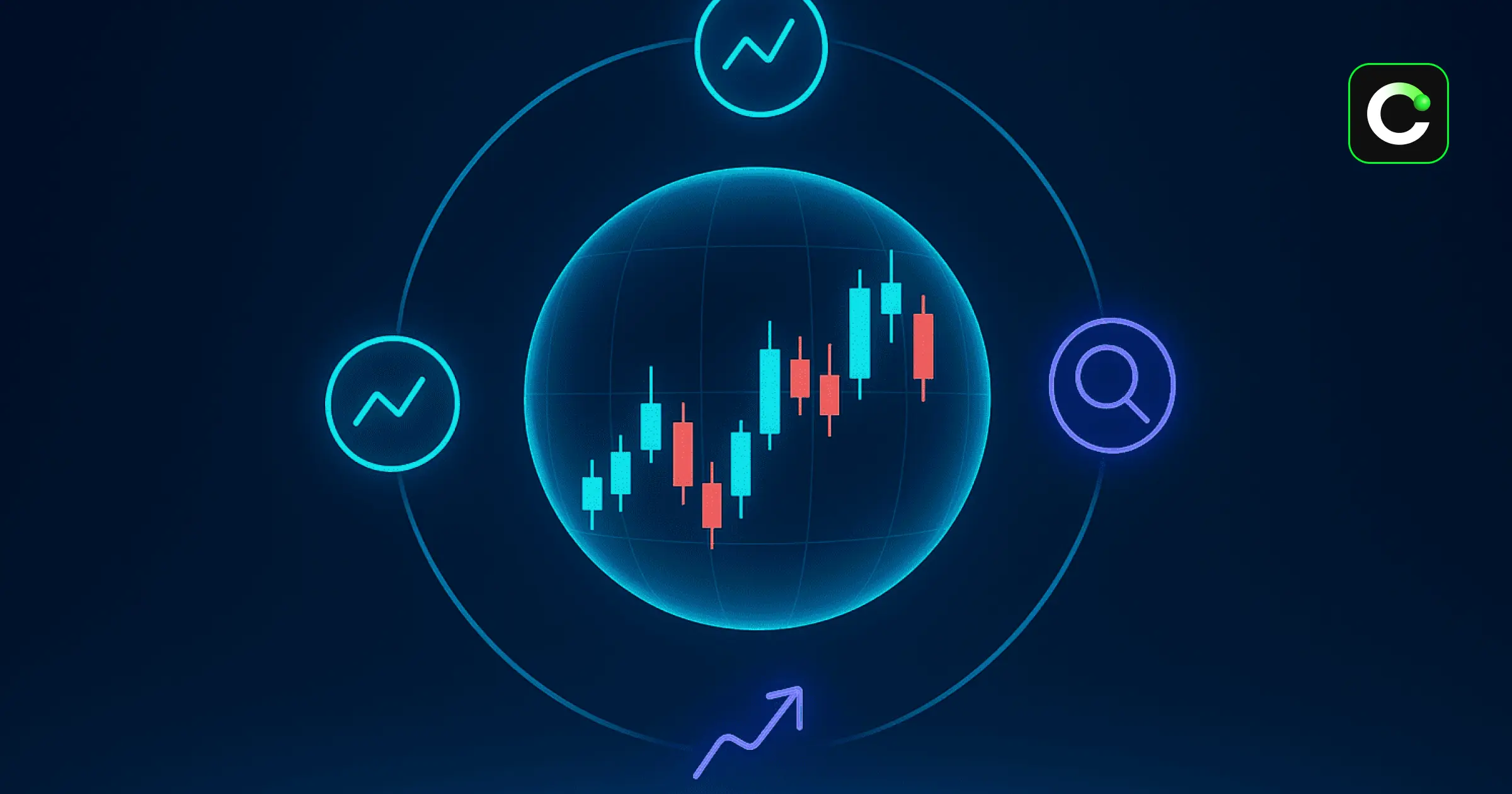
Technical analysis is important because it helps investors better interpret potential price movements, trend reversals, and market momentum in the cryptocurrency market. Due to the fast-moving nature of cryptocurrency markets, investors use tools such as support and resistance levels, trading volume, trend lines, and technical indicators to analyze the market’s potential direction.
Technical analysis is not only a method used for short-term trading but also for long-term market assessments and risk management. Especially in the highly volatile cryptocurrency market, it can help investors make more informed decisions.
24/7 Market Structure
The fact that cryptocurrency markets are open 24/7 is one of the factors that makes technical analysis crucial. Unlike traditional financial markets, trading in cryptocurrency markets continues every day of the week and at all hours of the day. This situation can cause price movements to change rapidly during nighttime hours, on weekends, or following sudden news developments.
Because the market is constantly active, investors use technical analysis tools to monitor price movements more closely and identify potential trend shifts earlier. Especially in short-term trading, chart analysis and technical indicators play a crucial role in interpreting market structure.
See.
Crypto Trend Map
Volatility and Price Movements
The high volatility in cryptocurrency markets makes technical analysis one of the most important tools for investors. Since prices can experience sharp rises or sudden drops within a short period, investors strive to analyze shifts in market momentum.
Technical indicators such as trend lines, support and resistance levels,
candlestick patterns, and the RSI help interpret price movements. Through technical analysis, investors aim not only to evaluate potential opportunities but also to manage risk more effectively by setting stop-loss levels.
How to Perform Technical Analysis of Cryptocurrencies?
Technical analysis of cryptocurrencies is a method that helps investors interpret price movements and market trends using charts. In technical analysis, data such as price, trading volume, trend structure, and support and resistance levels are examined to assess the market’s likely direction.
Price
In technical analysis, price charts are examined first. Charts visualize price changes of an asset over specific time intervals, making it easier to interpret market movements.
The most commonly used chart types in technical analysis are line charts, bar charts, and candlestick charts. Among these, candlestick charts are the most popular. Candlestick charts provide investors with more detailed data by simultaneously displaying the opening, closing, high, and low price levels.
Volume
Trading volume refers to the total number of trades executed within a specific time period. In technical analysis, volume data is used to gauge the strength of price movements.
For example, an increase in volume alongside rising prices may indicate a stronger trend. Conversely, movements at low volume can be interpreted as a sign that market momentum is weakening.
Trend
A trend describes the general direction of price movement over a specific period. In technical analysis, markets are typically evaluated in three distinct structures: an uptrend, a downtrend, and a sideways market.
When conducting trend analysis, investors often use trend lines. These lines help provide a clearer view of the market’s direction and potential breakout zones.
Support and Resistance
Support and resistance levels indicate areas where prices are likely to react. A support level indicates an area where declines may slow down, while a resistance level indicates areas where prices may struggle to rise.
These levels are used by investors to evaluate entry and exit points. When the price strongly breaks through a support or resistance level, this is referred to as a breakout in technical analysis.
Where should beginners start with technical analysis?

For investors new to technical analysis, the first step is to learn chart patterns and basic market concepts. Fundamental topics such as candlestick charts, support and resistance levels, trend patterns, and trading volume are among the most important components of technical analysis.
Users looking to learn technical analysis at the beginner level can utilize resources such as books, online courses, technical analysis guides, and expert content. Understanding basic indicators and the logic behind reading charts is particularly important for interpreting the market.
In technical analysis, practical application is just as important as theoretical knowledge. Regularly analyzing charts, examining past price movements, and tracking market trends help develop analytical skills over time. During this process, investors typically learn to interpret market structure through support and resistance levels, trend lines, and technical indicators.
Also see. Crypto guide for beginners
 2026-05-22
Legal Notice
The information, comments, and evaluations contained in this content do not constitute investment advice. This content is not intended to be prescriptive in any way and is intended to provide general information. It does not constitute investment advice. CoinTR cannot be held responsible for any transactions made based on this information or any losses that may arise.
 What Are Cryptocurrency Chart Patterns?
Recommended
 Technical AnalysisUnderstanding Support & Resistance Levels in the Crypto Market Summary: Support and resistance levels are key technical analysis zones in cryptocurrency markets where prices may reverse direction or continue their current trend. Investors can use tools such as moving averages, Fibonacci levels, and trend lines, in addition to past price movements, to identify support and resistance points. While support and resistance levels play a significant role in developing trading strategies, they should be evaluated in conjunction with trading volume,2026-06-22
 Technical AnalysisWhat Is Market Maker? Summary: A market taker is a market participant who executes trades by matching existing buy or sell orders. Rather than adding new liquidity to the market, market takers use existing liquidity to ensure that trades are executed quickly. While a market maker adds liquidity to the order book, a market maker participates in the trading process by matching existing orders. A market taker refers to the party that executes a trade using existing buy or sell orders waiting in the2026-06-15
 Technical AnalysisWhat Is Market Maker? Summary: Market makers contribute to maintaining liquidity in the markets and ensuring smoother trading by continuously providing bid and ask prices. A market maker quote is the bid and asks price and volume information submitted to the system by an authorized market maker. In crypto markets, market makers do not directly set prices, but they can help balance bid-ask spreads and limit sudden price movements by increasing liquidity. Sufficient liquidity is necessary for tra2026-06-09
