
Clarity Act Uncertainty and USDT Signal: Market Liquidity Tracking

Weekly Newsletter
4 min read time
|Updated: 2026-02-13
The key developments in the
cryptocurrency market this week are as follows: Over the past seven days, there has been a notable flow of news, particularly in the areas of regulation and institutional players. In the U.S., the Clarity Act discussions ended without a concrete decision, bringing the debate over the position of stablecoins back into focus. On the other hand, signs of weakening in the USDT market indicate that liquidity conditions need to be closely monitored. From the institutional side, the trend of miners shifting infrastructure and capital towards artificial intelligence and high-performance computing continues to grow, while some players have increased their positions in Ethereum as part of reserve management strategies.
Clarity Act Discussions: No Decision, Banks Oppose
On February 10th, the Clarity Act discussions held at the White House, considered critical for the crypto markets,
ended without a concrete decision. The focus of the discussions was primarily on banks' opposition to stablecoins.
-
Banks' Opposition: Banks view the yield (interest-like returns) offered by stablecoins as a competitive threat and a systemic risk to the traditional financial system. Therefore, they argue that no financial returns should be provided to holders of stablecoins.
-
Industry's Stance: The crypto industry, on the other hand, sees this stance as a reflex that limits competition and innovation. They emphasize that stable coins are a natural step in the evolution of the financial system.
Negative Growth in USDT Supply: Liquidity Conditions Back on the Agenda
Another key topic in the stablecoin market is the weakening growth momentum of USDT. The market capitalization of
USDT has shown a negative growth signal in the 60-day moving average, which points to a slowdown in the entry of fresh liquidity into the market.
Key Data:
-
The market capitalization of USDT has remained at 184.3 billion USD since the beginning of January.
-
Whale Alert reported a 3.5 billion USDT burn on February 10th.
Why is it important? Stablecoins are a crucial component of market liquidity. A decline in supply may bring a more cautious outlook in terms of risk appetite and market depth. Additionally, weaker liquidity conditions could lead to more erratic and fragile market movements.
Cango Sells 4,451 Bitcoin: Funding Expansion into Artificial Intelligence
Bitcoin miner
Cango sold
4,451 BTC, generating
305 million USD in net revenue. The company stated that a portion of the proceeds will be used to repay a Bitcoin-backed loan, while the remaining amount will support its goal of strengthening its balance sheet.
Also see.
Bitcoin mining
Additionally, Cango announced plans to use the funds to expand its
artificial intelligence and
high-performance computing (HPC) infrastructure. The company aims to build capacity for this expansion, leveraging its global network infrastructure to provide
distributed computing power and to move forward with this transformation through a phased roadmap.
This move aligns with a broader industry trend where miners are shifting their
power and data center infrastructure toward artificial intelligence and HPC clients to diversify revenue streams.
BitMine Increases Ethereum Reserves
Despite market fluctuations,
BitMine has increased its
Ethereum
holdings by purchasing approximately
20,000 ETH. The transaction was highlighted through a report based on
Lookonchain and
Arkham Intelligence data.
Key Highlights:
-
The company continues to aim for a target of holding 5% of the circulating ETH supply, with its current holdings nearing 70% of this target.
-
The management positions volatility as "a part of the cycle," with a focus on staking revenues and value-added investments as part of its strategy.
Why is it important? The increase in ETH reserves by institutional players underscores both the narrative of institutional demand and the evolving supply dynamics on the network. This trend highlights key factors to monitor in terms of long-term market impact.
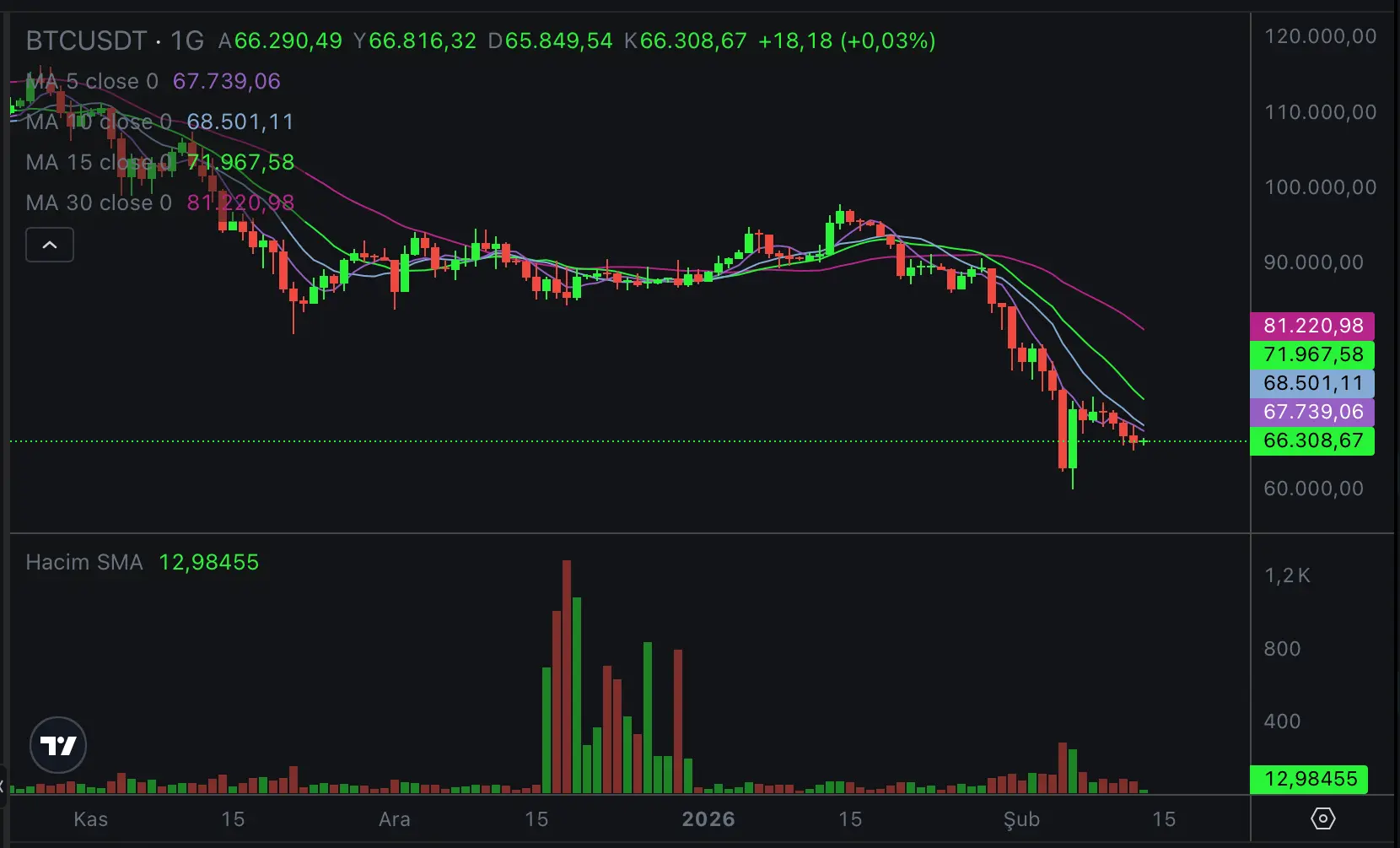
Bitcoin Price Chart
Throughout the week, the
price of Bitcoin dropped to 60,000 USD, but as of the time of writing, it is trading around 66,300 USD. Bitcoin finished the week with an increase of approximately 2%, while on the ETF front, there was a net outflow of 5 million USD this week.
Global tensions could potentially drive investors away from risky assets and towards safe havens or cash and other financial instruments. For Bitcoin, whether the 60,000 USD level holds or not will be an important point to monitor as it could significantly influence the market direction in the coming period.
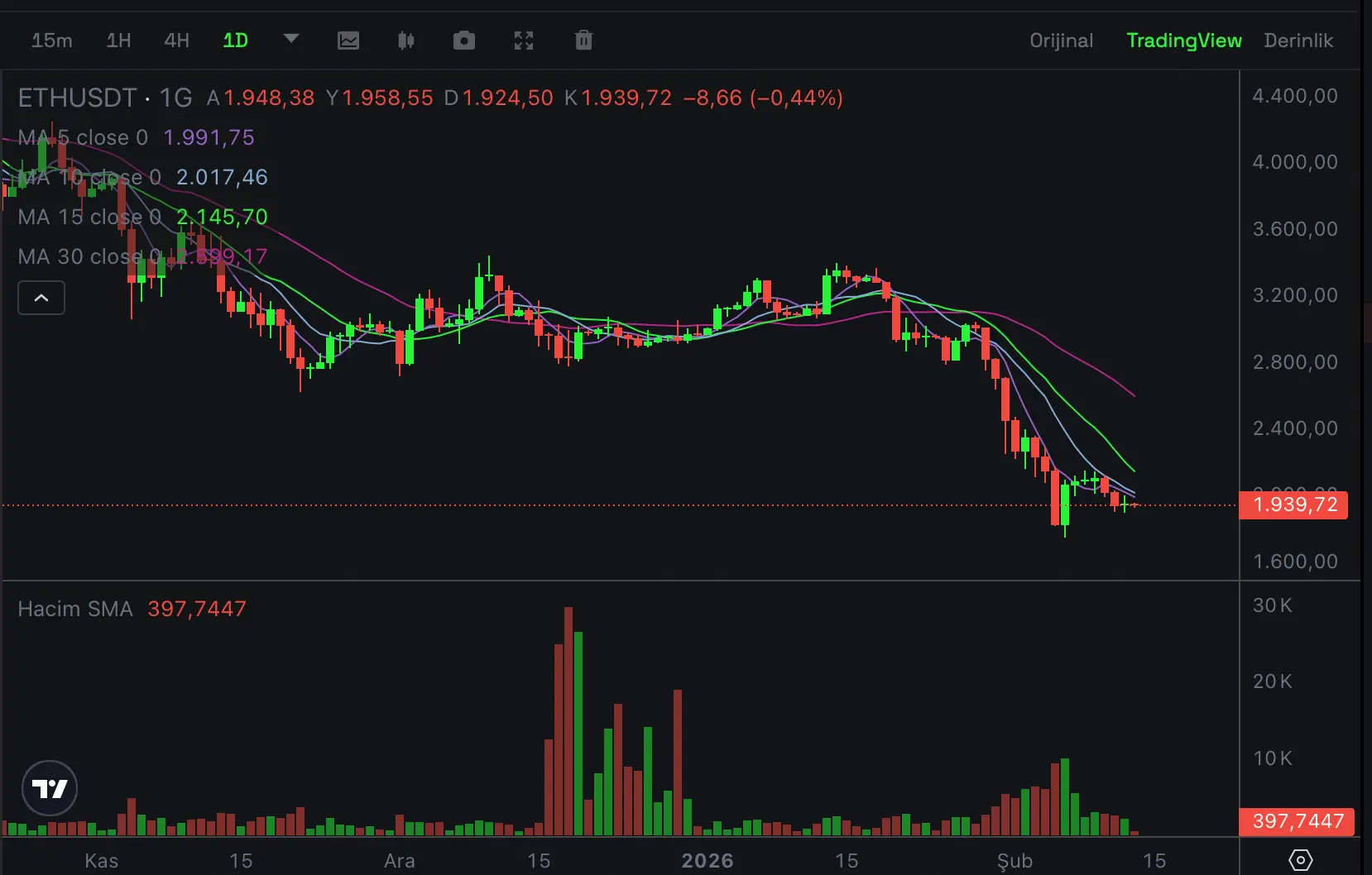
Ethereum Price Chart
The
price of Ethereum dropped to 1,750 USD during the week and is currently trading around 1,940 USD at the time of writing. On the ETF front, Ethereum ended the week with a net outflow of -188 million USD.
For Ethereum, whether the 2,000 USD level can be regained is becoming a critical point to monitor. Ethereum is expected to finish the week with an increase of approximately 2.5%, similar to Bitcoin.
 2026-02-13
Legal Notice
The information, comments, and evaluations contained in this content do not constitute investment advice. This content is not intended to be prescriptive in any way and is intended to provide general information. It does not constitute investment advice. CoinTR cannot be held responsible for any transactions made based on this information or any losses that may arise.
 Weekly Crypto Break February 20
Recommended
 Weekly NewsletterWeekly Crypto Break September 11 This week in the cryptocurrency market, spot Bitcoin ETF flows in the U.S., changes to the U.S. Treasury’s long-term bond buyback program, stablecoin initiatives in the banking sector, and crypto asset regulations in Europe were among the key topics on the agenda. U.S.-listed spot Bitcoin ETFs recorded $3.8 billion in net inflows over a three-week period. The U.S. Treasury increased the size of liquidity-supporting buybacks for long-term bonds. U.S. Bank completed a live stablecoin transfer on2026-09-11
 Weekly NewsletterWeekly Crypto Break September 4 This week in the cryptocurrency market, spot Bitcoin ETF flows in the U.S., a new regulation in Türkiye covering crypto asset service providers, and developments related to traditional financial institutions expanding their digital asset services were among the key topics on the agenda. U.S.-listed spot Bitcoin ETFs closed August with the highest monthly net inflow recorded in 2026. In Türkiye, the Capital Markets Board expanded the scope of remote customer onboarding2026-09-04
 Weekly NewsletterWeekly Crypto Break August 28 The crypto market this week was shaped by ETF demand for Bitcoin, corporate capital management and increasing usage across blockchain networks. Bitcoin’s weekly price increase in dollar terms reached a historic level, while spot ETF inflows recording their strongest week since October 2025 indicated that institutional demand was accelerating again. On the Strategy side, a more flexible balance-sheet approach focused on strengthening cash reserves rather than making new Bitcoin purchases drew at2026-08-28
