
Weekly Crypto Break October 16

Weekly Newsletter
4 min read time
|Updated: 2026-10-16
The
crypto asset market this week was shaped by spot ETF flows, US inflation data and new steps from regulatory agencies. Outflows continued from Bitcoin ETFs, while positive flows into XRP funds pointed to more selective positioning. Annual US inflation rose above expectations to 3.7%, creating short-term pressure on Bitcoin, while new crypto rules from the SEC and CFTC also brought the question of legal durability into focus.
On the market side, Bitcoin searched for directions between $80,000 and $84,000, while Ethereum tested the $2,300 area before returning to around $2,450. Macro data and fund flows showed that investors remained more selective in the short-term outlook.
Bitcoin ETF Outflows Continue While XRP Funds Diverge
US
spot Bitcoin ETFs recorded approximately $262 million in net outflows on Wednesday, taking weekly net outflows to $151 million. The previous week had also seen $681 million in outflows. Ethereum ETFs recorded approximately $190 million in weekly net outflows.
In contrast, XRP ETFs remained the only group among the tracked categories to maintain positive net flows for the week. This suggests that demand for crypto investment products has not disappeared entirely but has become more selective across assets.
Why does it matter?
ETF flows are an important indicator for understanding the direction of institutional demand through regulated investment products. The fact that some products remained positive while Bitcoin and Ethereum saw outflows points more toward risk reduction and selective positioning than a broad exit from the market.
US Inflation Exceeds Expectations as Bitcoin Reacts to Macro Data
Annual US consumer inflation rose above expectations to
3.7% in September. Core inflation also exceeded forecasts, while Bitcoin fell from around $83,860 to the $82,700 area immediately after the data release before partially recovering.
The report stands out as one of the final major inflation indicators ahead of the Fed’s October 27–28 meeting. Persistently, high inflation supports expectations that interest rates could remain elevated for longer.
Why does it matter?
Bitcoin’s rapid reaction to the inflation data shows that the crypto market remains sensitive to global financial conditions such as interest-rate expectations and dollar liquidity. For this reason, Fed policy and macro data continue to matter alongside crypto-specific developments in short-term pricing.
US Crypto Rules Accelerate as Questions Around Durability Emerge
Following the unsuccessful Senate process for the CLARITY Act, the SEC and CFTC began moving ahead with new crypto regulations under their existing authority. The SEC has taken new steps around tokenized equities,
staking and custody, while the CFTC is also working on a new registration category for crypto markets.
However, legal assessments suggest that agency-led rules could be reconsidered in court or under future administrations. A 2024 Supreme Court ruling also opened the way for courts to review regulatory interpretations more independently.
Why does it matter?
Direct action by regulatory agencies can provide the market with faster operational clarity. However, the long-term durability of the rules is as important to institutional investors and industry participants as their content. The role of legislation will therefore remain important in establishing a lasting market structure.
Bitcoin Price Chart
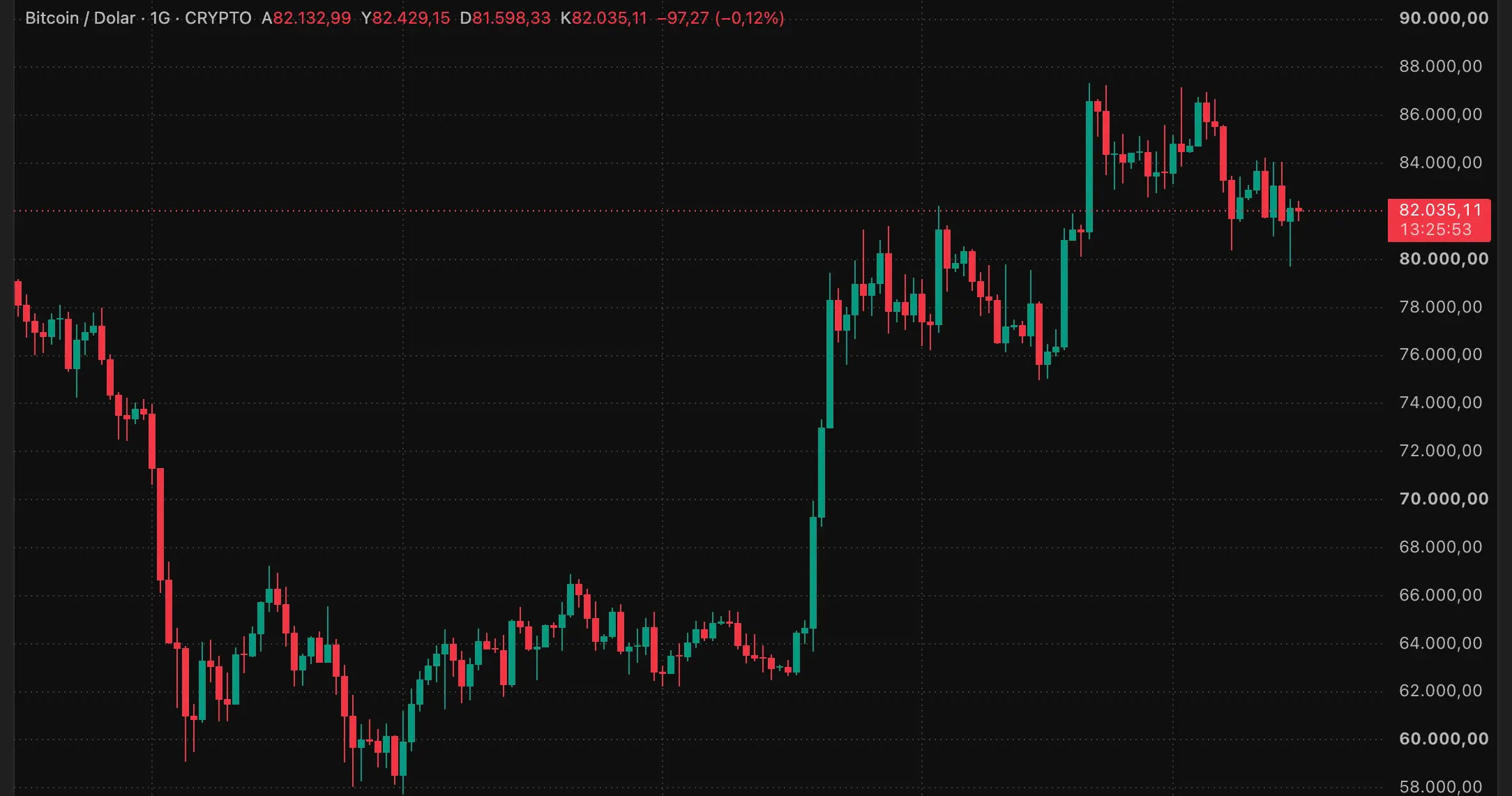
Bitcoin price closed at approximately $82,624 on October 9 and tested the $84,324 area during the week. BTC fell to approximately $79,842 on October 15 before returning to the $82,000 area as of October 16.
In the short term, the region around $80,000 stands out as the week’s lower balance area, while the $84,000 region remains the first reference on upward moves. TradingView data also shows that Bitcoin’s one-week performance remains slightly negative.
Ethereum Price Chart
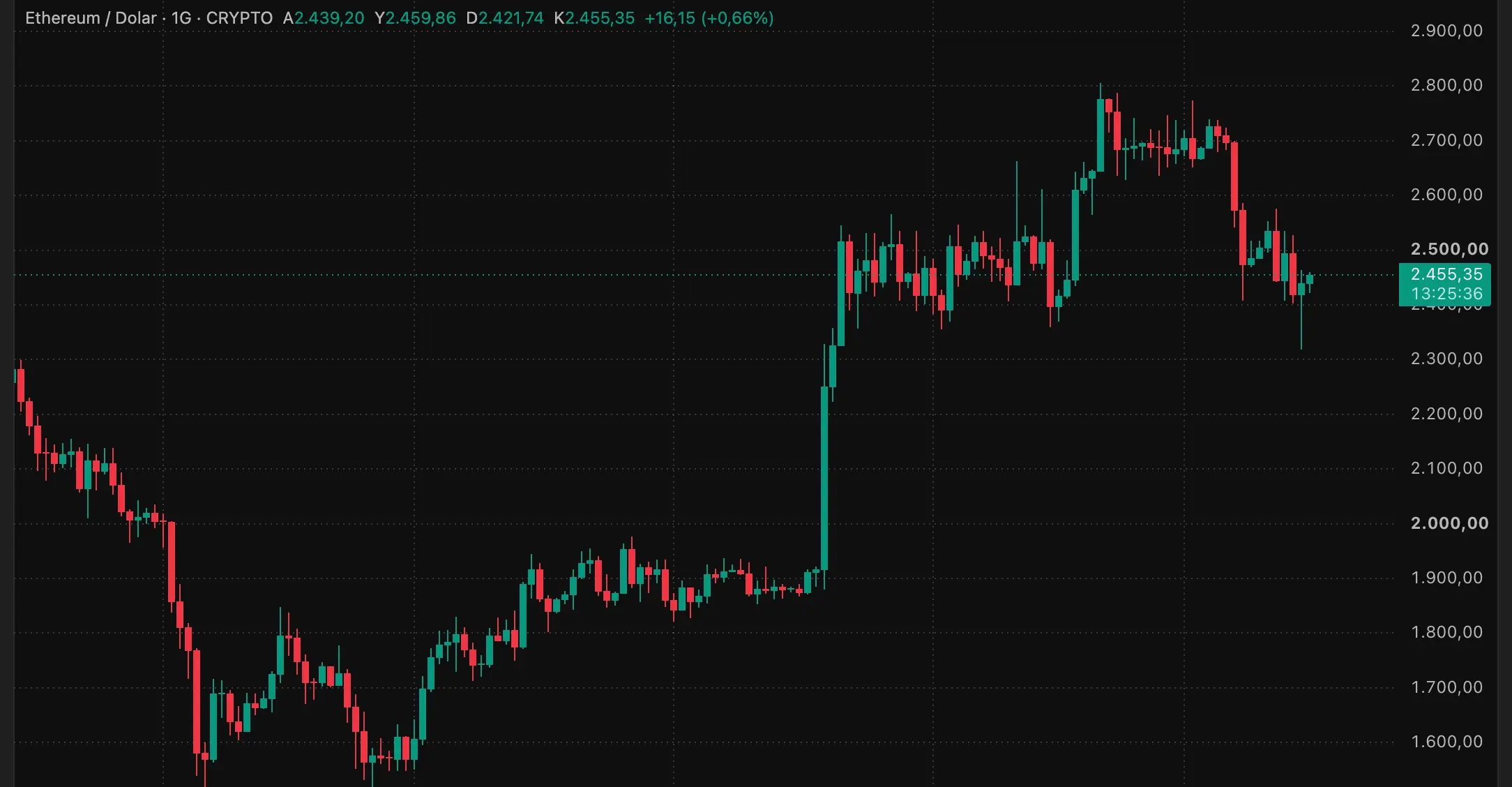
Ethereum price closed at approximately $2,488 on October 9 and tested the $2,579 area during the week. ETH fell to approximately $2,326 on October 15 before returning to the $2,450 region as of October 16.
In the short term, the $2,300–$2,400 range stands out as the lower balance area, while the $2,530–$2,580 region can be monitored on upward moves. CoinTR users can follow price movements in crypto assets including Bitcoin and Ethereum through Easy Buy/Sell and Spot Trading screens with the option to deposit Turkish lira.
 2026-10-16
Legal Notice
The information, comments, and evaluations contained in this content do not constitute investment advice. This content is not intended to be prescriptive in any way and is intended to provide general information. It does not constitute investment advice. CoinTR cannot be held responsible for any transactions made based on this information or any losses that may arise.

Recommended
 Weekly NewsletterWeekly Crypto Break October 9 The crypto asset market this week was shaped by the impact of geopolitical developments on macro conditions, ongoing regulatory efforts in the US and movements in government-held Bitcoin. Bitcoin approached the $80,000 area during the week as rising oil prices and US Treasury yields encouraged more cautious market positioning. In the US, the CFTC said it was working on a new crypto market framework under its existing authority after the CLARITY Act failed to pass the Senate. During the same wee2026-10-09
 Weekly NewsletterWeekly Crypto Break October 2 In the cryptocurrency market, new steps toward stablecoin regulation in the U.S., third-quarter fund flows in spot Bitcoin and Ethereum ETFs, the launch of the application process for the UK’s new crypto asset regime, and the impact of the U.S. government shutdown on regulatory processes were among the main topics between September 25 and October 2. The Fed opened two new draft regulations for payment stablecoin issuers for public comment. U.S.-listed spot Bitcoin and Ethereum ETFs ended the th2026-10-02
 Weekly NewsletterWeekly Crypto Break September 25 In the cryptocurrency market, spot Bitcoin and Ethereum ETF flows, blockchain-based payment infrastructure developed by traditional financial institutions, initiatives related to the international use of stablecoins, and regulatory developments in the U.S. were among the main topics between September 18 and September 25. U.S.-listed spot Bitcoin and Ethereum ETFs recorded approximately $877 million in total net inflows on September 22. Swift moved into the first use phase of its blockchain-base2026-09-25
