
Weekly Crypto Break October 9

Weekly Newsletter
4 min read time
|Updated: 2026-10-09
The
crypto asset market this week was shaped by the impact of geopolitical developments on macro conditions, ongoing regulatory efforts in the US and movements in government-held Bitcoin. Bitcoin approached the $80,000 area during the week as rising oil prices and US Treasury yields encouraged more cautious market positioning.
In the US, the CFTC said it was working on a new crypto market framework under its existing authority after the CLARITY Act failed to pass the Senate. During the same week, the transfer of more than $1 billion in seized Bitcoin from a US government-linked wallet brought public-sector crypto asset management back into focus.
Macro Conditions Put Bitcoin’s Search for Balance in Focus
Bitcoin tested below $82,700 during the week, reaching its lowest level in October up to that point. The move came against a backdrop of higher oil prices driven by developments in the Middle East, a stronger dollar and rising US Treasury yields. As Brent crude moved above $100, risk assets saw more cautious pricing.
Market data during the same period pointed to limited demand across both spot and derivatives markets. Bitcoin’s difficulty in moving beyond the $87,000 area also reinforced the short-term search for direction.
Why does it matter?
Bitcoin’s weekly move shows that crypto assets remain sensitive not only to industry-specific developments but also to global indicators such as oil prices, Treasury yields and the dollar. For this reason, macro conditions are likely to remain as important as crypto-specific demand in determining the short-term outlook.
New Steps Toward a US Crypto Market Structure
CFTC Chair Michael Selig said the agency would continue moving forward with crypto regulation despite the CLARITY Act failing to pass the Senate. The proposed framework includes new options for companies offering certain leveraged and margined crypto transactions to operate under more standardized federal oversight.
Together with the SEC’s previously announced digital asset proposals, the move shows that US regulators are seeking to create a clearer market structure by using their existing authority.
Why does it matter?
Progress in US crypto regulation without relying solely on new legislation could provide institutional market participants with a more predictable operational framework. However, the durability and scope of agency-led rules will depend on how the legislative process develops over time.
US Government Moves Seized Bitcoin
A wallet linked to the US government transferred more than 12,267 Bitcoin to another address. The assets were valued at more than $1 billion at the time of the transaction. Part of Bitcoin has been linked to assets recovered following a major cyberattack in 2016.
Estimates suggest that the US government holds approximately 328,000 BTC obtained through different investigations and seizure processes as of 2026. As a result, large movements from government-linked wallets are closely watched by the market.
Why does it matter?
Bitcoin transfers from large government wallets attract attention because they can influence expectations around market supply. However, moving an asset to another wallet does not by itself mean that it has been sold. Maintaining the distinction between a transfer and a sale is therefore important when assessing these transactions.
Bitcoin Price Chart
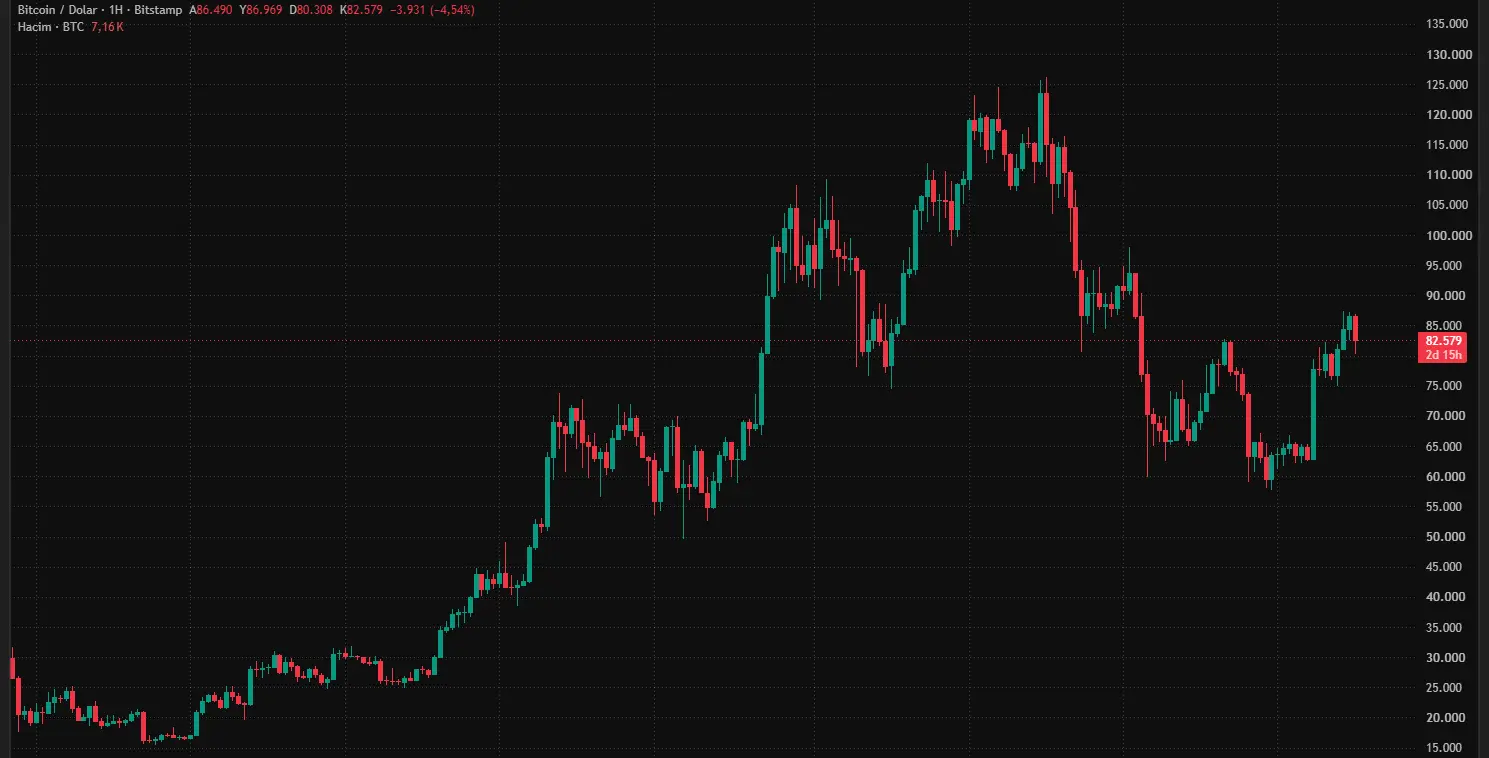
Bitcoin closed at approximately $84,516 on October 2 and tested the $87,129 area during the week. A more cautious picture then emerged, with Bitcoin reaching the week’s low at approximately $80,434 on October 8. As of October 9, BTC is trading back around $82,600.
In the weekly outlook, the $80,000–$82,000 range stands out as a short-term balance area, while the $86,000–$87,000 range remains the first important area to watch on upward moves. Compared with its October 2 level, Bitcoin is trading roughly 2% lower for the week.
Ethereum Price Chart
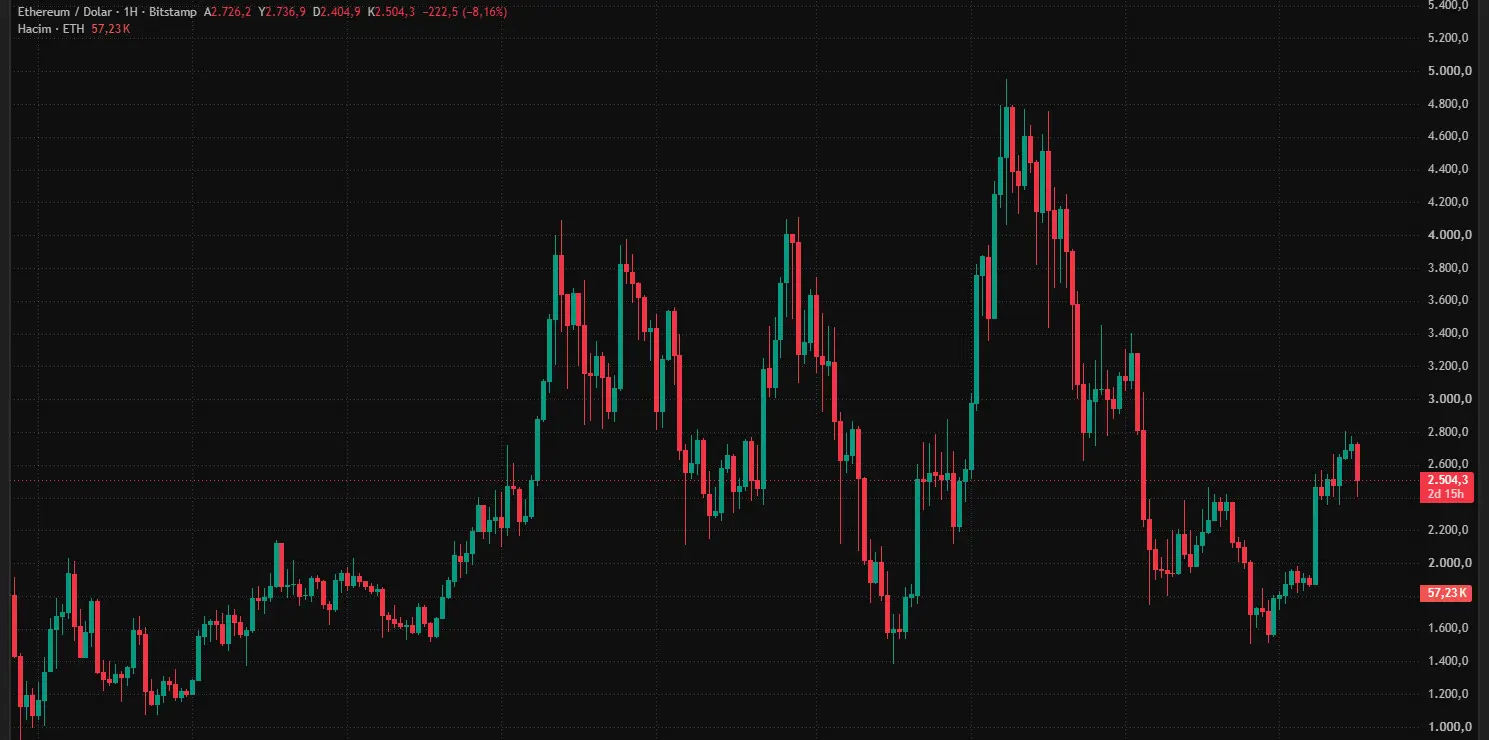
Ethereum closed at approximately $2,669 on October 2 and tested the $2,774 area during the week. Price pressure during October 7–8 took ETH down to approximately $2,408, before it returned to around $2,500 as of October 9.
In the short term, the $2,400–$2,500 range stands out as an important price balance area, while the region around $2,700 is the next area to watch upward moves.
 2026-10-09
Legal Notice
The information, comments, and evaluations contained in this content do not constitute investment advice. This content is not intended to be prescriptive in any way and is intended to provide general information. It does not constitute investment advice. CoinTR cannot be held responsible for any transactions made based on this information or any losses that may arise.
 Weekly Crypto Break October 16
Recommended
 Weekly NewsletterWeekly Crypto Break October 16 The crypto asset market this week was shaped by spot ETF flows, US inflation data and new steps from regulatory agencies. Outflows continued from Bitcoin ETFs, while positive flows into XRP funds pointed to more selective positioning. Annual US inflation rose above expectations to 3.7%, creating short-term pressure on Bitcoin, while new crypto rules from the SEC and CFTC also brought the question of legal durability into focus. On the market side, Bitcoin searched for directions between $80,0002026-10-16
 Weekly NewsletterWeekly Crypto Break October 2 In the cryptocurrency market, new steps toward stablecoin regulation in the U.S., third-quarter fund flows in spot Bitcoin and Ethereum ETFs, the launch of the application process for the UK’s new crypto asset regime, and the impact of the U.S. government shutdown on regulatory processes were among the main topics between September 25 and October 2. The Fed opened two new draft regulations for payment stablecoin issuers for public comment. U.S.-listed spot Bitcoin and Ethereum ETFs ended the th2026-10-02
 Weekly NewsletterWeekly Crypto Break September 25 In the cryptocurrency market, spot Bitcoin and Ethereum ETF flows, blockchain-based payment infrastructure developed by traditional financial institutions, initiatives related to the international use of stablecoins, and regulatory developments in the U.S. were among the main topics between September 18 and September 25. U.S.-listed spot Bitcoin and Ethereum ETFs recorded approximately $877 million in total net inflows on September 22. Swift moved into the first use phase of its blockchain-base2026-09-25
