
Weekly Crypto Break July 31

Weekly Newsletter
5 min read time
|Updated: 2026-07-31
Regulation, security, tokenization, and the search for greater efficiency in DeFi shaped this week’s crypto agenda. A new ethics compromise for the CLARITY Act brought the political timeline in the United States back into focus, while the security warning concerning Coldcard Mk3 devices highlighted the technical risks associated with self-custody solutions. Global banks testing real cross-border payments with tokenized money brought onchain infrastructure closer to the traditional financial system. Aave’s consideration of ending operations across six low-usage networks also suggested that DeFi protocols may be entering a more selective and efficiency-focused period. On the market side, Bitcoin and Ethereum pulled back from their weekly highs, while ETF flows recorded net inflows for both assets.
New CLARITY Act Ethics Compromise Submitted to the White House
United States Senators Thom Tillis and Ruben Gallego submitted a new compromise proposal to the White House concerning ethics rules, one of the main areas of disagreement surrounding the CLARITY Act. The bipartisan effort aims to establish a common framework for limiting conflicts of interest arising from senior public officials’ connections to crypto assets. The details of the proposal have not yet been made public.
The bill has not yet secured the 60 votes required to advance in the Senate. Continued concerns among both Republican and Democratic senators have made the limited legislative calendar ahead of the Senate recess beginning on August 7 increasingly critical.
Why it matters
The future of the CLARITY Act is now being shaped more by political compromise than by the technical scope of the legislation. Agreement on the ethics provision could support a more predictable framework for crypto asset classification and regulatory authority in the United States. However, it remains unclear whether the new proposal will receive sufficient support from both the White House and the Senate.
Coldcard Mk3 Security Issue Draws Attention Following 594 BTC Loss
Hardware wallet manufacturer Coinkite issued a security warning stating that some wallets created using Coldcard Mk3 devices may be at risk. The company advised users whose recovery phrases were generated with certain software versions to move their funds to a newly created and secure wallet.
The warning followed the transfer of a total of 594 BTC from approximately 500 single-signature
Bitcoin addresses in less than 30 minutes. Initial assessments suggest that the issue may be connected to the source of randomness used during the device’s key generation process. Coinkite continues to investigate the potential connection between the incident and the security issue.
Why it matters
The incident is a reminder that hardware wallet security does not depend solely on keeping a device offline. A problem in the key generation process can place user funds at risk even when the device has never been connected to the internet. Software updates, key generation methods, and manufacturer security notices therefore remain critical components of self-custody.
Global Banks Test Real Payments Using Tokenized Money
Under the BIS-led Project Agorá, 28 commercial banks completed real cross-border payments using tokenized central bank reserves and commercial bank deposits. The pilot included JPMorgan, Citi, UBS, Deutsche Bank, and Standard Chartered, completing 30 transactions worth approximately 1 million USD across six currencies.
The transactions were completed on a shared ledger on an average of approximately 80 seconds. The pilot also enabled different currencies to change hands simultaneously, reducing the risk that one party completes a payment without receiving the corresponding funds.
Why it matters
The initiative shows that tokenization is expanding beyond securities and investment products into interbank payment infrastructure. Using central bank money and commercial bank deposits within a shared system could introduce a new model for improving speed, traceability, and transaction security in cross-border payments.
Aave Considers Ending Operations Across Six Networks
A new governance proposal submitted to the Aave community raised the possibility of gradually closing the protocol’s deployments on Sonic, Scroll, zkSync, Metis, Soneium, and Aptos. The proposal also includes removing approximately 50 low-usage asset markets across other networks.
The proposal is driven by weak user demand, limited revenue, and ongoing maintenance and risk management costs. Deposited assets on some networks have declined by more than 90%, prompting Aave to reassess its multichain expansion strategy. The proposal must still pass through the protocol’s governance process before it can be implemented.
Why it matters
Aave’s proposal shows that expanding to every new network does not necessarily result in sustainable growth for
DeFi protocols. Following a period of rapid multichain expansion, protocols are placing greater emphasis on balancing reach with revenue, liquidity, maintenance, and security costs. This could mark the beginning of a more selective and efficiency-focused phase for DeFi.
Bitcoin Price Chart
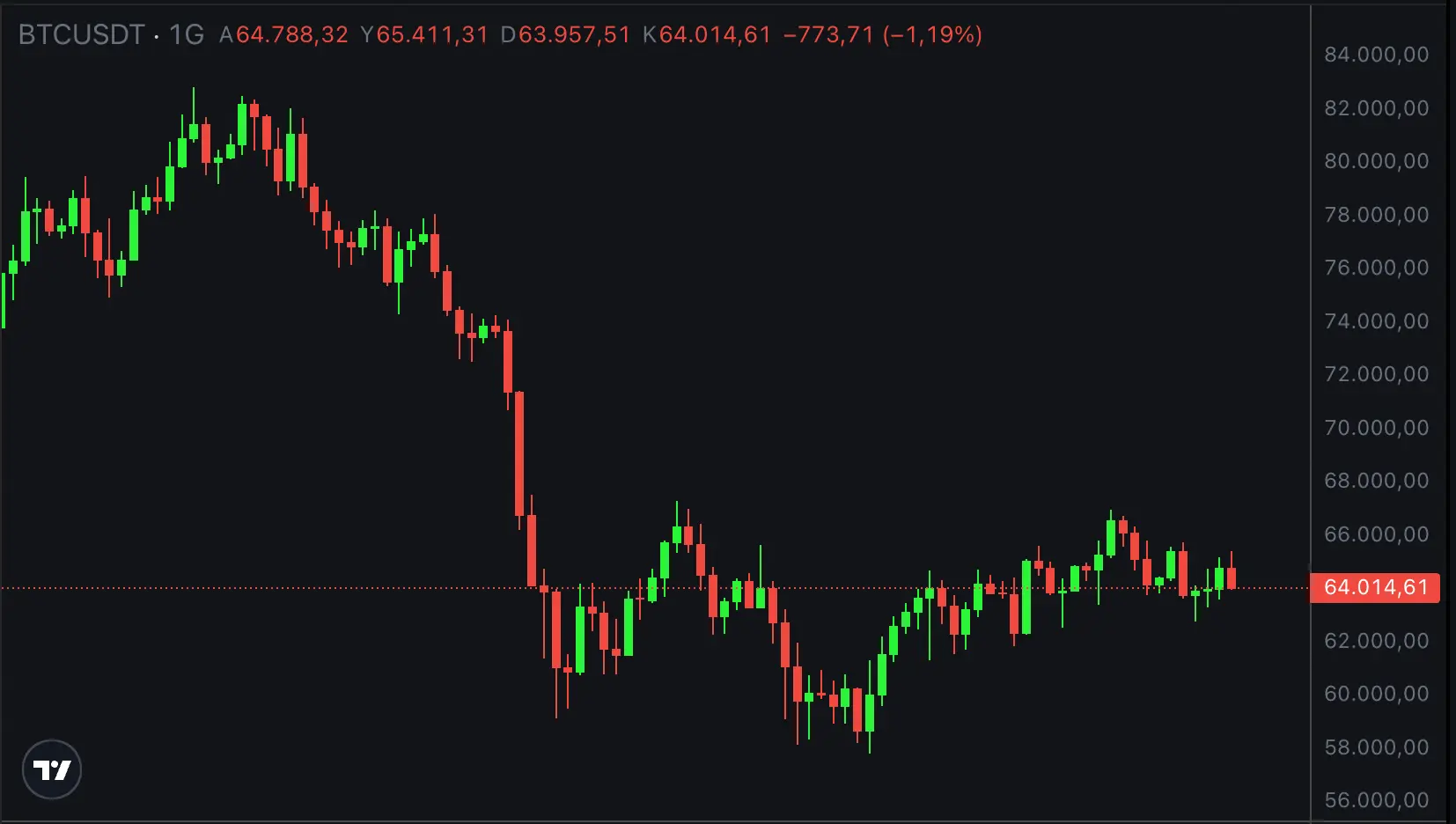
Bitcoin fell as low as 62,800 USD during the week and tested the 65,500 USD area during its upward attempts. At the time of writing, Bitcoin is trading around 64,000 USD.
From a technical perspective, the 62,800 to 63,000 USD range is being monitored as a short-term support area, while the weekly high at 65,500 USD remains the first major resistance level to overcome. Bitcoin, maintaining its position at around 64,000 USD, will be important for another potential test of the resistance area. On the
Bitcoin ETF side, total weekly net inflows of approximately
203.9 million USD were recorded.
Ethereum Price Chart
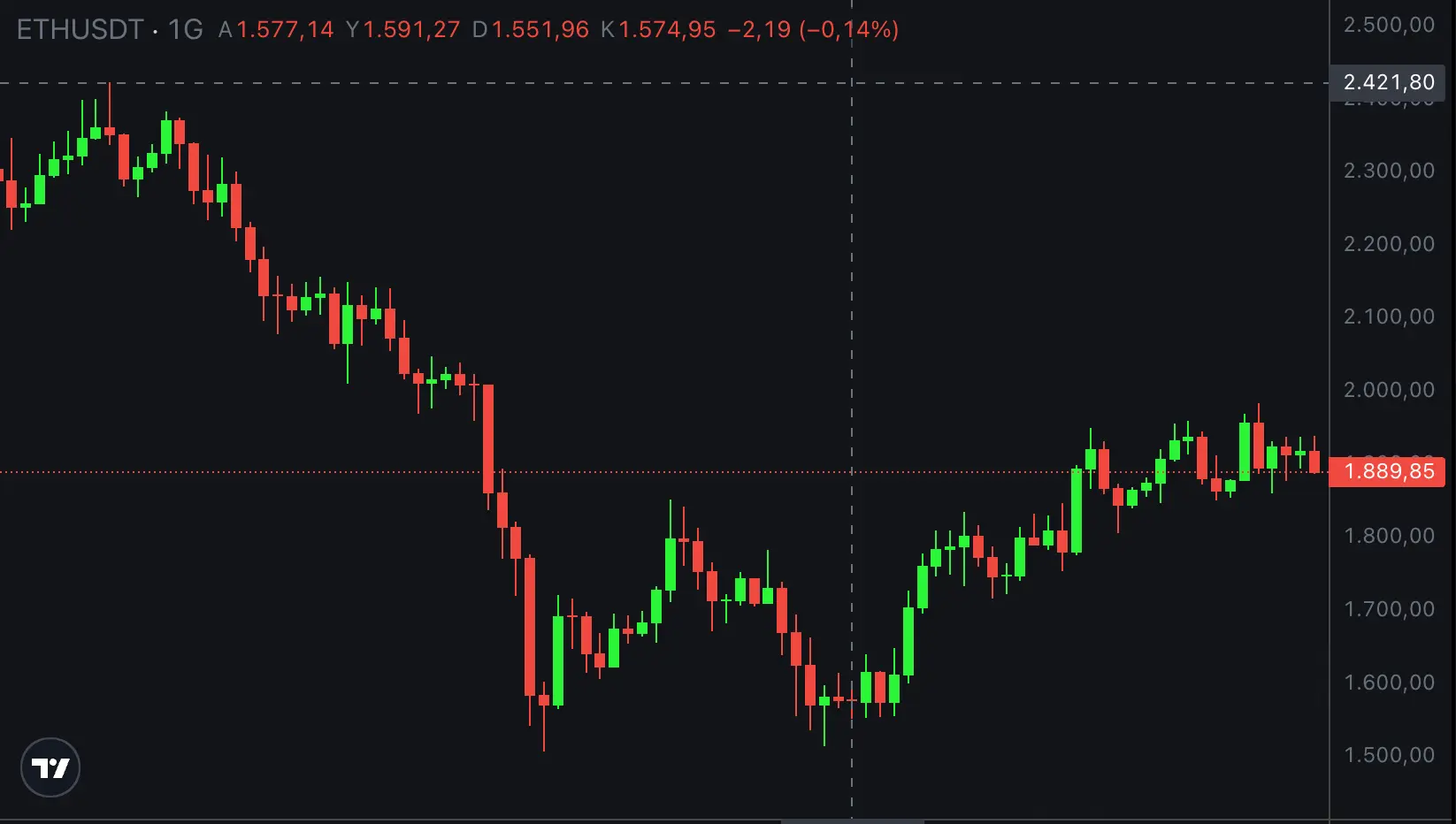
Ethereum fell as low as 1,850 USD during the week and tested the 1,973 USD area during its upward attempts. At the time of writing, Ethereum is trading around 1,886 USD.
From a technical perspective, 1,850 USD is being monitored as a short-term support level, while the 1,970 to 2,000 USD range remains the first major resistance area to overcome. Ethereum maintaining its current support area will be important for another potential move toward the weekly high. On the
Ethereum ETF side, total weekly net inflows of approximately
1 million USD were recorded.
 2026-07-31
Legal Notice
The information, comments, and evaluations contained in this content do not constitute investment advice. This content is not intended to be prescriptive in any way and is intended to provide general information. It does not constitute investment advice. CoinTR cannot be held responsible for any transactions made based on this information or any losses that may arise.

Recommended
 Weekly NewsletterWeekly Crypto Break July 24 Regulation, mass adoption, network security, and project governance shaped this week’s crypto agenda. The updated CLARITY Act draft brought political negotiations in the United States back into focus, while Telegram’s native crypto wallet plan strengthened the potential for crypto usage to reach a broader audience. The creation of the Bitcoin Security Consortium showed that institutional players are beginning to contribute more actively to the network’s long term security. Movement Labs’ restru2026-07-24
 Weekly NewsletterWeekly Crypto Break July 17 Regulation, tokenization, and stablecoin infrastructure shaped this week’s crypto agenda. Japan’s decision to bring crypto assets under a financial product framework, together with the ethics provision becoming a critical issue in CLARITY Act negotiations, placed regulatory developments at the center of the week. DTCC’s completion of live transactions using tokenized securities brought onchain finance closer to traditional market infrastructure, while Visa’s institutional stablecoin platform ex2026-07-17
 Weekly NewsletterWeekly Crypto Break July 10 This week, the crypto market was shaped by corporate treasury management, the regulatory timeline in the United States, and stablecoin infrastructure. Strategy’s sale of 3,588 BTC to generate liquidity showed that corporate Bitcoin strategies are beginning to evolve beyond accumulation toward more active capital management. As the political window for the CLARITY Act narrowed, regulatory uncertainty returned to the forefront. Sony’s preparations to establish a regulated stablecoin focused struc2026-07-10


