
Weekly Crypto Break August 7

Weekly Newsletter
5 min read time
|Updated: 2026-08-07
Regulation, institutional integration, and tokenization shaped this week's crypto agenda. The bipartisan ethics compromise drafted for the CLARITY Act deepened political uncertainty in the US by sparking a new tax debate rather than easing the bill's path through the Senate. Wintermute's registration as a broker-dealer with the SEC and completion of its FINRA membership showed that crypto liquidity providers are accelerating their direct integration into traditional financial infrastructure. While tokenized real-world assets grew more than threefold in DeFi over the past year, the overall decline in total DeFi investments signaled that on-chain capital is shifting toward more traditional, yield-generating assets. On the market side, Bitcoin and Ethereum pulled back from their weekly highs, while ETF flows recorded net inflows for both assets.
CLARITY Act Ethics Compromise Sparks New Tax Debate
The bipartisan ethics proposal drafted to help the CLARITY Act advance in the Senate has become the center of a new debate. The proposal, not yet made public, reportedly includes a provision requiring US President Donald Trump to divest his holdings in crypto-linked companies.
However, the proposal is said to allow for the deferral of capital gains taxes that could arise from forced sales, potentially creating a tax advantage worth millions of dollars for Trump. Democrats' concerns over Trump's financial ties to the crypto sector had previously been one of the core points of contention in CLARITY Act negotiations.
As a result, the ethics provision, while aiming to reduce conflicts of interest, may simultaneously open up a new area of political dispute. Since the final text of the proposal has not yet been released, the scope of the tax advantage and whether it will actually apply remain unclear.
Why it matters?
The core issue surrounding the CLARITY Act is increasingly shifting from the bill's technical content to political compromise. The ethics clause creating new disputes rather than resolving them could complicate the bill's progress through the Senate and once again leave the timeline for comprehensive US crypto market regulation uncertain.
Wintermute Opens Up to Regulated US Markets
Wintermute, one of the crypto market's major liquidity providers, announced that its US subsidiary, Wintermute USA, has registered with the SEC as a broker-dealer and completed its FINRA membership. This allows the company to take on a broader institutional role in traditional US securities markets alongside its crypto market activities.
The new structure paves the way for Wintermute to participate in market-making activities in equity and ETF markets. The company plans to initially focus on areas such as crypto-linked ETFs, with an eye toward expanding into tokenized securities down the line as the regulatory framework develops.
Why it matters?
This move by Wintermute shows that major liquidity providers born out of the crypto market are beginning to integrate directly into traditional financial infrastructure. As the boundaries continue to blur, this could pave the way for a new era in which crypto and traditional market-making converge under the same infrastructure, particularly around ETFs and tokenized assets.
RWA Assets Grow While DeFi Contracts Overall
According to new data, the size of tokenized real-world assets used across
DeFi platforms rose from $2.3 billion to $7.4 billion over the course of a year. During the same period, total DeFi investments fell by roughly 15%, revealing a clear divergence in the distribution of on-chain capital.
Driving this growth are traditional assets such as US Treasuries, tokenized funds, private credit, and gold. While overall decentralized exchange volumes in spot markets declined, a strong increase in trading activity for tokenized real-world assets reinforced this shift.
Why it matters?
The data suggests that capital isn't leaving on-chain finance so much as changing where it's deployed. Investors turning their attention toward more traditional, yield-generating assets points to accelerating integration between DeFi and traditional finance. In this sense, RWA growth looks less like a separate trend and more like part of on-chain finance's evolution toward a more institutional structure.
Bitcoin Price Chart
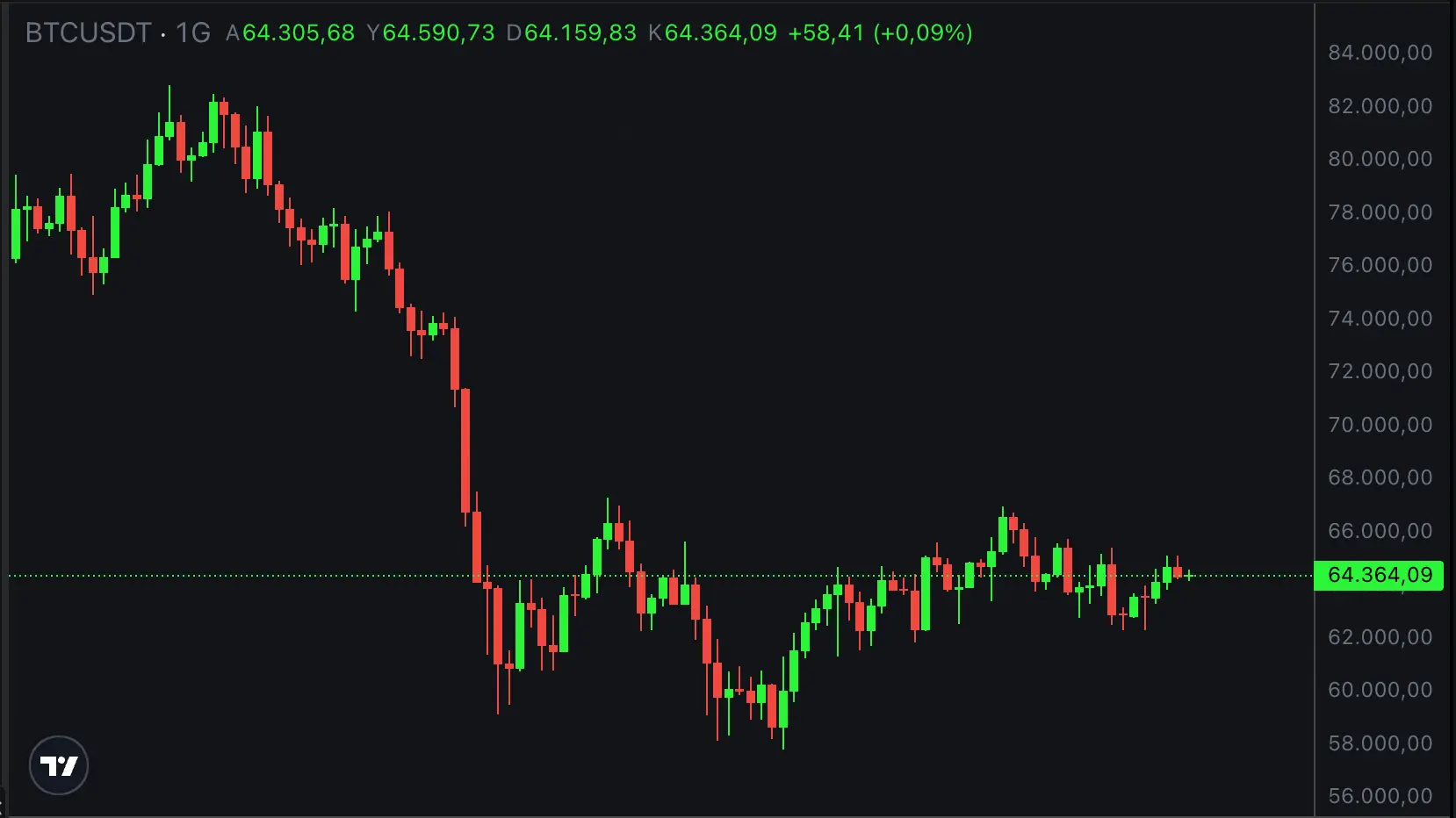
Bitcoin saw a weekly low around $62,300, while its upside attempts tested the $64,800 region. At the time of writing, Bitcoin is trading around $64,300.
Technically, the $62,000–$62,500 range is being watched as short-term support, while the $64,800–$65,000 zone stands as the first major resistance to clear. With price holding near its weekly high, a retest of the $65,000 level remains on the table. On the ETF side, total net inflows of approximately $763.6 million were recorded over the week.
Ethereum Price Chart
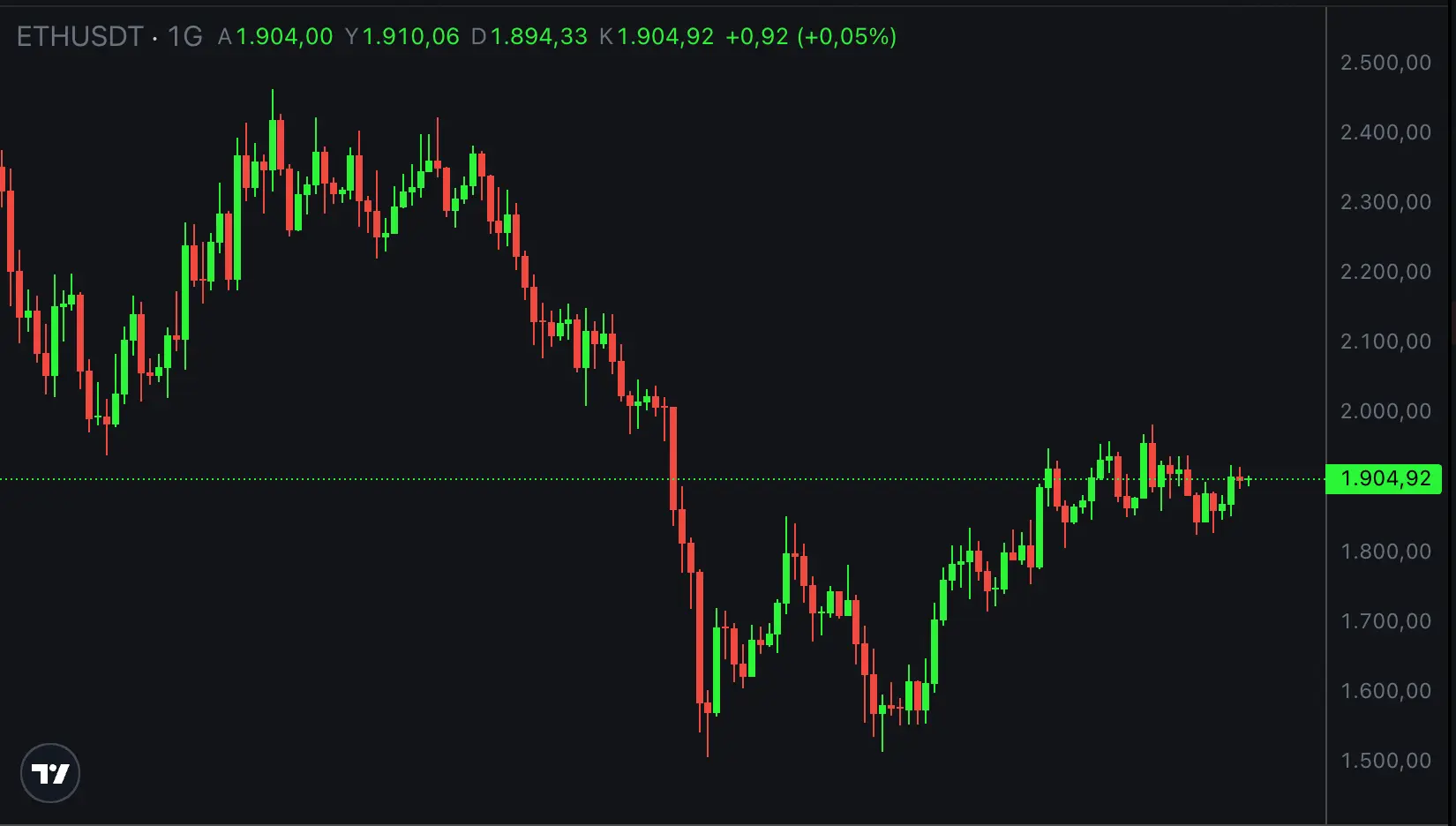
Ethereum saw a weekly low around $1,820, while its upside attempts tested the $1,910 region. At the time of writing, Ethereum is trading around $1,903.
Technically, price hovering near the 50-day moving average at roughly $1,900 makes this zone particularly significant. Below, the $1,870–$1,820 range is being watched as support, while the $1,910–$1,950 zone stands as near-term resistance to clear. On the ETF side, total net inflows of approximately $194.1 million were recorded over the week.
 2026-08-07
Legal Notice
The information, comments, and evaluations contained in this content do not constitute investment advice. This content is not intended to be prescriptive in any way and is intended to provide general information. It does not constitute investment advice. CoinTR cannot be held responsible for any transactions made based on this information or any losses that may arise.

Recommended
 Weekly NewsletterWeekly Crypto Break July 31 Regulation, security, tokenization, and the search for greater efficiency in DeFi shaped this week’s crypto agenda. A new ethics compromise for the CLARITY Act brought the political timeline in the United States back into focus, while the security warning concerning Coldcard Mk3 devices highlighted the technical risks associated with self-custody solutions. Global banks testing real cross-border payments with tokenized money brought onchain infrastructure closer to the traditional financial sys2026-07-31
 Weekly NewsletterWeekly Crypto Break July 24 Regulation, mass adoption, network security, and project governance shaped this week’s crypto agenda. The updated CLARITY Act draft brought political negotiations in the United States back into focus, while Telegram’s native crypto wallet plan strengthened the potential for crypto usage to reach a broader audience. The creation of the Bitcoin Security Consortium showed that institutional players are beginning to contribute more actively to the network’s long term security. Movement Labs’ restru2026-07-24
 Weekly NewsletterWeekly Crypto Break July 17 Regulation, tokenization, and stablecoin infrastructure shaped this week’s crypto agenda. Japan’s decision to bring crypto assets under a financial product framework, together with the ethics provision becoming a critical issue in CLARITY Act negotiations, placed regulatory developments at the center of the week. DTCC’s completion of live transactions using tokenized securities brought onchain finance closer to traditional market infrastructure, while Visa’s institutional stablecoin platform ex2026-07-17


