
Weekly Crypto Break July 17

Weekly Newsletter
5 min read time
|Updated: 2026-07-17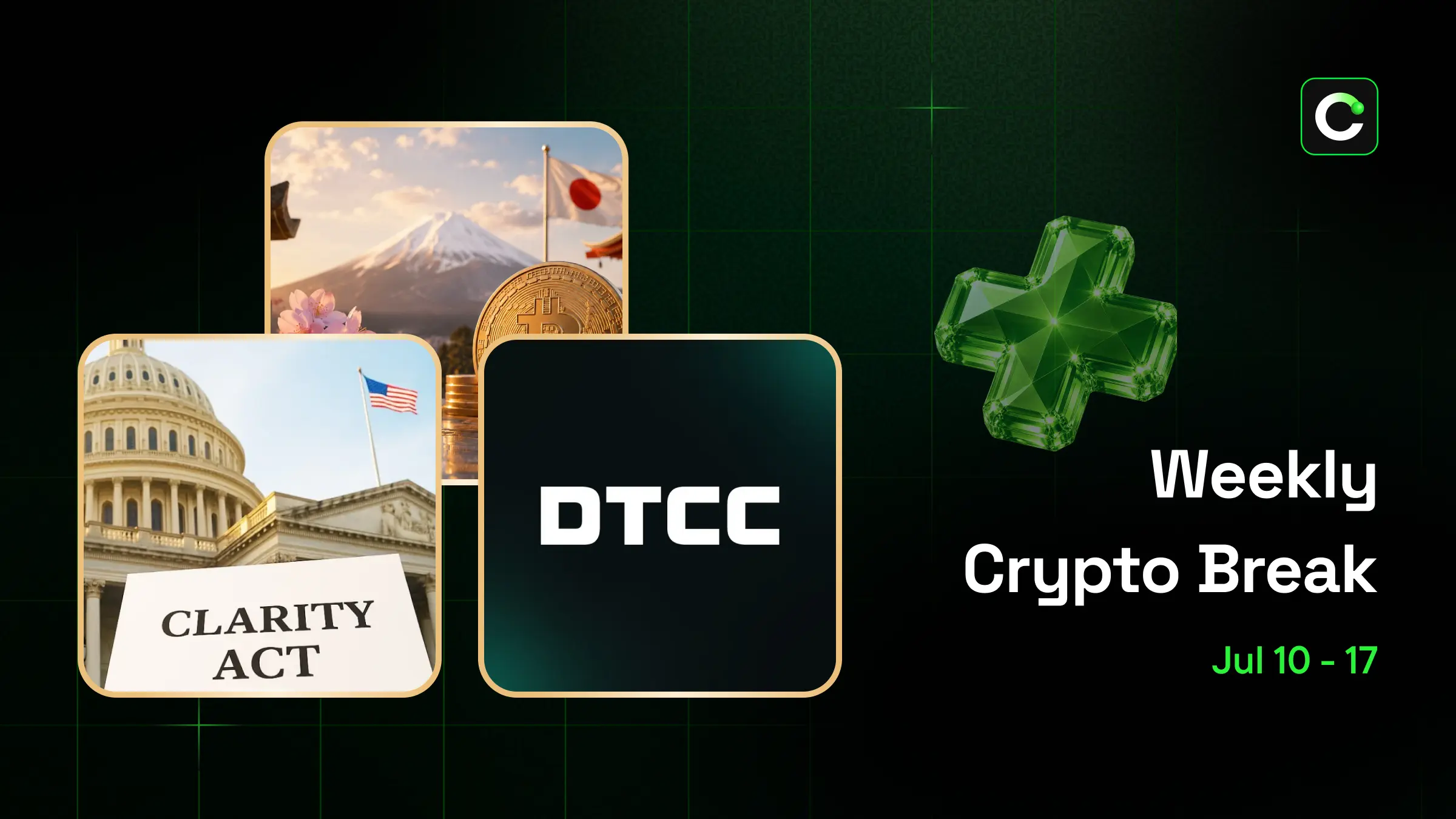
Regulation, tokenization, and stablecoin infrastructure shaped this week’s crypto agenda. Japan’s decision to bring crypto assets under a financial product framework, together with the ethics provision becoming a critical issue in CLARITY Act negotiations, placed regulatory developments at the center of the week. DTCC’s completion of live transactions using tokenized securities brought onchain finance closer to traditional market infrastructure, while Visa’s institutional stablecoin platform expanded the role of digital dollars in payments and treasury management. On the market side, Bitcoin and Ethereum traded near their weekly highs, while ETF flows showed a divergence between the two assets.
Japan Brings Crypto Under a Financial Product Framework
Japan approved new legislation bringing crypto assets under the Financial Instruments and Exchange Act. As a result, Bitcoin and other crypto assets are moving beyond the existing payment focused framework into a financial product structure with clearer investor protection, market oversight, and disclosure requirements.
The new framework introduces clearer rules around market manipulation and insider trading, while also establishing a legal foundation for the development of spot
crypto ETFs. On the tax side, rates on crypto income, which can currently reach as high as 55 percent, are planned to be reduced to approximately 20 percent over time.
Why it matters
Japan’s move shifts the position of crypto in the country from a payment instrument toward a regulated investment market. Clearer rules may support institutional participation and accelerate the development of local crypto investment products.
Ethics Provision Becomes a Critical Issue for the CLARITY Act
The CLARITY Act, which aims to establish the regulatory framework for the United States crypto market, advanced to the Senate floor after passing the Senate Banking Committee by a vote of 15 to 9. However, disagreements remain unresolved over an ethics provision designed to restrict the personal crypto interests of senior public officials.
Discussions between the White House and senators are continuing, while the bill must secure 60 votes with support from Democrats to advance. The Senate’s limited working calendar before the August recess is increasing pressure on the political negotiations.
Why it matters
The future of the CLARITY Act is now being shaped more by the ethics provision and political compromise than by the technical content of the bill. Progress could create a more predictable environment for institutional participation in the United States, while further delays may extend regulatory uncertainty.
DTCC Completes Live Transactions Using Tokenized Securities
DTCC tokenized securities held in custody and used them in transactions within a live production environment. More than 30 traditional finance and digital market participants took part in the initiative, which tested use cases including United States Treasury securities, repo transactions, equities, collateral management, and securities lending.
The process included institutions such as BlackRock, JPMorgan, Goldman Sachs, Nasdaq, and the New York Stock Exchange. It marked an important stage ahead of DTCC’s planned commercial tokenization service launch in October. The tokenized assets retain the same ownership rights and investor protections as traditional securities.
Why it matters
DTCC’s live transactions show that tokenization is moving beyond experimental projects toward real market infrastructure. Using traditional assets in an onchain environment could improve capital efficiency and liquidity movement while making the connection between the two financial systems more seamless.
Visa Announces Institutional Stablecoin Platform
Visa announced the Visa Stablecoin Platform, which will allow financial institutions, fintech companies, and payment providers to manage stablecoin operations through a single structure. In its initial phase, the platform will support the creation, redemption, custody, and transfer of Open USD.
The new structure brings
stablecoin operations together with Visa’s existing payment, treasury, and settlement systems. Institutions will be able to connect their own wallets or use wallet infrastructure managed by Visa. The platform will initially be tested with selected clients.
Why it matters
Visa’s move shows that stablecoins are progressing from independent experiments toward becoming part of institutional payment infrastructure. Integrating stablecoin operations with existing financial systems may expand the use of digital dollars across payments, liquidity, and treasury management.
Bitcoin Price Chart
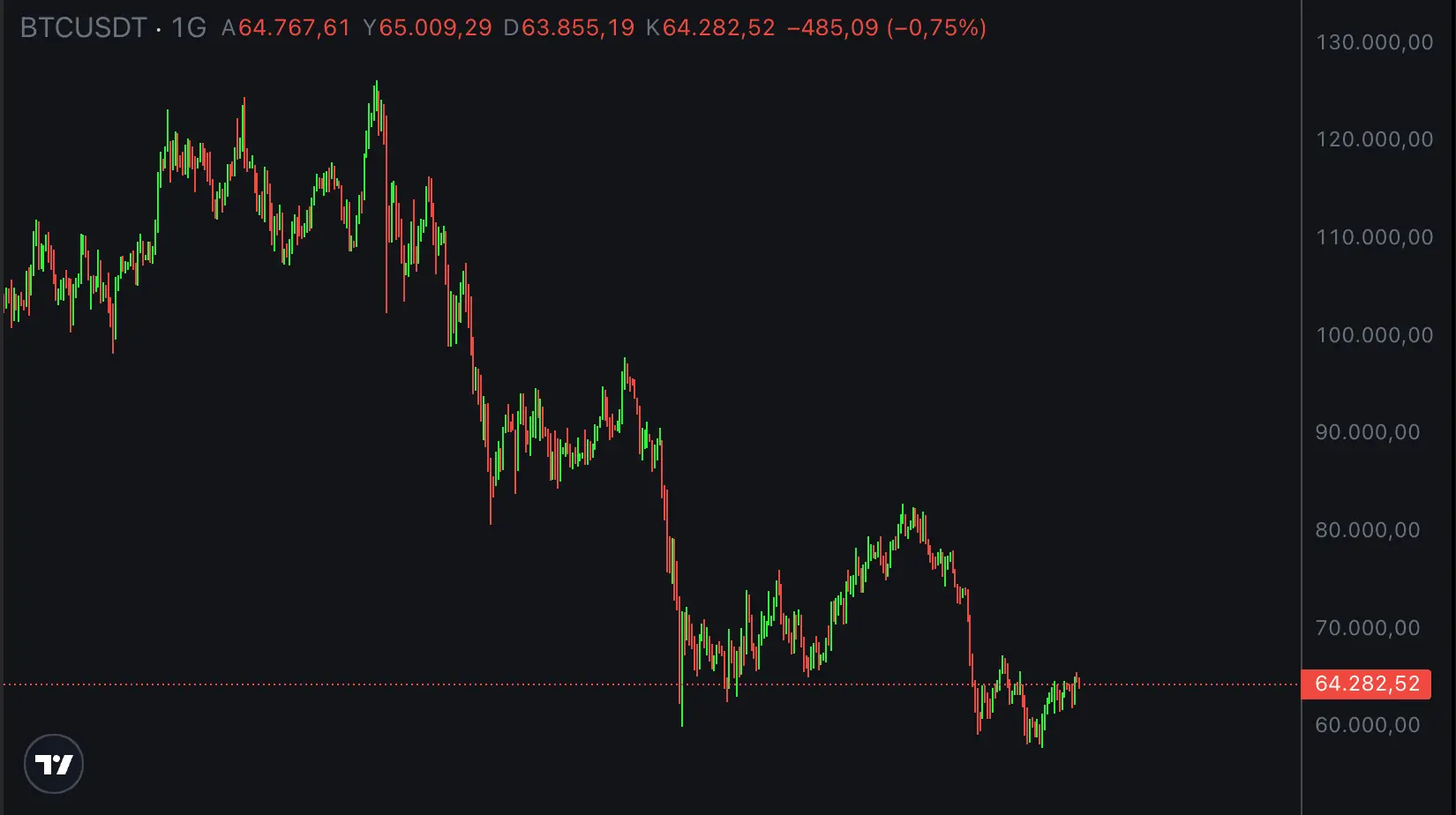
Bitcoin fell as low as 61,800 USD during the week and tested the 65,400 USD area during its upward attempts. At the time of writing, Bitcoin is trading around 64,100 USD.
From a technical perspective, the price is trading near its 50 day moving average at approximately 64,000 USD, making this area important for the near term direction. The 61,000 to 62,000 USD range is being monitored as a strong support area, while the 65,000 to 65,400 USD region remains the first major resistance zone to overcome. On the ETF side, total weekly net outflows of approximately 136.6 million USD were recorded.
Ethereum Price Chart
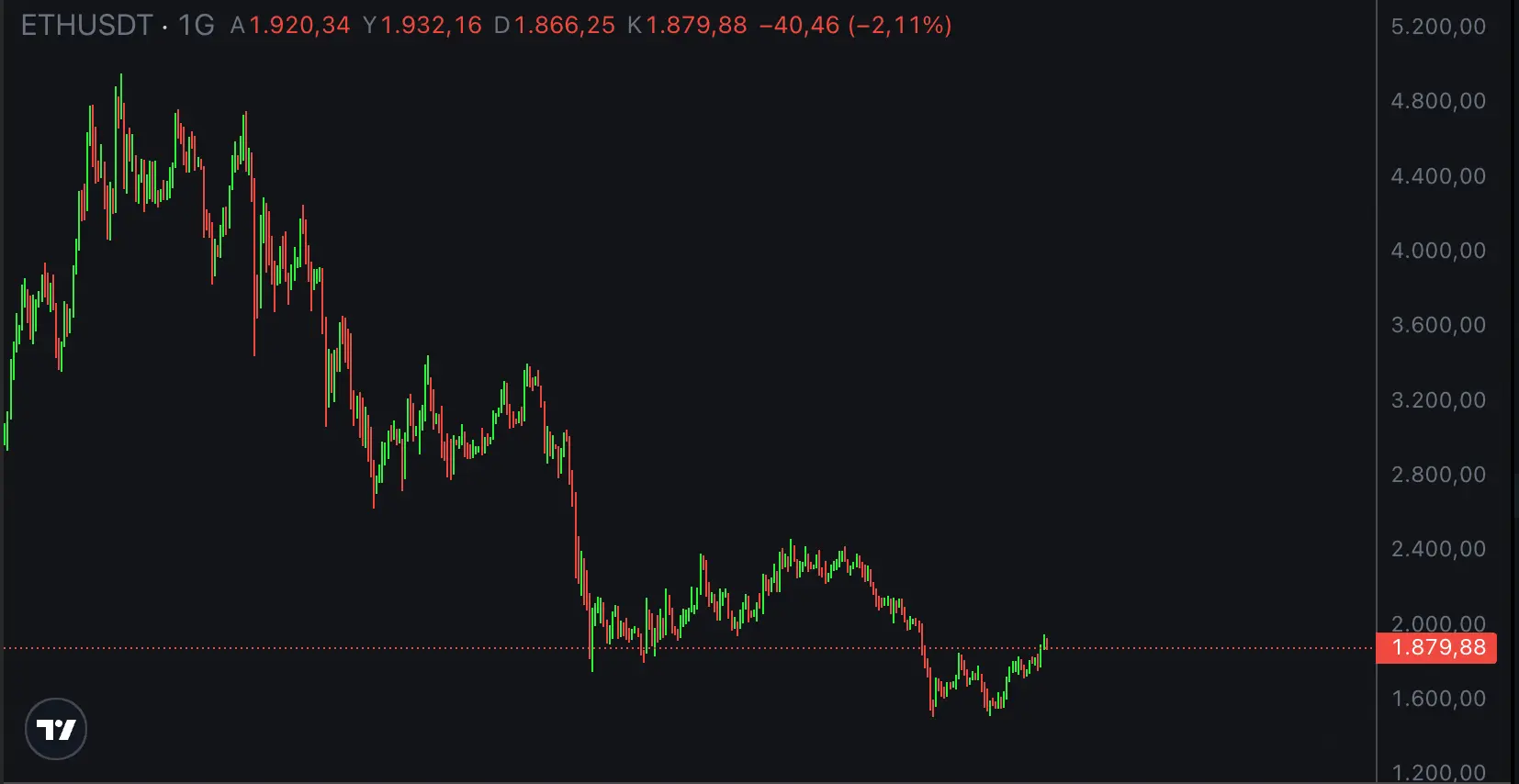
Ethereum fell as low as 1,750 USD during the week and tested the 1,940 USD area during its upward attempts. At the time of writing, Ethereum is trading around 1,875 USD.
From a technical perspective, the 50 day moving average at approximately 1,744 USD aligns closely with the weekly low, making the 1,750 USD area an important support zone. On the upside, 1,940 USD is being monitored as the first resistance level. A break above this area could bring the psychological 2,000 USD threshold back into focus. On the ETF side, total weekly net inflows of approximately 96.8 million USD were recorded.
 2026-07-17
Legal Notice
The information, comments, and evaluations contained in this content do not constitute investment advice. This content is not intended to be prescriptive in any way and is intended to provide general information. It does not constitute investment advice. CoinTR cannot be held responsible for any transactions made based on this information or any losses that may arise.

Recommended
 Weekly NewsletterWeekly Crypto Break July 10 This week, the crypto market was shaped by corporate treasury management, the regulatory timeline in the United States, and stablecoin infrastructure. Strategy’s sale of 3,588 BTC to generate liquidity showed that corporate Bitcoin strategies are beginning to evolve beyond accumulation toward more active capital management. As the political window for the CLARITY Act narrowed, regulatory uncertainty returned to the forefront. Sony’s preparations to establish a regulated stablecoin focused struc2026-07-10
 Weekly NewsletterWeekly Crypto Break July 3 This week, the crypto market was shaped by Bitcoin treasury management, RWA growth, stablecoin compliance, and Ethereum’s technical development process. K Wave Media’s sale of its 88 BTC portfolio to repay debt highlighted the importance of company specific balance sheet management in Bitcoin treasury strategies. On Solana, RWA value reaching 3.4 billion USD pointed to the growing strength of the tokenization theme across different networks, while Tether’s freeze of USDT in 131 TRON wallets bro2026-07-03
 Weekly NewsletterWeekly Crypto Break June 26 This week, the crypto asset market was shaped by Ethereum treasury strategies, stablecoin reserve management, and multichain stablecoin infrastructure. SharpLink’s first ETH purchase after an 8-month pause showed that institutional Ethereum accumulation strategies remain active. Invesco’s plan to launch a tokenized money market fund for stablecoin issuers highlighted how reserve management is becoming more integrated with onchain finance. USDT0 surpassing 100 billion USD in transaction volume a2026-06-26


