
What Is Bear Market? When Is Bear Season? 

Cryptocurrency Exchange
7 min read time
|Updated: 2026-03-26
In
cryptocurrency markets, the direction of prices plays a decisive role in investor decisions and risk management. Therefore, accurately understanding market trends is of critical importance for investors, especially during periods of uncertainty. One of the most commonly encountered concepts in this context, the bear market, refers to periods when prices are generally trending downward. So, what is a bear market, and what does it mean? These terms are used to describe periods when selling pressure increases, investor sentiment weakens, and a more cautious outlook prevails.
A bear season typically emerges when prices decline significantly from peak levels and this downward trend persists for a certain period. During this process, investor behavior becomes more cautious in both cryptocurrency markets and traditional financial markets, while the overall market direction may show a downward trend.
What Is Bear Market?
A bear market is a term used to describe a situation in financial markets where prices generally trend downward over a certain period. So, what is a bear market? This term is used to describe periods when investor sentiment weakens, selling pressure increases, and prices move downward.
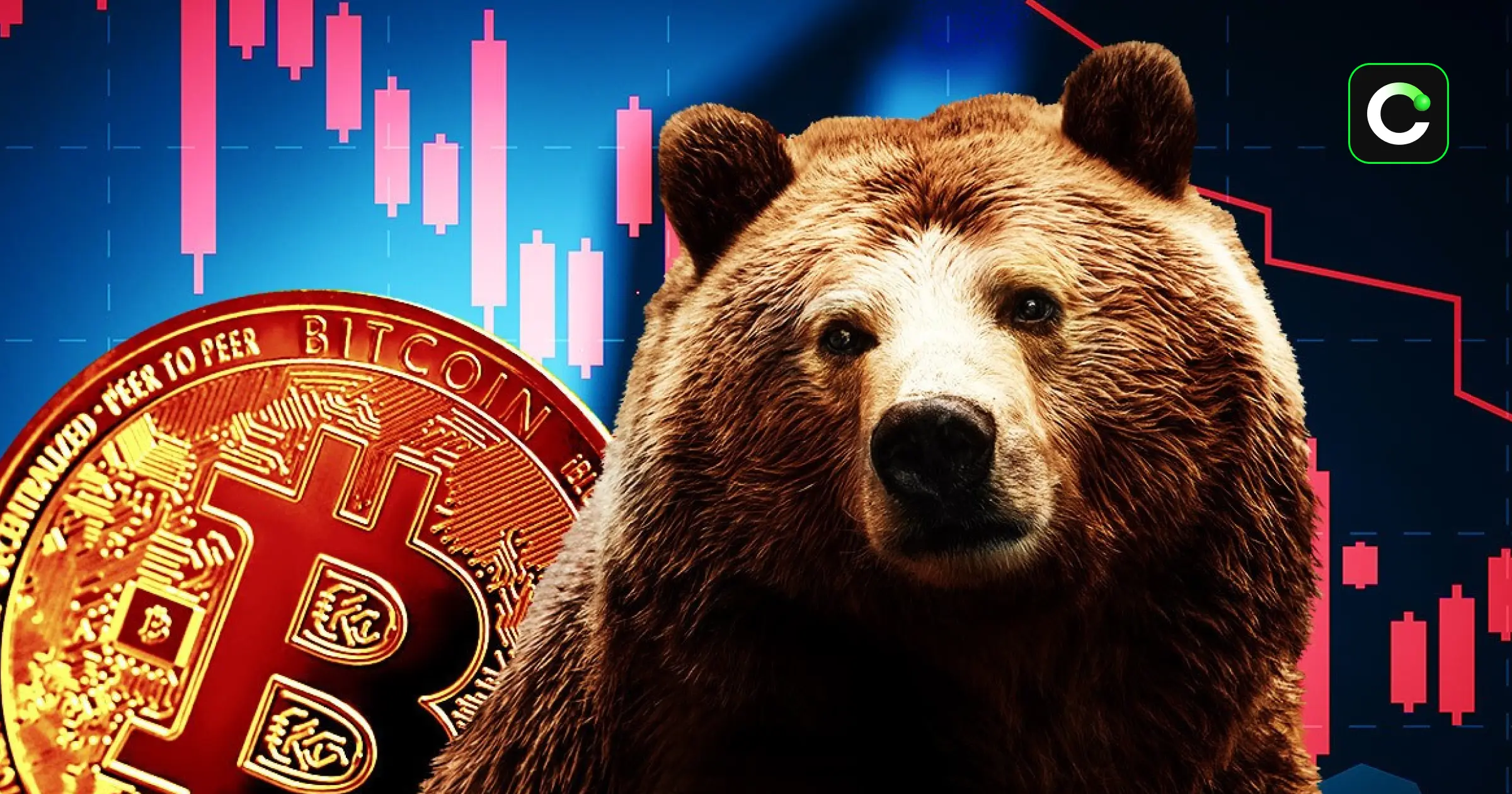
To answer the question “What does a bear market mean?” in simpler terms, it can be described as a period when a pessimistic outlook dominates the market and prices are trending downward. Known as a “bear market” in English literature, this concept is frequently used in stock markets, stock exchange bear markets, and cryptocurrency markets. The term originates from the way bears move their claws downward during an attack, symbolizing the downward trajectory of prices.
For a market to be described as being in a bearish trend, prices are generally expected to decline by approximately 20% or more from their recent peak, and this downward trend is expected to persist for a certain period. During this process, selling pressure increases across the market, and investors’ risk perception also rises.
In short, a bear market can be defined as a period during which prices move downward and market expectations take on a more cautious outlook. Such periods can be linked to various factors, including global economic developments, geopolitical risks, high inflation, financial uncertainties, or unexpected crises.
What Are the Characteristics of Bear Market?
A bear market generally refers to periods when prices follow a downward trend and a cautious outlook prevails in the markets. During this period, investors’ risk appetite may weaken, and a slowdown in trading volumes may be observed. In this environment of increased uncertainty, it can become difficult for investors to clearly predict future price expectations. Economic activity may also lose momentum in parallel; contraction in certain sectors and weakening in employment may be observed.
Unlike a
bull market, sell-side transactions may become more prominent during this period. Strategies such as short selling, in particular, come to the fore when expectations of a decline are prominent. However, it should not be forgotten that price movements are not one-sided, and periodic fluctuations may present opportunities. Market pullbacks can create a market environment that can be evaluated from the perspective of different strategies with appropriate risk management and proper timing. Therefore, it is important to make investment decisions by carefully analyzing market conditions and considering individual risk profiles.
When Does the Crypto Bear Market Begin?
The start of a crypto bear market is linked to a shift in market trends rather than a specific date. When prices enter a downward trend following a prolonged uptrend and this movement gains momentum, it is considered a significant signal that the bear market has begun.
Generally, a decline of approximately 20% or more from a cryptocurrency’s recent peak, coupled with a continuing downward trend, may indicate that the market has entered a bear market. During this period, investors tend to adopt a more cautious approach, and changes in trading volume and risk appetite may also be observed.
Factors such as global economic developments, regulatory news, market expectations, and general financial conditions can influence the formation of a bear market in cryptocurrency markets. Therefore, the onset of a bear market is viewed as a process shaped by the convergence of multiple factors rather than being tied to a single cause.
How Long Does a Bear Market Last?

The duration of a bear market cannot be defined by a fixed time frame and varies depending on market conditions. This process is influenced by numerous factors, including the outlook for economic growth, inflation levels, global developments, and investors’ risk perception.
While a bear market may be limited to a few months in some periods, it can persist for longer durations during times of significant global developments. Strengthening economic stability and the restoration of confidence in the markets, however, can accelerate the end of this process.
Bear Market vs. Bull Market
Two of the most commonly used concepts for understanding price movements and general trends in financial markets are the bull market and the bear market. These two market types reflect the direction of asset prices, investor behavior, and market expectations in different ways.
A bear market refers to periods when prices generally trend downward and market sentiment takes on a more cautious tone; a bull market, on the other hand, describes periods dominated by an upward trend and characterized by optimistic expectations.
The table below provides a comparative summary of the key differences between bear and bull markets:
|
Characteristic
|
Bear Market
|
Bull Market
|
|
General Trend
|
Prices are trending downward
|
Prices are trending upward
|
|
Market Sentiment
|
Pessimistic and cautious
|
Optimistic and confidence-driven
|
|
Investor Behavior
|
Selling pressure increases; risk aversion is evident
|
Buying pressure increases; risk appetite
|
|
Price Movement
|
Typically a decline of 20% or more from the peak
|
A strong rally from the lows
|
|
Trading Volume
|
Decline or volatile fluctuations
|
Upward trend
|
|
Economic Environment
|
Recession, high inflation, uncertainty
|
Growth, stability, and positive expectati
|
|
Duration
|
Uncertain, often prolonged
|
Uncertain, dependent on market conditions
|
|
Opportunities
|
Buying opportunities may arise at low prices
|
Profit-taking becomes prominent with price appreciation
|
|
Risk Level
|
Relatively higher uncertainty
|
Relatively lower uncertainty
|
Also see.
Difference between Bear and Bull Market
FAQ
What is a bear market?
A bear market refers to periods in financial markets when prices exhibit a prolonged downward trend. During this period, a cautious outlook prevails across the market, and pessimistic expectations dominate among investors. Generally, a decline of approximately 20% or more in an asset’s price relative to its recent peak, coupled with the continuation of this downward trend, is considered one of the key indicators signaling the formation of a bear market.
How is the bear market identified?
A bear market is identified by prices entering a downward trend, weak recovery attempts, and increasing selling pressure. A significant decline relative to peak levels is typically among the key indicators of this process.
What is bear trap?
Bear trap occurs in financial markets when prices signal a short-term rise while a downtrend continues, and this situation is mistaken for a sustained recovery. This misleading movement can cause investors to buy too early. However, if the expected rise does not materialize and prices resume their decline, this situation is referred to as a “bear trap.” Therefore, it is important for investors to distinguish between short-term price movements and long-term trends and act with greater caution.
What does “bear market” mean?
A bear market refers to market periods where prices generally trend downward and investor sentiment weakens.
 2026-03-26
Legal Notice
The information, comments, and evaluations contained in this content do not constitute investment advice. This content is not intended to be prescriptive in any way and is intended to provide general information. It does not constitute investment advice. CoinTR cannot be held responsible for any transactions made based on this information or any losses that may arise.
 What is a Cryptocurrency Exchange?
Recommended
 Cryptocurrency ExchangeWhat is a Stablecoin? 2026 Stablecoin List The cryptocurrency market is known for its high volatility, posing significant risks for investors. Stablecoins provide a secure alternative by maintaining a stable value. Typically pegged to fiat currencies, precious metals, or other assets, stablecoins serve as a safe haven for investors and traders. But what is a stablecoin, how does it work, and what types exist? Let’s dive into the details. What is a Stablecoin? A stablecoin is a type of cryptocurrency des2024-11-24
 Cryptocurrency ExchangeWhat are Bear and Bull Markets? In financial markets, the terms bear market and bull market are often used to describe overall trends. A bear market represents periods of declining prices, while a bull market refers to rising trends. These terms are particularly important in the cryptocurrency market. But what exactly is a bear market, what is a bull market, and how long do these periods last? Here’s a detailed guide. What is a Bear Market? A bear market is a period when asset prices experience a prolonged decline, typically2024-11-24
 Cryptocurrency ExchangeWhat is Blockchain Technology? Blockchain is a digital ledger technology where data is stored on a distributed network without the need for central authority. As the backbone of cryptocurrencies such as Bitcoin, blockchain is now being used not only in the financial world but also across many different industries. Blocks record transactions, and each block is linked to the previous one, forming a chain. This structure makes data immutable, tamper-proof, and transparent. Key Features: Decentralization: Not controlled by a s2024-11-28


