
Weekly Crypto Break March 6

Weekly Newsletter

This week, the crypto-asset
market was shaped by the regulatory agenda and rising geopolitical risks. In the United States, regulatory developments remained in focus, while market data highlighted a decline in Bitcoin reserves held on centralized crypto exchanges and an increase in stablecoin transfer activity on Solana. On the institutional side, companies and miners continued to prioritize positioning and balance-sheet management in line with operational considerations.
Bitcoin Balances on Centralized Exchanges Hit Lowest Levels Since 2018
Bitcoin held on centralized crypto exchanges has declined to its lowest levels since November 2018. Data aggregators tracking exchange reserves indicate that total balances on exchanges have fallen to around the 2.6 million BTC range.
Such declines are commonly associated with investors moving assets off exchanges into self-custody, including
cold wallet. Institutional accumulation and alternative custody channels are also considered factors that may reduce the amount of BTC readily available for trading on exchanges.
Why does it matter? A lower exchange balance is often monitored as a structural indicator for market liquidity and order-book depth. At the same time, “exchange reserve” metrics can vary across providers due to differences in wallet labeling and methodology, so the data is typically interpreted alongside other liquidity indicators rather than on a standalone basis.
Solana Stablecoin Transfers Reach 650 Billion USD in February
In February 2026, stablecoin transfer volume on
Solana rose to approximately 650 billion USD on a monthly basis. Commentary shared alongside the data suggests this is the highest monthly stablecoin total ever recorded on a blockchain, more than double the previous peak seen in October 2025.
The increase is attributed not to short-term, memecoin-driven activity, but rather to growing usage in Solana–stablecoin trading pairs and payment oriented transfers. Low transaction fees are also cited as a key factor supporting Solana’s continued traction.
Why does it matter? Growth driven by payments and transfers is closely watched as an indicator of the quality and composition of on-chain activity. Solana also ranks among the leading networks by
stablecoin supply, and it is positioned just behind Ethereum in USDC circulation. In contrast, Ethereum remains the leading network in tokenized real-world assets (RWA) at this stage.
SEC Ends Justin Sun Case With a 10 Million USD Settlement
The U.S. Securities and Exchange Commission (SEC) is reported to have resolved the civil case it filed in 2023 against crypto entrepreneur Justin Sun and related entities through a settlement. In the process, a Sun-linked company agreed to pay 10 million USD, while the settlement remains subject to court approval.
The case alleged that certain transactions involving
TRX may have artificially inflated market activity. It is also reported that the parties resolved the matter without admitting or denying the allegations.
Why it matters The development is being watched as it may shape expectations around how crypto-related enforcement and oversight will evolve in the United States, while keeping market integrity and regulatory risk at the forefront for institutional participants.
CleanSpark Sells 553 BTC in February as Miners Continue Prioritizing Liquidity
U.S.-based Bitcoin miner CleanSpark said it sold 553 BTC out of 568 BTC produced in February, generating approximately 36.6 million USD in proceeds. The company also reported total Bitcoin holdings of 13,363 BTC as of month-end.
CleanSpark added that it continues to expand its infrastructure footprint and has completed the process for a second campus in Texas, supported by an additional 300 MW of grid-approved capacity.
Why it matters Selling a larger share of monthly production to fund operations and capacity expansion has become a more visible trend among miners. CleanSpark also noted it is exploring ways to align parts of its infrastructure with AI and high-performance computing (HPC) workloads.
Also see.
Bitcoin mining
Bitcoin Price Chart
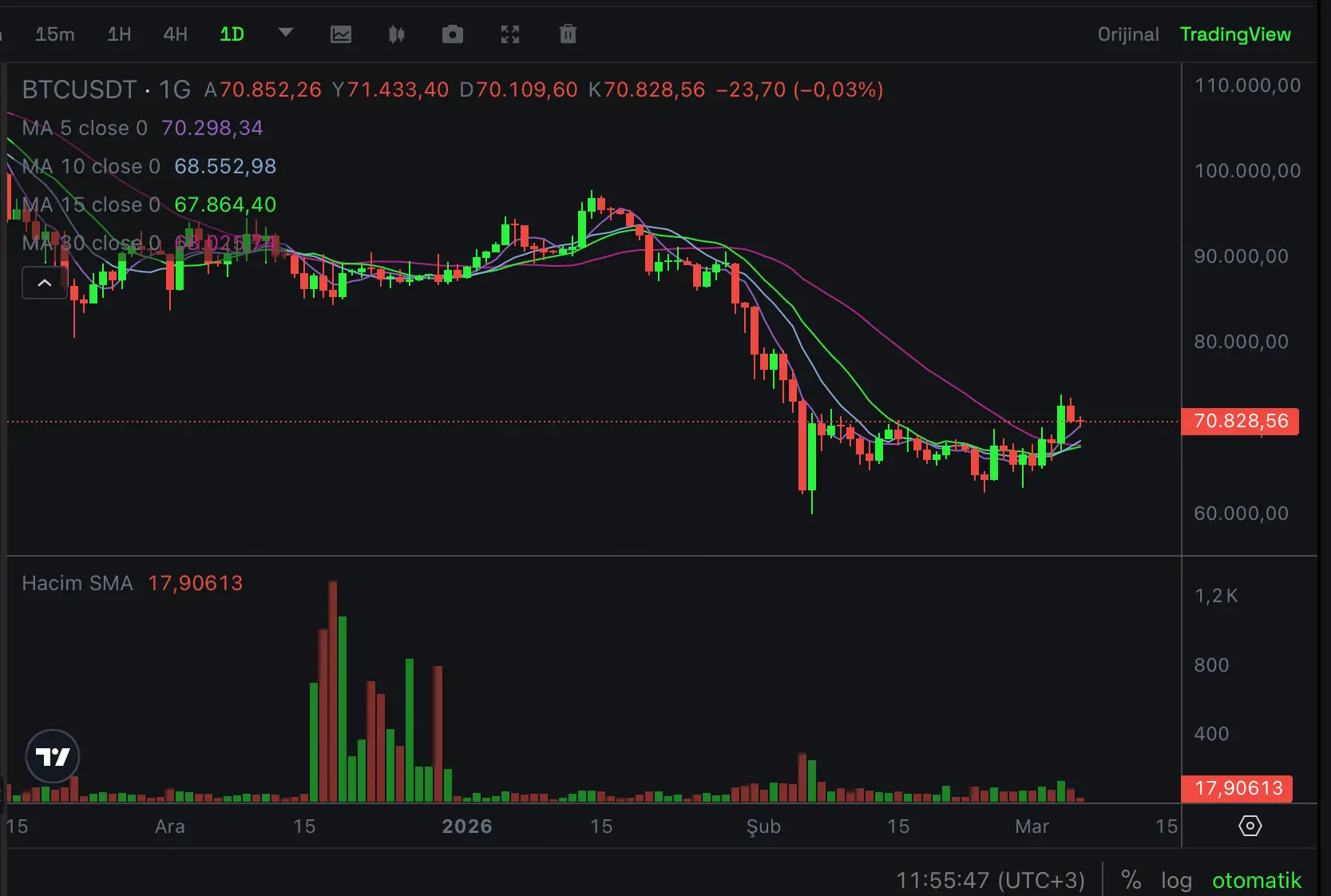
Bitcoin price tested the 70,000 USD level last week and moved above it this week, reaching 74,000 USD. As of this week, 70,000 USD stands out as a key support area, while Bitcoin was trading around 70,800 USD at the time of writing. Bitcoin is expected to close the week by approximately 4%. On the ETF side, total net inflows of +917.4 million USD were recorded over the week.
Ethereum Price Chart
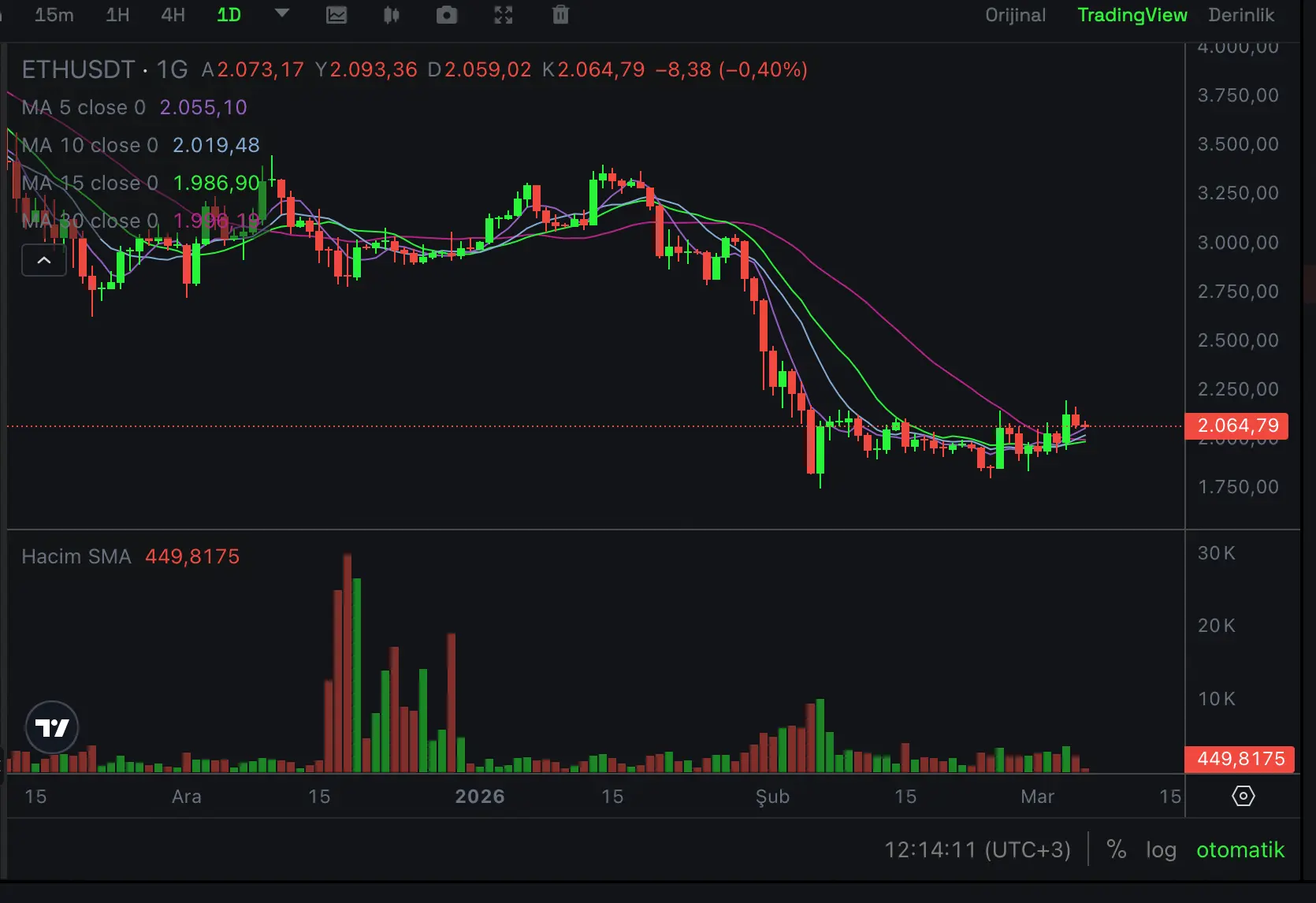
Ethereum price posted a performance broadly in line with Bitcoin this week. After testing 2,200 USD on March 4, Ethereum was trading around 2,075 USD at the time of writing. In this context, 2,000 USD remains an important level to monitor in the near term, while whether the 2,200 USD zone can be reclaimed continues to stand out as a key threshold for the outlook. On the ETF side, total net inflows of +106.4 million USD were recorded over the week.
 2026-03-06
Legal Notice
The information, comments, and evaluations contained in this content do not constitute investment advice. This content is not intended to be prescriptive in any way and is intended to provide general information. It does not constitute investment advice. CoinTR cannot be held responsible for any transactions made based on this information or any losses that may arise.
 Weekly Crypto Break March 13
Recommended
 Weekly NewsletterWeekly Crypto Break March 13 This week, the crypto asset market saw a busy news flow with Ethereum and stablecoins taking center stage. BlackRock’s new Ethereum-focused product that incorporates staking rewards drew attention, while on the stablecoin front, both investments aimed at building infrastructure on Bitcoin and new product moves centered on USDT and USDC across DeFi protocols stood out. Meanwhile, event announcements in the memecoin space highlighted that community momentum and visibility remain in2026-03-13
 Weekly NewsletterWeekly Crypto Break February 27 This week in the crypto-asset market, the narrative was shaped by both U.S.-driven macro policies and corporate balance-sheet and restructuring moves. Signals from the U.S. administration around raising global tariff rates lifted risk sensitivity across markets, while the resulting uncertainty supported a more cautious pricing environment globally. In parallel, corporate updates tied to financial results and position adjustments stood out as key themes throughout the week. FG Nexus Reduces Ethe2026-02-27
 Weekly NewsletterWeekly Crypto Break February 20 This week, the market narrative was led by developments around the Clarity Act in the United States, keeping the focus on the regulatory agenda and institutional positioning. Alongside the Clarity Act discussion, key topics included Aave’s expansion in RWA deposits within DeFi, Base’s evolving OP Stack strategy on the infrastructure side, and Aptos’ supply model debate in tokenomics. On the institutional front, Strategy purchased 2,486 BTC, bringing total holdings to 717,131 BTC. BitMine acquir2026-02-20


