
Weekly Crypto Break March 27

Weekly Newsletter
4 min read time
|Updated: 2026-03-27
This week, the crypto asset market saw a busy agenda shaped by the intersection of AI and crypto alongside renewed focus on institutional transparency. On the regulatory side, comments highlighting how blockchain could help verify AI generated content drew attention. Across the ecosystem, expectations that onchain activity could increasingly be driven by AI agents and automation also stood out. On the institutional front, transparency around stablecoin reserves and miners’ balance sheet actions brought the themes of risk management and operational transformation back into focus.
Tether Moves Forward With Its First Full Audit, KPMG Named as Auditor
Tether previously announced that it had initiated a formal process with a Big Four firm to conduct its first full independent audit of the financial statements related to USD₮ reserves. While Tether did not name the firm at the time, Financial Times reported that KPMG is expected to lead the audit. The report also notes that PwC has been brought in to support the strengthening of internal control processes as part of audit readiness.
Why it matters For a systemically used stablecoin such as USDT, a full audit can provide deeper visibility beyond reserve snapshots, covering internal controls, reporting processes, and reserve composition. In an environment of rising transparency expectations, this is a development closely monitored by institutional participants.
MARA Sells 15,133 BTC With a Focus on Convertible Note Repurchases
U.S. based miner MARA Holdings said it sold a total of 15,133 BTC between March 4 and March 25, generating approximately 1.1 billion USD in proceeds. Following the sale, the company noted that its Bitcoin holdings declined by roughly 28% from early March levels to 38,689 BTC.
MARA stated that the proceeds will be used to repurchase convertible notes maturing in 2030 and 2031, with the aim of improving balance sheet flexibility. Over the same period, the company has also continued to highlight plans beyond mining, including initiatives related to AI and high performance computing infrastructure.
Why it matters Sales like this underline that miner decisions are shaped not only by price action but also by cash management, deleveraging, and funding for investment priorities. For large operators, Bitcoin holdings can function as a periodic tool for liquidity and balance sheet management, a trend closely tracked by institutional observers.
CFTC Chair Selig Says Blockchain Could Help Verify AI Generated Content
CFTC Chair Michael Selig said blockchain could play an important role in verifying content produced by artificial intelligence. In his view, applying timestamps and creating a unique identifier for each piece of content could help distinguish authentic material from AI generated output.
Selig also emphasized that as AI agents and automation become more visible in markets, regulatory focus should be placed on the actors executing financial activity, rather than on “software developers” as a broad category.
Why it matters As AI generated content scales rapidly, the need for provenance and verification is growing. Blockchain based identity and timestamping approaches are increasingly discussed as potential tools to support market integrity and reduce misinformation risks.
Solana Signals a Bold Shift as AI Agents Could Drive Most Onchain Activity
Vibhu Norby, who leads product strategy and AI adoption at the Solana Foundation, suggested that within the next two years a large share of onchain transactions could be driven by agents, bots, and LLM powered wallets and execution tools. He also highlighted a shift in user experience from “click based” interfaces toward language driven commands.
Within this framework, Norby noted that AI agents on Solana are already generating millions of small value transactions, with activity clustering around micropayments and automation based transaction flows.
Why it matters This narrative strengthens the idea that onchain activity may evolve from primarily human initiated transactions toward machine driven micropayments and automation. In parallel, continued development of API layers for payments, tokenized assets, and compliance tooling suggests institutional integration work is also progressing to support this shift.
Bitcoin Price Chart
Bitcoin Price Chart
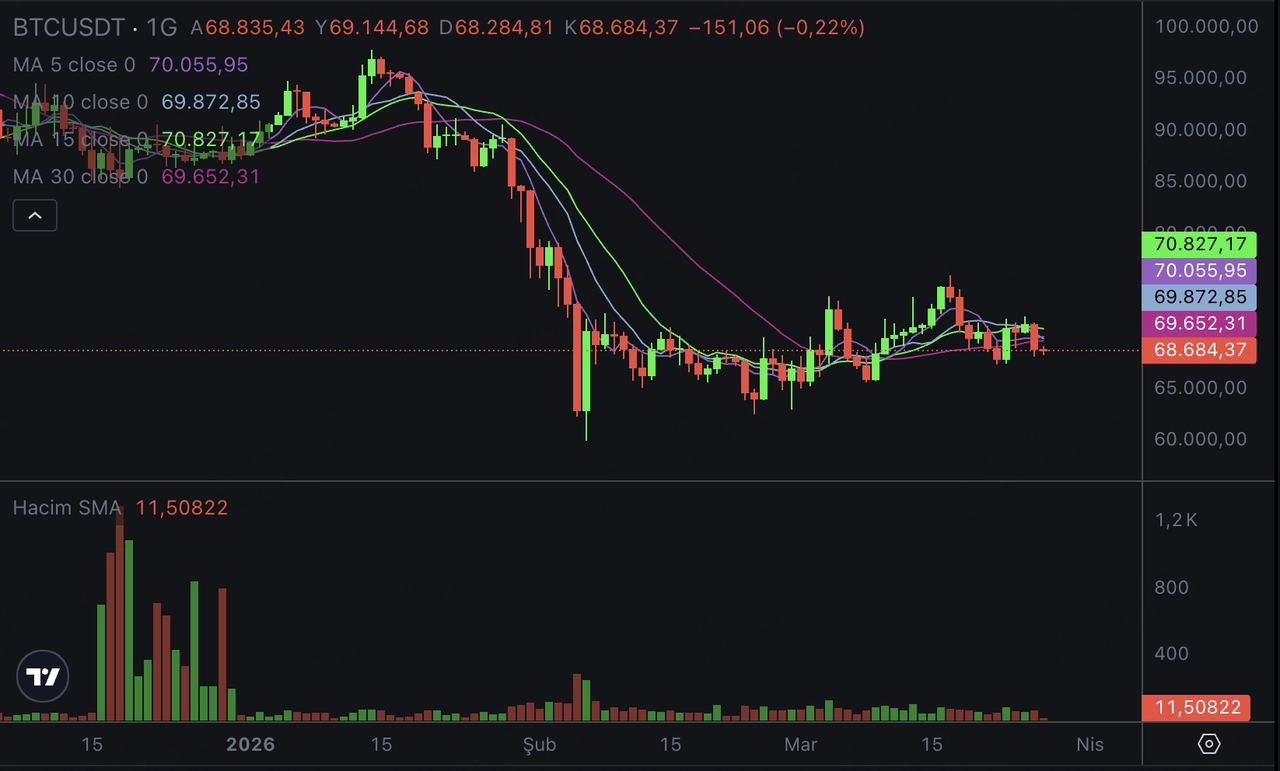
Bitcoin tested the 72,000 USD area during the week, but continued to trade within a sideways range amid rising geopolitical risks. At the time of writing, Bitcoin is trading around 68,700 USD. In this setup, 70,000 USD stands out as a key near term resistance level. Bitcoin is expected to close the week down by approximately 2.5%.
On the ETF side, total net outflows of 62.9 million USD were recorded over the week.
Ethereum Price Chart
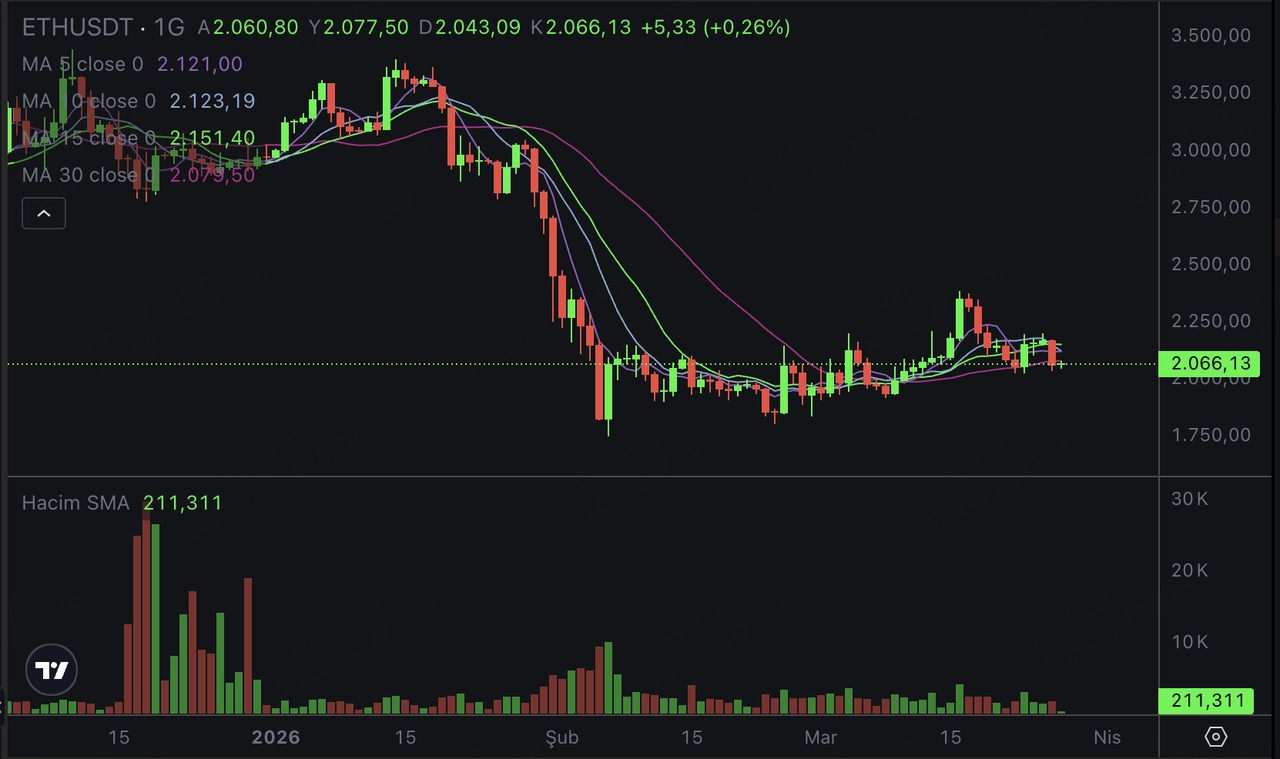
Ethereum tested the 2,200 USD level during the week and, similar to Bitcoin, continued to trade within a sideways range. In this setup, 2,200 USD stands out as a key resistance level, while 2,000 USD remains one of the main support areas being monitored in the near term. At the time of writing, Ethereum is trading around 2,060 USD.
On the ETF side, total net outflows of 157.9 million USD were recorded over the week.
 2026-03-27
Legal Notice
The information, comments, and evaluations contained in this content do not constitute investment advice. This content is not intended to be prescriptive in any way and is intended to provide general information. It does not constitute investment advice. CoinTR cannot be held responsible for any transactions made based on this information or any losses that may arise.

Recommended
 Weekly NewsletterWeekly Crypto Break March 13 This week, the crypto asset market saw a busy news flow with Ethereum and stablecoins taking center stage. BlackRock’s new Ethereum-focused product that incorporates staking rewards drew attention, while on the stablecoin front, both investments aimed at building infrastructure on Bitcoin and new product moves centered on USDT and USDC across DeFi protocols stood out. Meanwhile, event announcements in the memecoin space highlighted that community momentum and visibility remain influential fac2026-03-13
 Weekly NewsletterWeekly Crypto Break March 6 This week, the crypto-asset market was shaped by the regulatory agenda and rising geopolitical risks. In the United States, regulatory developments remained in focus, while market data highlighted a decline in Bitcoin reserves held on centralized crypto exchanges and an increase in stablecoin transfer activity on Solana. On the institutional side, companies and miners continued to prioritize positioning and balance-sheet management in line with operational considerations. Bitcoin Balances on Ce2026-03-06
 Weekly NewsletterWeekly Crypto Break February 27 This week in the crypto-asset market, the narrative was shaped by both U.S.-driven macro policies and corporate balance-sheet and restructuring moves. Signals from the U.S. administration around raising global tariff rates lifted risk sensitivity across markets, while the resulting uncertainty supported a more cautious pricing environment globally. In parallel, corporate updates tied to financial results and position adjustments stood out as key themes throughout the week. FG Nexus Reduces Ethe2026-02-27


